






Ingenuity, Technical Proficiency Drive Independents’ Strategies In Permian Plays
By Danny Boyd
Even as companies balance softer commodity prices against record asset valuations, weigh capital discipline against long-term investment opportunity, and seek to sharpen their competitive edge in arguably the world’s most competitive operating environment, the Permian remains North America’s workhorse basin—and the upstream industry’s perpetual engine of innovation and value creation.
Across the Permian, deal-making is intensifying as established independents and majors alike compete to replenish drilling inventories and extend runways after an extended period of consolidation. And a blockbuster $58 billion merger of Devon Energy and Coterra Energy announced on Feb. 2 was a reminder that the consolidation trend is not over yet.
The combined company will retain Devon Energy’s name and create a leading large-cap shale operator with a high-quality asset base anchored by a premier position in the economic core of the Delaware Basin and complementary technical capabilities. The company will be among the largest producers in the Delaware Basin, with pro forma third-quarter 2025 production of 863,000 barrels of oil equivalent per day distributed across nearly 750,000 net acres in the core of the play. It will also have more than 10 years of high-quality inventory in Delaware tight oil plays.
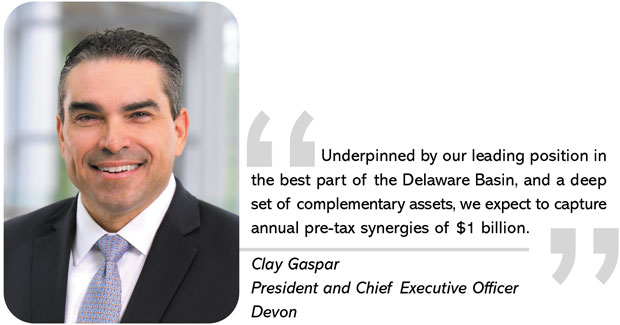
“This transformative merger combines two companies with proud histories and cultures of operational excellence, creating a premier shale operator,” says Devon President and Chief Executive Officer Clay Gaspar. “We have now built a diverse asset base of high-quality, long duration inventory to drive resilient value creation and returns for shareholders through cycles. Underpinned by our leading position in the best part of the Delaware Basin, and a deep set of complementary assets, we expect to capture annual pre-tax synergies of $1 billion. This will drive higher free cash flow and greater shareholder returns beyond what either company could achieve alone.”
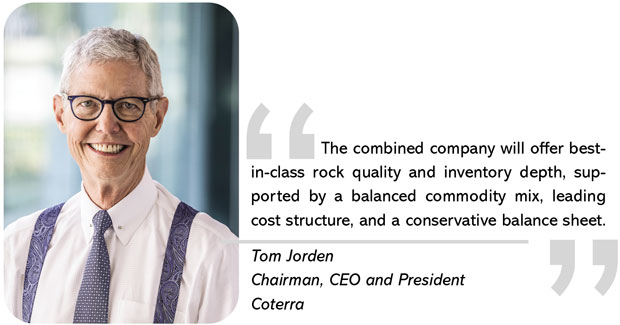
Tom Jorden, chairman, CEO and president of Coterra, adds, “This combination enhances the Delaware and brings together two premier organizations with complementary cultures rooted in operational excellence, disciplined capital allocation, and data-driven decision making focused on creating per share value. The combined company will offer best-in-class rock quality and inventory depth, supported by a balanced commodity mix, leading cost structure, and a conservative balance sheet. Devon Energy will be strongly positioned to deliver top-tier capital efficiency gains and consistent profitable per share growth through the commodity cycles.”
Gaspar will serve as president and CEO of the new Devon Energy, and Jorden will assume the role of non-executive chairman of the board. Executive leadership will be based in Houston, but the company plans to maintain a significant presence in Oklahoma City.
In announcing the all-stock transaction, Devon and Coterra noted the merger is expected to unlock substantial value by leveraging each company’s core strengths, achieve technology-driven capital efficiency gains, and benefit from optimized capital allocation to drive near and long-term per share growth. Citing one example of the combined company’s position as a “technology-focused leader,” merging both organizations’ artificial intelligence capabilities will create a strong technology platform across subsurface, operations, and enterprise functions and allow AI optimization to enhance capital efficiency, operational performance, and decision-making at scale.
Value Creation Cycle
Despite oil price volatility, competition for quality acreage is as intense as ever, and the Permian only continues to solidify its strategic importance on the American energy landscape. The U.S. Energy Information Administration projects that the basin will account for nearly half of total domestic crude oil production in 2026, contributing roughly 6.6 million barrels of oil a day for a total forecast of 13.5 million bbl/d.
No matter how one looks at it, the Permian business is arguably more dynamic than ever. Whether drilling cutting-edge U-shaped (horseshoe) well architectures or participating in farmouts, joint ventures, and non-operated structures, companies such as Admiral Permian Resources, Greenlake Energy, Cutbow Operating, and Henry Resources are leveraging both creative ingenuity and technical proficiencies to score big wins across the basin’s horizontal resource plays.
While independent oil and gas companies’ core business strategies are varied and constantly evolving, one historical pattern continues to repeat amidst the consolidation and churn of the past few years: Successful management teams rarely exit the scene. Instead, they regroup, re-enter the stage, reload on assets, and restart the value creation cycle all over again.
A case in point is Admiral Permian Resources. Following the sale of its Permian assets to Petro-Hunt LLC in 2022, Admiral’s management relaunched, recalls Chief Executive Officer Denzil West. Although securing inventory is intensely competitive, Admiral has rebuilt a new position and successfully underwritten prospects across the basin, relying on a lean operations team with decades of Permian experience.
“We are not concerned with how we look on a map, but only with securing positions where we can drill and deliver reliable returns to our financial partners,” West says. “Some are farm-ins, some consist of acreage trades, and some include acreage purchases and coring up a unit. As you can imagine in the Permian, it can be a knife fight. It is a tough ride to put them together. Our secret sauce is really not a secret; it is the fact that we have a top-performing operations team.”
The Next Chapter
Four years ago, Admiral and an equity partner divested 21,430 acres and producing assets. Before that sale closed, however, the company acquired a 600-acre undeveloped tract in Loving County to serve as the foundation for its next chapter.
Roughly 14 members of Admiral’s management team chose to stay together, forgoing salaries for a year while investing personal capital into the new venture. As of early 2026, the Midland-based company has assembled 11,800 net acres, 75 producing wells, and gross production exceeding 30,000 boe/d.
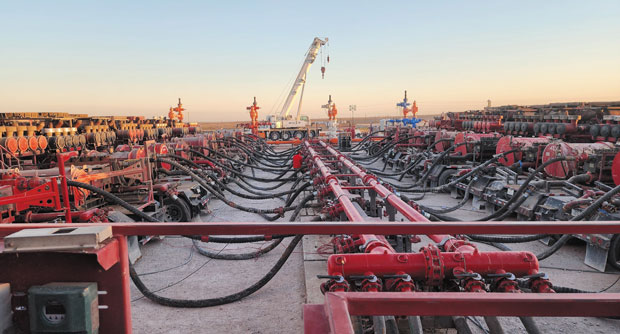
Among private operators, Admiral Permian Resources may rank as the most active driller of U-lateral well architectures in the basin. In 2026, Admiral plans to drill 25 U-laterals—about 60% of its entire drilling campaign—which would bring the company’s total U-lateral well count to 44 by year’s end.
Although the prior private equity partnership was successful, the team wanted to operate independently, West relates. A Midland native, West earned a mechanical engineering degree from Texas A&M University and returned to the Permian in 1984 after stints with ARCO in the Mid-Continent and Rockies. Other team members bring similar long resumes from Chevron, Texaco, Apache, EOG, and others.
The new Admiral soon entered a joint development agreement with a capital group retaining participation options. Nearly $1 billion in capital has since been deployed or committed to projects with the capital partners, primarily in the Delaware Basin, while Midland Basin activity includes non-operated participation with ExxonMobil and other large players. Admiral is also drilling the Barnett Shale on the Central Basin Platform in northern Ector County.
In 2026, Admiral expects to keep two rigs active and drill 36-42 wells across 27 development projects, including five wells in Eddy County, N.M., following five last year on the company’s first New Mexico position. To enhance economic returns, Admiral has embraced U-lateral development.
In fact, the company has perhaps drilled as many or more
U-laterals than any other private operator, West assesses, including 14 in the Delaware Basin that are now either producing or awaiting completion. In January, drilling was underway or about to begin on five others in Loving County, tapping the Bone Spring and Wolfcamp C in the deepest part of the Delaware.
Two U-laterals—the Dirt Dauber 1WC and the Mavericks 2WA—reached total depth in mid-January as rigs prepped to drill the Dirt Dauber 1WB, Mavericks 1WB, and the Mavericks 1WC. In 2026, 25 other U-laterals—about 60% of Admiral’s entire drilling campaign—are planned, which are expected to bring the company’s total to 44 wells by year’s end, West points out.
Growth Opportunities
In the liquids-rich Delaware Basin, Greenlake Energy continues to expand, acquiring a marketed package of roughly 5,000 acres in Loving County during 2025, reports Chief Financial Officer Kyle Rhodes.
The purchase increased Greenlake’s Delaware position to 24,000 net acres amassed since launching in the sub-basin in 2021. Included is a 200+-well drilling inventory currently being exploited with one rig. The acquired Loving County assets are largely undrilled rather than proved, developed and producing, giving Greenlake the opportunity to capture significant upside.
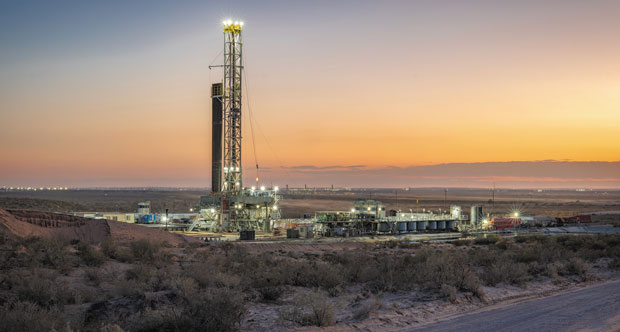
Greenlake Energy recently acquired 5,000 acres in the Delaware Basin, increasing its lease position to 24,000 net acres. Included is a 200+ well drilling inventory that Greenlake is currently drilling with one rig. Last year, the company drilled 22 wells, including seven U-laterals. Six of the U-laterals were drilled in a single run and one included a successful 17,000-foot J-lateral.
Though large operators continue to prune noncore assets, competition for properties remains fierce in the Delaware, says Rhodes, who, along with Greenlake CEO Matt Gallagher and others management team members, traces his Permian roots to Parsley Energy.
“You hear a lot of companies that have financial backing that have not been able to get a toehold in the Permian,” he observes. “The fact we have been able to keep a rig running for over four years is a testament to the team we have.”
Flexibility is the key word when contemplating the market and potential drilling in 2026, according to Rhodes. Last year, the company drilled 22 wells, including seven U-shaped or horseshoe wells. Six of those U-laterals were drilled in a single run and one included a successful 17,000-foot J-lateral.
Following Parsley Energy’s landmark sale to Pioneer Natural Resources in 2021, Gallagher (who was Parsley’s CEO at the time) and his team began searching for Permian deals with backing from NGP Energy Capital Management, Rhodes recalls. NGP increased its commitment to Greenlake with the formation of Greenlake Energy II in 2025. “A solid partnership is foundational and we are grateful to be aligned with the NGP team.”
Altogether under two investment platforms, Greenlake has 77 producing wells (and counting) and exited 2025 with production approaching 20,000 barrels of oil equivalent per day, split between 50% oil, 25% natural gas liquids, and 25% natural gas.
Rhodes says the company is targeting whichever benches are available, including layers of the Bone Spring and Wolfcamp. “We are not picky. We just focus on delivering healthy full-cycle returns on the development capital deployed,” Rhodes assesses. “In a $60 oil world, hitting and beating your budgeted costs are table stakes for playing.”
In keeping with ongoing preparations, the company this year will continue to invest in its water handling network and is looking to retain optionality for its residue gas in a rapidly changing power generation landscape. “Waha has been a four-letter word for awhile and I think you are just going to grin and bear it in 2026, but things are changing rapidly on multiple fronts. Having more control over that molecule is becoming a higher priority for operators,” Rhodes remarks.
Tried And True
In the Midland Basin, Cutbow Operating plans to continue to target tried-and-true benches as it assesses options to acquire acreage and participate in farmouts and “non-op AFEs.” The expansion of the Permian’s geographical periphery, along with its functional extension from operators exploiting deeper benches, creates additional growth possibilities amid the basin’s hyper-competition for assets, says Chief Executive Officer Keith Fritschen.
After drilling steadily since 2022, the Midland-based company is assessing market conditions before drilling a pad in 2026 that is prepped and ready. Even with an eye on growth, Fritschen says the company has plenty of assets to further exploit in the sub-basin.
“We have some undeveloped Middle Spraberry available on most of our position, and other operators have even tested the Upper Spraberry,” Fritschen comments. “If that turns out to be a viable target, we have that to come back to as well.”
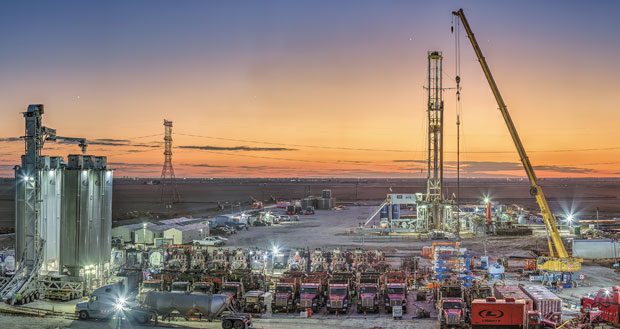
In the Midland Basin, Cutbow Operating is evaluating options to acquire acreage and participate in farmouts and non-operated AFEs. The company is assessing market conditions before green-lighting a multiwell pad that is prepped and ready on its 5,000 net-acre leasehold prospective for the Sprayberry, Wolfcamp and Dean formations.
A desire to grow requires a keen eye for other possibilities as large public players merge, aggregators re-emerge to acquire, consolidate and flip acreage, and established executive groups take advantage of available capital to build positions from scratch, he observes.
With 5,000 net acres and 90 wells in the Midland Basin, Fritschen says Cutbow is keeping abreast of possible deals in the basin’s northern reaches in Borden and Dawson counties where the Wolfcamp thins out and operators chiefly favor the Spraberry and Dean.
Other options are available on the eastern shelf, including in Fisher County closer to Sweetwater, which requires more 3D seismic assessment, Fritschen states.
On its current position, the deepest bench Cutbow has developed is the Wolfcamp B, the focus for many Midland Basin operators over the past several years, he notes. Shallower benches typically include more water, and as a result, generate higher lease operating expenses and slightly lower returns, but he adds that the company has plenty of water disposal options to accommodate future work.
The deeper Wolfcamp D is available on some of Cutbow’s acreage, although it has a gassier overall composition, Fritschen notes. The company has limited acreage perspective of the Woodford and Barnett shales but is considering opportunities to add more. Other recent developments have included creative laterals on space-constrained leases.
“We have to get creative,” Fritschen says. “We are not going to be able to compete with the biggest bids out there, so for us, an addition does not necessarily have to be a full development. It may be a half section. It could only be for certain depths. There could be just certain benches where we could come in and knock it out. We are looking at all options, including farmouts to drill stranded sections or certain depths that are stranded and drill assets that are not as high on the priority list for bigger operators.”
A selling point for participation in non-op AFEs and farmouts is that the revenue from a capital infusion from Cutbow and others would help offset merger expenses of large public companies, he adds.
Building Relationships
Adding participation in non-operated AFEs to its portfolio, Henry Resources continues to build on relationships with operators across the Permian, including a comprehensive roster of majors, large independents, private equity-backed companies, and small private players, according to Executive Vice President Malcolm Kintzing.
Founded by the late Jim Henry, in 2023 the Midland company divested its operated assets to Vital Energy and became strictly a non-operator, combining carved out non-op working interests from operated assets with existing non-op positions to retain and build investments in attractive properties.
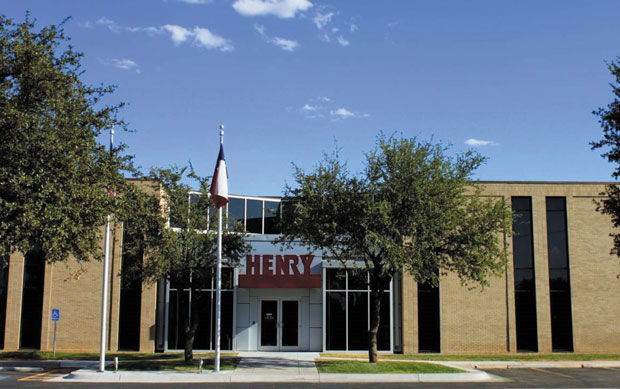
Henry Resources became strictly a non-operator after divesting all its operated assets in a 2023 deal. Today, it is building on long-standing relationships with operators of all sizes across the Permian to participate in joint ventures and non-operated AFE wellbore deals.
As a non-operator, the company prefers participation in joint ventures, Kintzing says, but these days it considers more non-op AFE wellbore deals that are becoming prevalent.
In exchange for proportional revenue from the operator, Henry considers contributing to a well or pad drilling and completion budget in an arrangement that includes a shorter commitment compared to a broader, ongoing non-op working interest in a lease.
Non-op AFE wellbores involve potentially partnering with operators testing step-outs instead of developing core acreage, explains Kintzing. Also, he says larger operators with big non-op positions throughout the basin can offer AFE opportunities on non-op positions so they can dedicate more of their capital to operated work.
“That provides a lot of opportunity for people like Henry to get into good projects,” he states. “The one drawback we have seen in the non-AFE market is that is has become extremely popular—and a lot more competitive. You have to be patient and wait for the right opportunity. Even at $60 oil and lower, you see non-op AFEs being bid up.”
The value of undeveloped acreage in general keeps climbing as players bid to establish or grow a Permian position. Values can eclipse $50,000 even at current market prices, he points out.
Despite challenges, Henry Resources will continue to focus on the Permian and business arrangements with respected operators that the company knows and trusts, Kintzing avers.
Even amid the intense competition and market uncertainty, the mood around Midland continues to be relatively positive, he adds. “I think people realize we have to play these cycles, and sometimes the best time to make investments is during a downturn,” Kintzing concludes. “It is not going to last forever. Things will turn around and oil prices will start coming up. There is a lot of optimism, and there is still a lot of running room in the Permian going forward.”
For other great articles about exploration, drilling, completions and production, subscribe to The American Oil & Gas Reporter and bookmark www.aogr.com.