






Longer Laterals, Stacked Pays Expanding Running Room For Rockies Operators
By Danny Boyd
Longer laterals, infrastructure ownership and stacked-pay development are giving Rocky Mountain operators more ways to protect returns and expand inventory as competition for high-quality oil assets intensifies. Across the basin, Rockies operators are quietly adding inventory and improving efficiencies—and hitting a few home runs in the process, especially in Wyoming’s Powder River Basin, where initial oil production rates in the play’s core in Campbell, Converse and Johnson counties can rival Permian Basin wells.
The Powder River offers a stacked pay column as thick as 5,000 feet, including the workhorse Niobrara along with the Shannon, Sussex, Frontier, Teapot, Parkman, Mowry and numerous other hydrocarbon-bearing intervals. High-rate Niobrara and sandstone wells are supporting production growth, while operators look ahead to deeper, gassier targets as an ongoing infrastructure buildout allows gathering and processing capacity to catch up to rising production volumes.
In the Williston Basin, meanwhile, operators are using three- and four-mile laterals to steadily improve well economics and push horizontal development beyond the traditional Middle Bakken and Three Forks core.
That backdrop is shaping the growth plans of Silver Hill Energy Partners, WRC Energy LLC, and Three Crown Petroleum LLC. Silver Hill is pairing owned midstream infrastructure with longer laterals to elevate northern Williston Basin economics, while in the Powder River, WRC is ramping its drilling program to grow daily production output and Three Crown is leveraging private-land permitting advantages and outside capital to expand a multizone inventory.
Elevating Economics
For Silver Hill Energy Partners, midstream ownership and longer laterals are helping elevate Tier 2 Williston Basin assets to Tier 1 economics, says President and Chief Operating Officer Drew Wellsfry.
Ownership of gas and water gathering systems also gives the company flexibility to control the pace of development as market conditions vary, he adds.
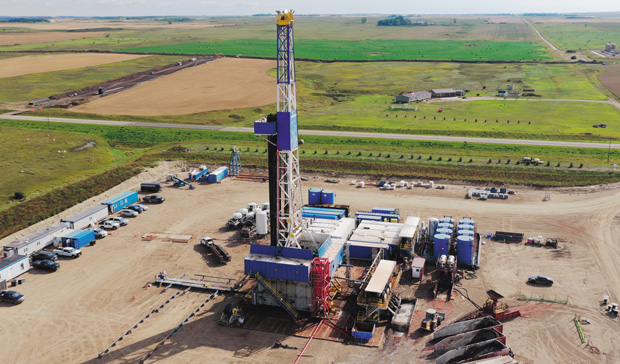
By applying technical expertise to integrated upstream and midstream assets, Silver Hill Energy Partners aims to enhance well economics on a 95,000-net-acre Williston Basin position that is north of the basin’s traditional core. The company says its integrated model gives it the flexibility to set the pace of development. This year, it plans to drill 30-40 wells in three North Dakota counties: Mountrail, Williams and Burke.
“We called it an infrastructure-led upstream asset,” Wellsfry explains. “That is how we describe it to our investors. It is an atypical way for an upstream guy to talk about an asset, but that is how we thought about the opportunity set, and it is one reason we really like the region.”
With the economic advantage of owning midstream assets and a unified technical and financial team in Dallas, Silver Hill continues to build on a 95,000-net-acre Williston position north of the basin’s traditional core. Thanks to reservoir continuity and quality, Wellsfry says this position supports repeatable well performance.
This year, one rig is expected to drill 30-40 wells in Mountrail, Williams and Burke counties, N.D., where much of Silver Hill’s position can accommodate three- and four-mile laterals.
Silver Hill functions as both its own private equity fund manager and direct asset operator. It entered the basin with its 2024 acquisition of Liberty Resources’ Williston assets, which at the time, included 84,000 net acres, non-operated interests and midstream infrastructure.
The company also holds 80,000 acres in the Haynesville Shale with net production of 360 million cubic feet of gas a day and 20,000 acres—and counting—in the South Texas Eagle Ford, where Silver Hill forecasts steadily increasing daily production.
Williston production has climbed to 16,000-20,000 barrels of oil equivalent a day on a northern position that is shallower, at about 9,500 feet true vertical depth. Pay can be somewhat thinner, with the core Middle Bakken measuring about 55 feet.
Silver Hill previously acquired, developed and divested Permian Basin positions. However, as competition for Permian assets intensified, Wellsfry says the Williston—along with the Haynesville and Eagle Ford—offered more attractive risk-adjusted options for deploying capital.
Longer laterals have an especially significant effect on lowering finding and development costs, he notes. A three-mile Williston well can be drilled in about 10 days, with completions using about 1,200 pounds of proppant and 30-32 barrels of fluid per lateral foot.
Wells in the area typically begin with higher water cuts of 2:1 to 3:1, but those decline over time, Wellsfry explains. IPs can range from 800 to 1,100 boe/d, and wells can free flow for 60-120 days. Production from the southernmost portion of the position sometimes flows naturally for as long as nine months.
The company has used electric submersible pumps but increasingly has shifted toward centralized gas lift as the go-to artificial lift method to reduce lease operating expenses, Wellsfry remarks. Additional flexibility comes from expanding existing pads to accommodate more wells around established locations, allowing new production to be tied readily into existing facilities.
With a sizeable inventory of drilling locations, Silver Hill continues to assess potential Williston acquisitions as competition for assets intensifies, he says.
Aggressive Growth
With two rigs running in the heart of the Powder River Basin, WRC Energy is drilling 35 wells this year as it continues aggressive production growth, says Chief Executive Officer Seth Urruty.
The Denver-based company plans to add a third rig early next year, increasing its annual well count to about 50 across its 175,000 net acre position. The footprint, concentrated primarily in southwestern Campbell and northwestern Converse counties, includes an inventory of more than 650 wells, which Urruty describes as a conservative estimate.
August production of 25,000 barrels of oil equivalent per day, about 65% oil, is expected to exceed 30,000 boe/d by year’s end and surpass 40,000 boe/d in the second half of next year, he predicts.
With surface pressures often exceeding 4,000 pounds and WRC seeking to minimize movement or embedment of sand that could close fractures, the company restricts flow from new wells. Even under those choked-back flow conditions, wells with two- and three-mile laterals are posting initial production rates of 1,300-2,000 bbl/d. The drilling units include a high percentage of federal minerals but significant private surface ownership.
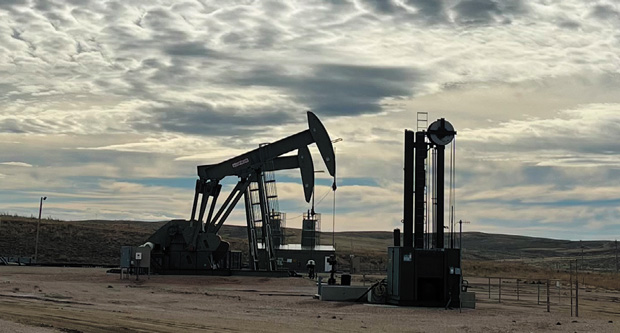
In August, WRC Energy reports it produced about 25,000 barrels of oil equivalent per day (65% oil) from a position in the Powder River Basin of Wyoming. Thanks in part to an aggressive drilling program, the company plans to push its production beyond 30,000 boe/d by year’s end and reach 40,000 boe/d in the second half of 2027.
“Average 12-month cumulative oil production per 1,000 feet of completed lateral from our Powder River wells falls into the top quartile of core Delaware Basin operators. Our high-quality resource in the core of the Powder River is driving the highest productivity wells ever drilled in the basin,” says Urruty, a native of Buffalo, Wy., in Johnson County, where his father was a production superintendent and Urruty worked summers in the oil patch.
Most wells are completed in the Niobrara at a depth of about 12,000 feet, with the remainder landed in the Shannon, Sussex and Frontier. As a midstream build-out nears completion, development of the deeper, gassier Mowry is expected to begin later in the year.
About 90% of WRC’s current horizontal wells have been drilled since the company was formed in December 2021 through the combination of Wold Energy Partners, Rebellion Energy and Massif Oil & Gas. As part of the combination, private equity backer NGP Energy Capital brought in management from Camino Natural Resources, where Urruty serves as CEO and was co-founder with Ward Polzin.
WRC has plenty of running room on its existing footprint, Urruty assesses. The company will continue evaluating potential expansion opportunities, but as interest in the Powder River has grown, so has competition for assets.
Because of long lead times for grid access, WRC is currently using field gas to power generators that electrify about 90% of its sites, with efforts to move more of its sites to line power in the coming years. To further improve returns, the company plans to extend lateral lengths to three miles and beyond where acreage permits. In August, WRC was completing its first three-mile lateral and drilling its second.
Larger Niobrara completion designs use 2,750 pounds of proppant and 60 barrels of fluid per lateral foot with 200-foot stage spacing. In sandstone targets, designs use 1,250 pounds of proppant and 30 barrels of fluid per lateral foot.
All in well costs, from pad construction to flowback, of about $1,050-1,150 per foot in the Niobrara and $900-1,000 per foot in the sands are declining as WRC adds key water infrastructure and pursues other efficiencies, Urruty concludes.
Attracting Investors
Three Crown Petroleum LLC is building inventory and attracting non-operated investors while developing acreage alongside larger, established Powder River operators. The company continues to target the Niobrara, Shannon, Mowry and other pays across 20,000 acres.
The Colorado-based company is able to drill primarily on private lands, where securing drilling permits is significantly less expensive and time-consuming than in its home state, says President Howard Cooper. Cooper and members of his technical team have drilling experience across U.S. basins as well as internationally.
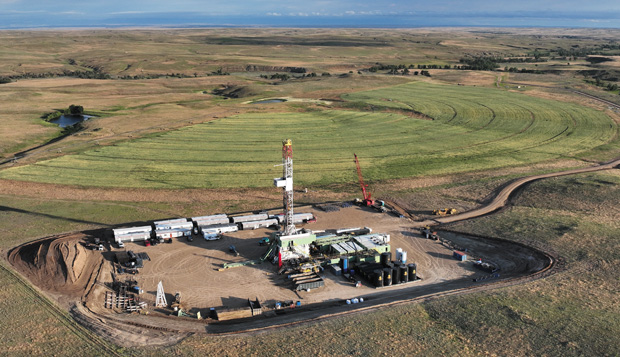
This year, Three Crown Petroleum LLC plans to drill five wells across a 20,000-acre position in the Powder River Basin that contains stacked pay, including targets in the Niobrara, Shannon, and Mowry formations. Noting that many larger operators work nearby acreage, the company says its Niobrara wells deliver strong results. For example, a two-mile, 51-stage well in Johnson County, Wy., that was brought online in October 2025 and initially produced more than 1,000 barrels of oil equivalent was still making 300 boe/d in August without artificial lift.
“If you are drilling on private land in Wyoming, it takes two weeks to get your permit to drill, the permit is $500, and you can move a rig in immediately after building a pad in about a week,” Cooper says. He contrasts that with Colorado, where permits can cost $150,000 or more and it can take more than a year to secure permission from the state to move a rig on location.
Three Crown is extending laterals to 2.5 miles on several of the five wells it is drilling this year as part of a $50 million program. These wells are located in areas where Camino, WRC, Anschutz Exploration, Continental Resources, Devon Energy, EOG and others are currently drilling and operating.
Although a typical two-square-mile drilling and spacing unit (DSU) can accommodate as many as four Niobrara wells from a pad, Three Crown generally drills three wells in the oil-saturated bench, Cooper says. Drilling takes about two weeks per well, and results have been strong.
A two-mile, 51-stage Niobrara well in Johnson County, Wy., that was brought online on Oct. 14, 2025, with an IP of more than 1,000 boe/d was still producing 300 boe/d in August without artificial lift.
New wells this year include two Niobrara offsets and a Shannon well in Johnson County and two Niobrara wells in neighboring Converse County.
Cooper attributes part of the performance to the company’s standardized practice of “soaking” wells by shutting them in for 45 days after stimulation. He says the practice significantly lowers water cuts and lease operating expenses. The Johnson County well has averaged an 8% water cut.
In preparation for additional drilling across its position, Three Crown is raising capital by bringing in non-operated investors. Prospects include a Johnson County asset where logs confirm hydrocarbons in the Niobrara and Shannon in an area with estimated ultimate recoveries of 625,000-700,000 barrels of oil from two-mile Niobrara and Shannon laterals.
The company’s Irvine 1NH Niobrara well in the same unit produced 75,000 barrels of oil during its first 3.5 months, Cooper says. Other leases also are prospective for the Shannon and Mowry.
While developing DSUs exclusively on private land is quicker and less expensive, drilling first on private acreage within mixed-ownership DSUs that also include state and federal minerals can accelerate the overall permitting and development process, Cooper offers.
Drilling the first well on private acreage holds the entire DSU by production, including publicly owned portions of the tract, he explains. Three Crown then works to secure the necessary federal and state permits for subsequent wells.
On undrilled DSUs, obtaining a federal permit can take about 90 days. On a unit where a well already has been drilled, the process can take only about 30 days, Cooper concludes.
For other great articles about exploration, drilling, completions and production, subscribe to The American Oil & Gas Reporter and bookmark www.aogr.com.