






Natural Gas Playmakers Pair Upstream Execution With Midstream Expansions
By Danny M. Boyd
Most of those who demonstrated their enthusiasm during the 2026 FIFA World Cup, are now moving on to other sporting event interests. How about the anticipation building for the September 9 opening game of the National Football League, which will pit the 2026 Super Bowl-winning Seattle Seahawks against the New England Patriots? Like ‘em or not, it’s getting close to kickoff time for America’s favorite professional sport, the real “football!”
Meanwhile, oil and natural gas producers never stop calling power plays of their own. And rest assured, there is plenty of excitement building on the natural gas side of the industry coin. Many of today’s natural gas powerhouses anticipated growing demand and have spent years putting themselves in the perfect position to capitalize on today’s market.
But as in any game, success depends not only on a strong strategy, but also on effective execution. Consider EQT, which controls a 1.2 million-acre Appalachian position, including approximately one million undeveloped core net acres across Pennsylvania, West Virginia and Ohio. With large blocks of contiguous acreage, the company has the flexibility to drill long laterals without running into lease boundaries.
In early summer, the Canonsburg, Pa.-based company set an onshore U.S. record with a 29,070-foot lateral on the Longwell 9H well in Wetzel County, W.Va. Despite a record total measured depth of 37,610 feet, the 5.5-mile horizontal exceeded company drilling milestones and stayed 100% within the targeted lower Marcellus, says EQT Chief Financial Officer Jeremy Knop.
“We didn’t go into it intending to set a record,” Knop says. “It was actually the byproduct of effectively calling an audible.”
Adaptability
Initially, he explains, the company had planned to access the pay by drilling two wells on separate pads that each had 15,000 foot laterals traveling toward each other. But when one lateral encountered a fault and well loss became a risk, the team instead discontinued the problematic lateral and doubled the distance of the other.
This year, EQT is running three-four rigs and three frac crews across a position with a 30-year drilling inventory that includes around 4,000 locations. The company also has multiple compression projects underway that will reduce the pressures in its gathering lines. According to Knop, such projects have increased production and arrested decline rates more than expected, making them one of the most capital-efficient investments in EQT’s portfolio.
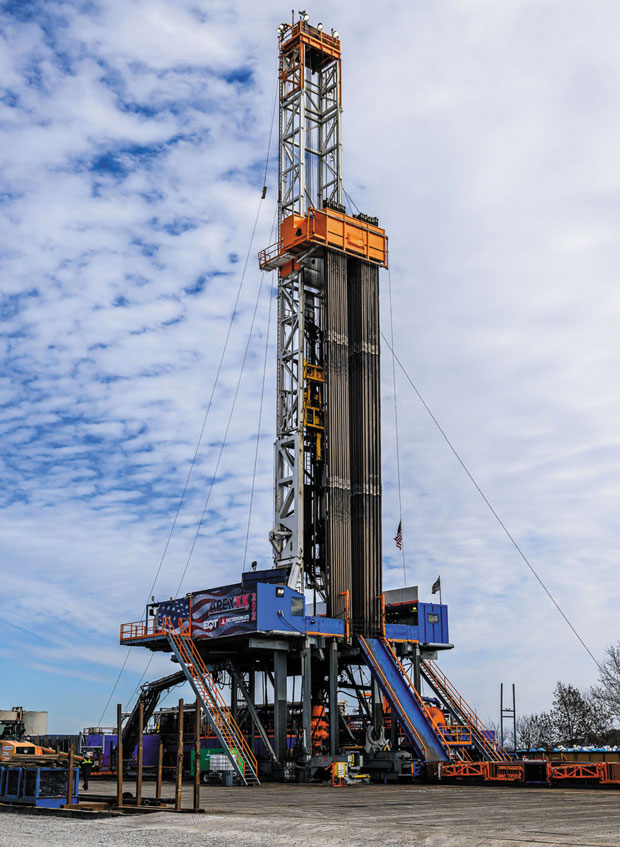
This year, EQT is running three-four rigs across its position, which includes more than 4,000 drilling opportunities in Pennsylvania, West Virginia and Ohio. The company also has multiple compression projects underway that will reduce gathering line pressures, a capital-efficient way to unlock significant production increases.
To ease access to remote locations and minimize the impact of its operations, the company is working with Pennsylvania to widen and pave roads. Service and production equipment is often powered by EQT’s gas through pipes installed before drilling begins.
Ongoing midstream additions extend 2,000 miles of gathering line capable of transporting more than 9 billion cubic feet of gas equivalent a day, as well as 225 million cubic feet a day of processing capacity and 40 Bcf of gas storage.
In July, EQT acquired the New England propane storage and distribution company Blackline Midstream LLC, which was already buying EQT propane to fill about 60% of its 46-million-gallon capacity.
Expansion continues on the FERC-regulated 2 Bcf/d Mountain Valley Pipeline. EQT has accelerated capital spending to complete by year-end MVP Southgate extending from the MVP terminus in Chatham, Va. into Rockingham County, N.C. to meet what CEO Toby Rice says are some of the fastest growing demand centers.
“The project will provide critical infrastructure needed to connect low-cost Appalachian natural gas supply with one of the fastest growing demand regions in the country,” Rice says. “Bringing additional supply into the Carolinas will help utilities meet growing energy needs, support system reliability, and help keep energy costs affordable for consumers.”
Knop predicts more demand on the horizon. He points to 45+ Appalachian demand and pipeline projects that are under construction or evaluation. Collectively, they could represent as much as 20 Bcf/d of demand.
To prepare for such growth, EQT upsized its Clarington Connector pipeline by 33%, to 400 MMcf/d. The line is expected to come online in the fourth quarter to move gas from Marcellus and Utica wells to the hub in Clarington, Oh., where it can connect to other anticipated takeaway to markets in the Midwest and Gulf Coast.
“I think we have an edge in making sure we supply those projects,” Rice remarks. “That’s the dynamic that is really exciting to see materialize, and EQT will be able to continue to play a role in creating win-win solutions for our customers while giving our shareholders access to some premiums in the form of midstream fees.”
EQT’s latest supply contracts include a five-year agreement beginning in 2028 to supply up to 0.5 million tons per annum to a Gulf Coast LNG terminal. On the coast, the company also continues to acquire LNG from export terminals and resell the volumes abroad, Knop says.
The company’s newest gas supply contracts include a 10-year agreement with Competitive Power Ventures for up to 325 MMcf/d to fuel a 2 GW combined-cycle power plant planned for Doddridge County, W.Va., similar to an earlier agreement for a separate facility.
The gas price is linked to wholesale power rates rather than a gas price index, allowing gas costs to match power revenue, Knop says.
Gas-Rich Footprint
In the gas-rich Western Haynesville, Comstock Resources continues to deploy the latest drilling and completion technologies to prove up a 545,190 net-acre position as it eyes full-scale development supported by its Pinnacle Gas Services midstream subsidiary.
A recent $600 million sale of a 27% stake in Pinnacle to Sixth Street Partners allowed Comstock to retire Pinnacle preferred securities and debt while retaining operational control as it times midstream and upstream buildouts in the expansive play, says Chairman and CEO M. Jay Allison.
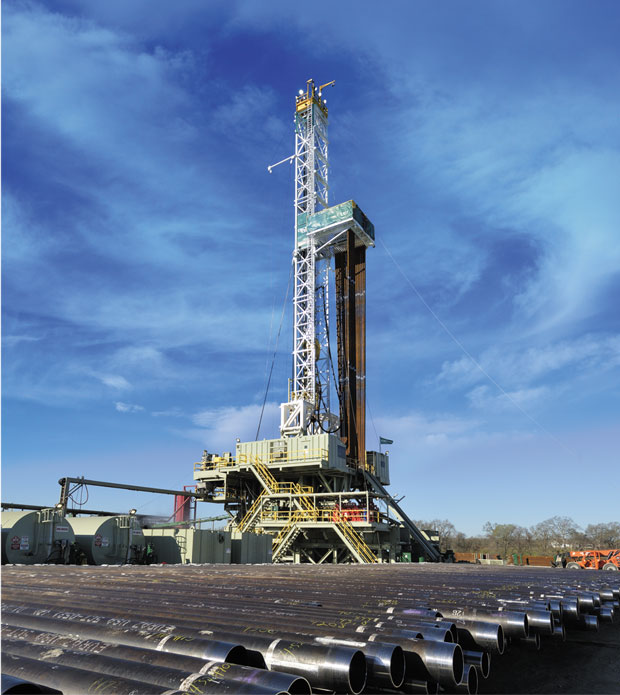
Comstock Resources describes its 545,190 net acre position in the Western Haynesville as one of the most valuable natural gas fields in the United States and potentially the world. To develop it efficiency, the company is refining drilling and completion techniques while leveraging its midstream subsidiary, Pinnacle Gas Services.
“We think the Western Haynesville position we’re sitting on is one of the most valuable natural gas fields in the United States and maybe the world,” he insists.
Pinnacle’s two processing plants and 246 miles of high-pressure gathering pipe will enable Comstock to supply by 2031 an anticipated 1 Bcf/d to the planned 5.2 GW Texas Power Generation Hub operated by NextEra Energy Resources. The facility, which is near Pinnacle’s Bethel plant in Anderson County between Dallas and Houston, is being funded under a $550 billion U.S. investment commitment from Japan under a recently announced trade deal.
Pipeline connections will allow Comstock to sell Western Haynesville gas to other power plants, industry, local distribution companies and LNG terminals. Potential customers continue to reach out about possible gas supply contracts, Allison says.
During an exploratory phase, the company plans to drill 60 more wells on its Western Haynesville position to hold it by production. Four rigs will spud 21 wells this year tapping the Haynesville and Bossier, which combined can have more than 1,000 feet of pay capable of accommodating multiple wells, says President Roland Burns. He estimates that Comstock’s Bossier inventory doubles even its large Haynesville runway.
Early results from the Western Haynesville and Bossier are strong from benches 17,000-to-19,000 feet down in 400-degree temperatures. The laterals average 10,874 feet and deliver IPs around 29 MMcf/d. In March, the Pollard TFG #1 flowed 31 MMcf/d on a 12,710-foot lateral.
A trove of technical data from cores and logs guides lateral landings reinforced by sturdier drill pipe, advancements in MWD and rotary steerable systems, special rigs and stimulation units, Burns says.
The company’s technical team has drilled its first 8 1/2-inch wellbore to lower temperatures and enhance tool performance, and it plans to drill several more with this big-hole method. The company has also opted to not use tubing on shallower wells, Allison points out. Additional efficiencies include the use of Pinnacle’s gas to power field operations and service work.
Across its entire Haynesville operated holdings, Comstock has 3,383 net drilling locations with about two-thirds in the west. On its 267,000 net-acre legacy position in northern Louisiana and East Texas, the company is running five rigs drilling average laterals of 10,153 feet. The Campbell 9-16-21 #1 flowed 37 MMcf/d on 14,855-foot lateral in late March.
Legacy inventory includes 113 U-lateral and J-lateral candidates on restricted lease positions. The company plans to drill 16 of those laterals this year, Allison says, explaining that they allow Comstock to gain the reservoir exposure typically associated with multiple short-lateral wells using a single two-mile lateral. This reduces the drilling cost per lateral foot from $1,240 to $800, a 35% savings.
Greater Integration
With 7.5 Bcfe/d in net production that is 92% gas, Expand Energy Corp. is a leading gas producer nationally, but its acquisition of Twin Eagle Holdings will soon also make it one of the nation’s largest gas marketers as well.
On July 27, Expand announced the $1.25 billion deal to buy Twin Eagle, an independent gas and power marketer with 1,000 customers across 18 states and five provinces that include utilities, power generators, local distribution companies and other commercial and industrial customers.
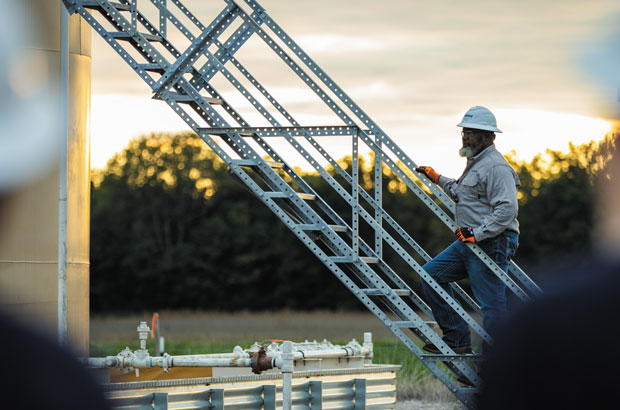
As part of an integrated business model that extends from natural gas production to transportation, storage and marketing, Expand Energy is running 11-12 rigs and six-seven frac crews across 2 million acres in Appalachia and the Haynesville Shale. In the process, it is leveraging subsurface data, experience, and modern completion designs to bring the performance of second-tier acreage up to the top tier.
“We will soon be the undisputed largest independent natural gas producer and leading gas marketer, scaling our business from a regional player to a coast-to-coast heavyweight across the United States and Canada, reaching customers that none of our domestic peers can touch,” says Michael Wichterich, Expand’s interim president and CEO.
Twin Eagles’ business is built around linking customers to physical supply through transportation and storage. Combined, Expand and Twin Eagle can provide 49 Bcf of storage to supplement transmission rights that give access to gas supplies from top U.S. basins, Wichterich says.
Following the acquisition, Expand says it will be the largest supplier to Gulf Coast LNG facilities. The deal also creates more opportunities to sell gas to Northeast data centers and power generators while providing Expand access to new customers in the Midwest, Southeast and Southwest.
To bolster its upstream production, Expand is adding acreage and running 11-12 rigs and six-seven frac crews across 2 million acres with more than 20 years of drilling inventory in Appalachia and the Haynesville Shale. In the second quarter, the company drilled 55 wells and turned 48 to sale.
Following Expand’s 75,000-net-acre addition last year in the Western Haynesville, its newest assets include 33,000 acres in Sabine and Natchitoches parishes purchased for $46 million, says Chief Operating Officer Josh Viets. The bolt-on provides more than 100 locations and extends the play to the deeper Natchitoches Fault Zone.
Some of the Haynesville assets may appear to be Tier 2, but with substantial subsurface data and experience, including third-generation completion designs, Viets says Expand can elevate their performance to Tier 1.
“You end up moving down another 2,000 feet in true vertical depth, but we are made to go operate and develop these deep, complex high-pressure reservoirs,” he says.
In Appalachia, the company is supplying more gas from 1.3 million acres for in-basin power generation at AI data centers and overall electrification growth.
For $15 million, it added 3,000 acres and 15 net locations in core position in Bradford County in northeastern Pennsylvania. In southwest Appalachia, technical teams continue to set drilling records and experiment with higher completion intensities.
Recent southwest Appalachia feats include drilling 2,724 feet through the Marcellus in one day, 33% farther than the previous record. In the Utica, the company’s daily footage record recently hit 2,163 feet. Since 2024, Expand reports it has achieved a 14% decrease in its drilling and completion costs, bringing them down to $730 a foot.
Partnership Opportunities
Amid the anticipated gas market resurgence, RedBud Exploration & Production Inc. is eyeing partnerships to develop gas assets on 35,000-40,000 central Texas acres prospective principally of the Austin Chaulk, says President Thomas Kaetzer.
Included in drilling inventory near Giddings, Tx., which is east of Austin, are deeper dry gas prospects in Washington County and oil inventory in adjacent Fayette County. The Austin Chalk wells have total vertical depths between 12,000 and 14,000 feet and laterals ranging from 10,000 and 12,000 feet, enabling them to produce 20 MMcf/d or more, Kaetzer says.
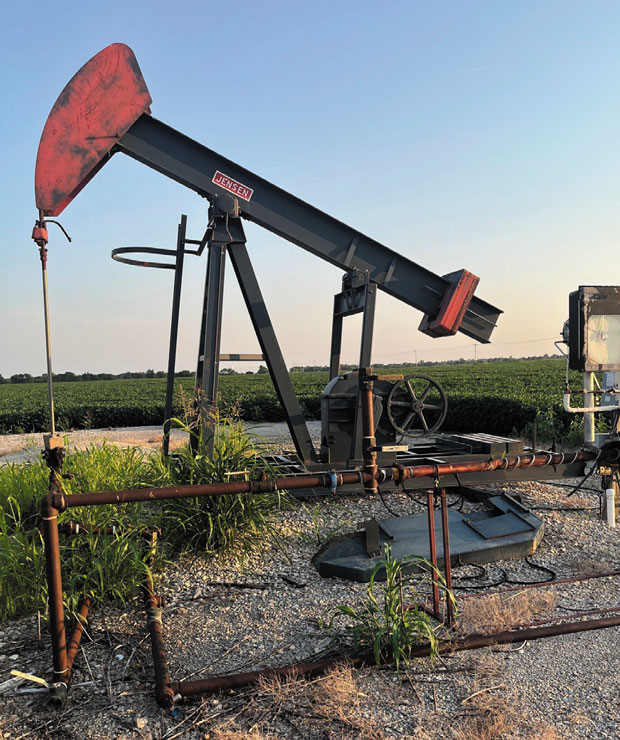
In addition to developing the Austin Chalk in Central Texas, RedBud Exploration & Production has about 2,000 vertical wells in the Cherokee Basin of Southeast Kansas that produce 90% gas. As gas prices improve, RedBud can boost this area’s output by performing workovers, perforating gas-focused zones up hole or completing wells in the upper Mississippian.
Already, the company has about 120 wells in the area that produce several million cubic feet of gas and several hundred barrels of oil. Neighboring operators include GeoSouthern Energy, Magnolia Oil & Gas and WildFire Energy, which in July was in the process of being acquired by Magnolia.
With drilling on the horizon, RedBud continues to boost output by adding compression to support plunger lift and gas lift.
In the Cherokee Basin of southeast Kansas, the Houston-based company is experimenting with possible uses for 18 MMcf/d from about 2,000 gas-heavy vertical wells. These wells produce 90% gas from coalbeds in Neosho, Labette, Montgomery, Wilson and portions of Sumner and Cowley counties.
Drilled decades ago by large independents, the Cherokee Basin wells frequently deliver 985 MMbtu gas, which is ideal for power generation, Kaetzer says.
The gas compressors in the area are powered by gas engines that run on field gas to reduce costs, Kaetzer notes. He says the company also saves money by owning and maintaining its compression.
To evaluate another use case for its gas, RedBud assembled its own Bitcoin pilot facility containing 40 to 50 computers powered by electricity from a generator fed by gas from the company’s gathering system. The small project demonstrates that a larger data center could be fueled with area production, Kaetzer says.
“We haven’t done a major project like that ourselves, but Kansas is a friendly state to work in, with good people, and that’s why we like it,” he comments. “We were able to use our gas to generate power just to prove that we could do it and we knew how to run it. We’re hoping that lends itself to a bigger project down the road.”
RedBud and partners have had success expanding stimulations of the vertical Cherokee oil wells and are planning additional oil drilling. Hindering gas drilling is a 40 to 60-cent differential off NYMEX gas prices, and with limited takeaway options, competition from Appalachia gas in the Midwest market. Higher lifting and compression costs also limit gas development, he says.
But if gas prices improve, the company has the option to workover existing wells, perforate gas zones up hole and complete wells in the upper Mississippian.
Eager Investors
As operators refine their drilling and completion techniques, gas minerals consolidator WhiteHawk Minerals Corp. is garnering investor interest on Wall Street, says CEO Daniel Herz.
Large investors supporting a June IPO on the New York Stock Exchange include Horizon Kinetics and T. Rowe Price. Investors’ interest isn’t based solely on optimism about gas demand, but also on an emerging opportunity to secure large natural gas mineral and royalty positions, Herz says.
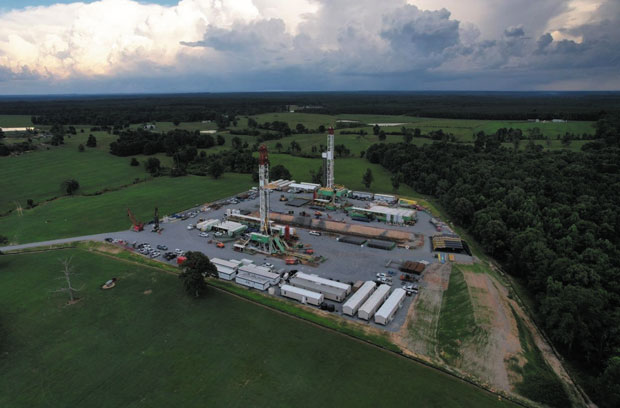
WhiteHawk Minerals Corp. holds mineral and royalty interests across 3.5 million gross acres containing more than 11,000 producing wells in the Marcellus, Haynesville and Oklahoma. In April, the company acquired interests covering an additional 150,000 Haynesville acres in Louisiana and East Texas. It anticipates more opportunities to pick up meaningful positions as mineral interest aggregators backed by maturing private equity funds look to exit.
Private equity funds that have amalgamated minerals positions from landowners are nearing the end of their fund lives and want to liquidate, he explains. Additional deals are likely as adjacent landowners opt to sell their minerals interests.
“There are billions of dollars in minerals for us to buy from private equity firms and landowners because we cover almost a million acres in the Marcellus, and we have asymmetrical data probably second only to EQT,” he says.
Already, WhiteHawk holds mineral and royalty interests across 3.5 million gross acres with over 11,000 producing wells in the Marcellus, Haynesville and Oklahoma. In April, the company acquired interests covering an additional 150,000 Haynesville acres in Louisiana and East Texas.
About 55% of WhiteHawk’s production revenue comes from Marcellus wells operated by EQT, Range Resources, Antero Resources and CNX Resources. About 30% comes from Haynesville wells managed by Expand, Comstock, Mitsubishi-Aethon and others.
WhiteHawk’s focus is supported by experience that spans the upstream, midstream and minerals sectors in Appalachia and elsewhere, including past IPOs. Herz served as president at early Marcellus unconventional player Atlas Energy Inc., which went public in 2004 and was acquired by Chevron before Chevron divested it to EQT. The Atlas Pipeline Partners midstream and pipeline arm was sold to Targa Resources in 2015 for $7.7 billion.
During his time as CEO of Falcon Minerals Corp., Herz and the management team took the company public through a merger with Osprey Energy Acquisitions Corp. in 2018 before Falcon and Desert Peak Minerals merged to become Sitio Royalties Corp., which has since been acquired by Diamondback Energy’s Viper Energy minerals unit.
The opportunities for M&A across the segment are huge, Herz says.
“There’s a real tailwind over the next decade behind our business, and so our job is to protect the downside and to drive value where we can,” he comments. “I think there is a lot to come for us.”
Aerial Methane Surveys Identify Problems, Boost Production
By developing more efficient ways to spot, size and fix gas leaks, service companies are helping operators send more gas to market and minimize regulatory compliance costs.
“With demand from LNG export terminals and AI data centers increasing, we have to stay out front of emissions so the sales meter can keep ringing. At the end of the day, that’s what Bridger Photonics is doing,” says Ben Little, the company’s CEO.
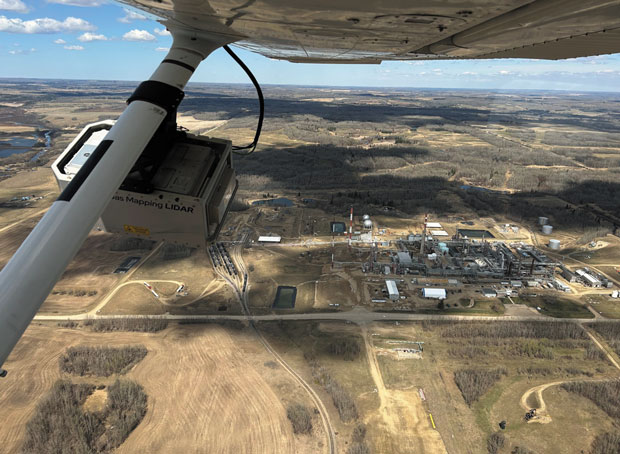
Planes equipped with laser-based sensors provide an affordable way to scan large areas for methane emissions, Bridger Photonics reports. The company adds that the surveys calculate the size of each emission to help operators prioritize the most impactful repairs and equipment upgrades.
To find and quantify emissions quickly, Bridger uses methane sensors lightweight enough to mount on planes, helicopters and drones. Airplanes and helicopters allow surveillance over a broad area, while drones come into play when operators need to look at equipment more closely or view areas that might be obscured from the sky, Little outlines. For example, drones can aim the sensors at every deck on an offshore rig to determine exactly where emissions sources are located on each.
The sensors work by shining invisible lasers through the areas of interest. Methane absorbs some of that light, and measuring how much tells Bridger where a leak is and how big it is, down to about one kilogram an hour.
The surveys can deliver attractive returns, Little reports. In one case, Bridger surveyed a major oil company’s position and pinpointed sources the operator had not seen from the ground. Equipment upgrades and the sale of recovered gas generated $100 million in additional revenue.
In the Permian, a smaller operator recovered $1.2 million in gas in three months, then extended the program to every basin where it holds assets. Another operator returned $5.20 for every dollar spent within six months.
These are not isolated incidents, Little assures. He says the company is now driving results to the bottom line for 100 operators across U.S. basins and 12 countries, including nine of the 10 largest U.S. natural gas producers.
For other great articles about exploration, drilling, completions and production, subscribe to The American Oil & Gas Reporter and bookmark www.aogr.com.