






Permian Operators Find Attractive ROIs With Diverse Playbooks
By Danny Boyd
With the world waiting to see if there could be a break in the gridlocked Middle East, one American constant is providing relief for nations striving to keep the engines humming and the lights on: the Permian Basin. U.S. crude exports averaged an unprecedented 5 million barrels of oil a day for the first four weeks of May, with the Port of Corpus Christi and Port Houston busy loading foreign tankers diverted from the Middle East for the security of U.S. docks.
Global demand for U.S. crude to power international transportation and industry is higher than ever as domestic producers pump out 13.7 million bbl/d. The Permian contributes more than half of that, with an output around 7 million bbl/d, according to the U.S. Energy Information Administration.
Producers showed strong interest in the basin during a federal lease sale on May 20, quadrupling the previous record for lease sale revenue generation by submitting more than $4 billion in winning bids. They also set a record for the highest per-acre bid, pushing it to a whopping $357,129.
The industry’s eagerness for acreage in West Texas and Southeast New Mexico is a testament to operators’ confidence they can continue to achieve attractive returns there.
The companies writing the next chapter in the Permian Basin’s storied history range from public players such as SM Energy Company, which merged with Civitas Resources, to private equity-backed conventional entrepreneur New Height Energy. Discovery Operating and The Eastland Oil Company are among established family-backed businesses that remain mainstays in America’s premier basin.
Meanwhile, midstream firms such as Brazos Midstream and MPLX are hard at work building processing plants and pipelines to bring associated gas to market.
Permian Expansion
After closing its Civitas acquisition in January, SM Energy continues to focus on execution and expanding its drilling inventory as it exploits a Permian Basin position that now stands at 237,000 net acres. In total, the company has 696,000 acres across the Midland Basin and Delaware Basin in West Texas and New Mexico, the South Texas Eagle Ford, Colorado’s Denver-Julesburg Basin and Utah’s Uinta Basin.
“Maximizing the value of the company’s Permian acreage requires a broad toolbox and strong execution,” reflects Nikki Burnett, senior vice president of SM’s southwest business unit. “SM has several compelling opportunities to expand its drilling inventory organically by applying technical expertise. These include delineating the Wolfcamp D and Woodford, drilling U-laterals where appropriate, and optimizing landing zones.”
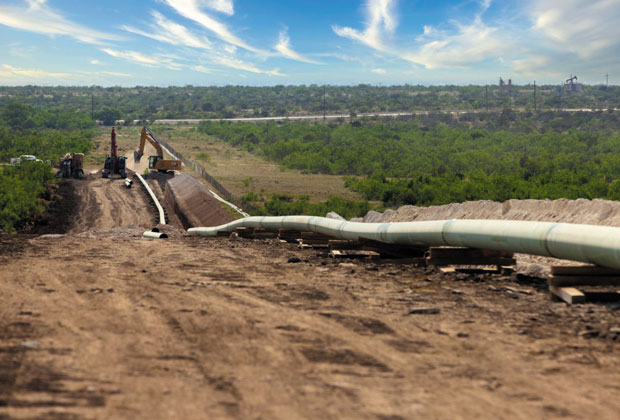
Following its acquisition of Civitas in January, SM Energy is focusing on perfecting execution and expanding its drilling inventory on its Permian Basin position, which now stands at 237,000 net acres. In the first quarter, SM drilled 30 net Permian wells and turned 25 net wells to sale among 64 net drilled companywide. The company sees several opportunities to grow its drilling inventory, including delineating the Wolfcamp D and Woodford, employing U-laterals where appropriate, and optimizing landing zones.
During the first quarter, SM drilled the longest and fastest Wolfcamp D wells in company history.
“What makes the Wolfcamp D special is significant vertical separation from the lower Wolfcamp B, allowing for this zone to be developed independently from the rest of the Wolfcamp formations,” she says. “The performance also reflects what the merger delivered: SM’s strong subsurface legacy expertise combined with the operational capabilities the Civitas team brought. Civitas has had more experience drilling Wolfcamp D wells in the Midland Basin, so we are leveraging best practices and optimizing drilling parameters. That combination is producing results faster than either team could have on its own.”
This year, Woodford development continues to advance with spacing and landing zone tests.
“Like the Wolfcamp D, this is inventory we are creating through technical work, not through acquisitions,” Burnett comments. “It layers additional locations onto our existing stacked-pay program. Early results are encouraging, and we expect more clarity as this year’s tests come online.”
Burnett says U-laterals “are another tool in the combined company’s toolbox that make it stronger than the sum of its parts.”
“Where the geometry works, U-laterals provide a capitally efficient way to develop the acreage. Close to two miles of productive lateral from one surface location instead of drilling two separate one-mile wells translates to improved value and better well returns,” she says.
The drivers of improved Permian drilling and completion costs are scale, longer laterals and integration. Running six rigs across SM’s basin position creates procurement and scheduling leverage that neither legacy company had alone and enables the application of best practices across a larger program, Burnett mentions.
“Longer laterals spread fixed costs over more productive footage,” she notes. “And best-practice transfer across four basins is moving faster than we expected: Our completion efficiency in the Permian improved 4% in the first quarter on a feet-per-day basis.”
In the first quarter alone, SM reports it drilled 30 net Permian wells and turned 25 net wells to sale among 64 net drilled companywide. For the second half of 2026, the company anticipates a production run rate around 430,000 barrels of oil equivalent per day across its asset base.
Good Partner
For New Height Energy LLC, assets acquired over the past two years have increased production more than fivefold to over 5,000 boe/d, says Scott Trackwell, managing partner and chief financial officer.
The latest acquisition happened in the spring, expanding the Houston company’s PDP conventional reach in the Midland Basin into three Texas counties: Martin, Howard and Glasscock.
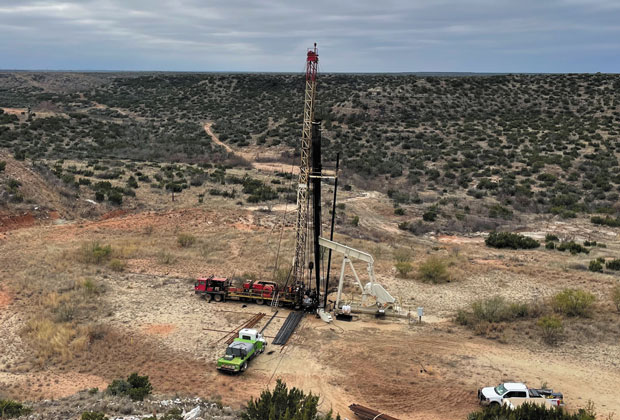
In the past two years, New Height Energy LLC has quintupled its production to 5,000 barrels of oil equivalent a day through acquisitions. The company attributes its success partly to its reputation as a great partner and neighbor, which allows it to acquire assets in the same units as ongoing unconventional development. Its targets include producing wells, waterfloods, recompletion opportunities and offline wells it can return to production.
As it grows by acquiring producing assets, waterfloods, recompletes, and return-to-production projects, New Height is leveraging what Trackwell describes as a key asset: its reputation as a reliable partner on the same units to unconventional players who want to divest noncore assets.
“They want to sell to someone who is a prudent operator that is playing in the same sandbox,” Trackwell observes. “We’re going to have the same surface-use rights. They will be drilling horizontally, and they need a partner who won’t mess things up out in the field when they are doing frac work and who will ensure their operations aren’t disrupted in any way.”
When companies know they have such a partner, Trackwell says the divestitures are a win-win. “When we buy producing wellbores within another operator’s horizontal field, we can help remove some operational headaches for them while we benefit from prudently maintaining production from vertical wells,” he explains.
Among New Height’s assets are some horizontal producers and undeveloped tracts that could be developed with drilling partners. Other options include possibly drilling vertical wellbores to help unconventional operators hold acreage.
While the company remains open to the right additions in other basins, Trackwell says capital-starved, unloved assets around the Permian are its top priority.
In West Texas, the company is enhancing assets through refracs, repairs and other interventions. Waterflood work has included tapping new purge zones and implementing different injection patterns.
Managing Partner and CEO Jon Benavides formed New Height in 2021. Trackwell joined in 2024. His previous positions include stints at Sable Permian, then an offshoot of Aubrey McClendon’s American Energy Permian Partners, as well as time as an executive director at Moelis & Company focusing on upstream capital placement, A&D and corporate M&A.
Armed with ample capital resources, New Height is positioned to add more with a syndicated reserve-based lending facility of $300 million led by Texas Capital. Other capital providers involved in recent transactions include United Beren Energy Capital, Trackwell notes. The company is open to either oil or gas assets and is commodity agnostic.
“We’ve gotten to the point where we have scale,” he says. “We’re still looking at growth and would like to grow by another 5,000 to 10,000 net boe/d over the next 12 to 18 months.”
Enduring Family Business
The Permian Basin remains home to family-owned businesses that have more than earned their keep working the basin and supporting its communities. Overseeing 350 wells, including about 100 horizontals, Discovery Operating focuses on cultivating long-term production for the benefit of private investors and family members employed by the longtime Midland E&P company, says President Jeff Sparks.
Sparks’ father Don launched Discovery in 1973 and still comes to the office. Other family members in the business include Sparks’ two brothers—state Senator Kevin Sparks and Todd Sparks—a son, son-in-law, niece, nephew and a cousin’s husband. Outside investors are also multigenerational, he adds.
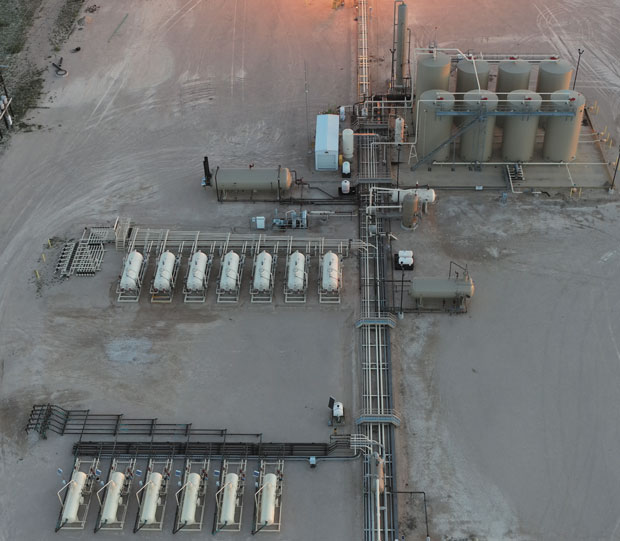
Family-owned Discovery Operating oversees 350 wells, including about 100 horizontals. The company drills, produces and eventually plugs its wells, so it focuses on optimizing their long-term value. Today, Discovery is investigating drilling prospects in the Texas counties of Midland and Upton, as well as looking forward to takeaway capacity expansions that will increase revenue from the value of its dry gas assets.
“Some who invested with Dad have passed, but their children or grandchildren have continued to invest in oil and gas wells with us,” Sparks says. “We drill, produce and eventually plug the wells, so our focus is on the long term. We are truly a family-oriented business and have employees who have been here 25 years or more and are a part of the Discovery Operating family, too.”
Discovery drilled its first horizontal well in the Sprayberry in 2014. This summer, it is planning to drill a horizontal pad in Upton County after Discovery navigated the complicated process of securing participation agreements from ExxonMobil and ConocoPhillips. The two majors co-owned rights on an 80-acre tract near the end of the planned lateral.
Discovery is eyeing other drilling prospects in Midland and Upton counties, where laterals extend 1.5 to 2.0 miles and aim to recover as much oil per foot as possible. The company also owns dry gas assets in Schleicher County to the southeast near San Angelo. Sparks says he looks forward to the Hugh Brinson Pipeline starting up later this year and other takeaway additions entering service, as they should result in higher long-term prices.
Over the years, Discovery has divested positions in Oklahoma and exited New Mexico to avoid the difficulty and expense of navigating the state’s complicated regulatory hurdles, says Sparks, who serves as chairman of the Permian Basin Petroleum Association. He credits PBPA for legislative and regulatory work beneficial to all members, including smaller players like Discovery that have limited staffs.
Adding assets in the hyper-competitive Permian is increasingly difficult as asset values rise, Sparks observes. Higher oil prices early in the year have helped boost revenue from existing wells, but Sparks puts too little stock in predictions for sustained higher prices to make long-term investments on that basis alone.
Finding Opportunities
Amid more intense competition for assets, The Eastland Oil Company and its partners scour the periphery as larger players compete for more expensive core properties, says Vice President Garrett Donnelly.
“We look for places that are a little less loved and that involve more exploration and higher risk,” he explains. “The bigger guys aren’t going to the places we are willing to go, and they’re not willing to take the risk we are to find something new. We’re willing to spend the time to figure out the Mississippian in Borden County, Tx., and find other places where access isn’t solved in the same way it is for the Wolfcamp or the Barnett.”
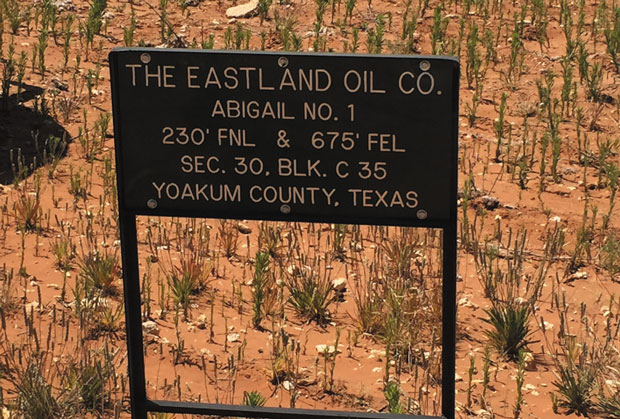
The Eastland Oil Company continues to find opportunities in the highly-competitive Permian Basin by targeting plays that involve more exploration, complexity and risk than many larger players find appealing. For example, it is investing in the Mississippian Chert, a difficult-to-drill play in its early stages. Other recent work has involved drilling wells in the San Andres and maintaining operating wells in New Mexico and Texas.
Donnelly represents the fifth generation in a Midland family-owned business where his father Robert is president. Launched as A.M. Donnelly Drilling Company in New York, Eastland has drilled wells for itself or served as a drilling contractor in Kansas, Oklahoma, New Mexico and Texas. In 1922, the venture changed its name to The Eastland Oil Company after Eastland County in north-central Texas, where discoveries included the then-prolific Martin Field.
The company’s stomping ground shifted to Monahans in Ward County, Tx., after Donnelly’s grandfather, George Donnelly Jr., returned from World War II. As an operator, its recent work includes drilling new wells targeting the San Andres on the Central Basin Platform and maintaining operated wells in Eddy County, N.M., and Dawson and Borden counties in Texas.
As a non-operator, the company partners with established producers across basins, with four horizontal wells drilled lately in Borden and Dawson targeting the challenging Mississippian Chert about 8,300 feet down.
“Everybody’s still experimenting with the play,” says Donnelly, who is a PBPA board member. “It’s been rough, and the chert is difficult to drill. It’s very hard and can chew up bits quickly.”
Although some operators have used two-mile horizontals in the formation, lateral lengths between one and 1.5 miles have worked for Eastland and its operating partners. The best results have come on the western side of the large Fluvanna Unit, which extends into Borden County from Scurry County to the east, Donnelly reports.
Midstream Momentum
Across the Permian, midstream players are working to meet growing demand for gathering and processing. In the Midland Basin, Brazos Midstream is expanding aggressively as long-term dedications grow to more than 500,000 acres, says CEO Brad Iles.
In addition to providing offloading services for multiple midstream peers, the Fort Worth-based company supports operators with wellhead gathering, compression, treating, processing, nitrogen treating, and natural gas liquid and residue gas marketing services. Iles says demand for these services is growing for several reasons.
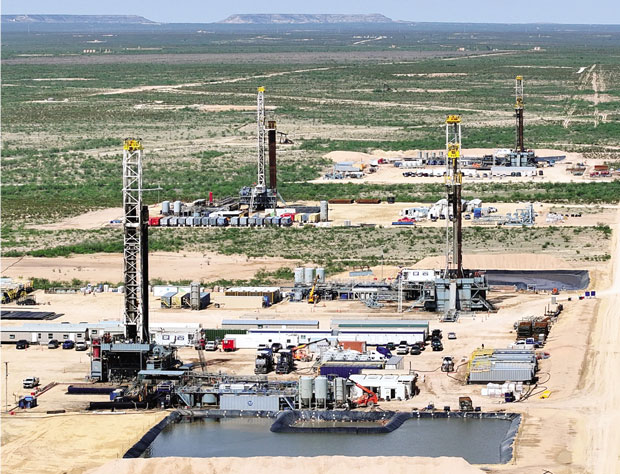
In the Midland Basin, Brazos Midstream is building more than 70 miles of large diameter, high-pressure gas gathering pipelines to address constraints in parts of Reagan, Glasscock, Midland and Upton counties. The company says its pipeline expansions and improvements will maximize flow assurance, reduce fuel and line loss and ultimately improve producer net backs.
“First, existing wells across the basin are experiencing higher gas-to-oil ratios, resulting in increased natural gas volumes over time,” he begins. “Second, producers are targeting deeper, gassier zones across the basin, driven by continued technological advancements and lower drilling costs.”
In recent years, some Midland Basin producers have experienced gathering and processing constraints, with curtailments at times forcing them to reduce oil production or temporarily flare associated gas, Iles points out. He says Brazos is designing and expanding its system and connecting to more takeaway to help alleviate those constraints.
Combined Permian operations for the basin’s largest private midstream player include 1,435 miles of gathering for gas, liquids and crude oil. By year-end, expansion will push total Permian processing capacity to 1.3 billion cubic feet of gas a day, including more than 800 MMcf/d in the eastern sub-basin.
In Martin County, operations got underway earlier this year at Sundance II, a 300 MMcf/d cryogenic gas processing plant. Startup followed completion in 2024 of the 200 MMcf/d Sundance I.
By year-end, the company expects to finish work in Glasscock County on Cassidy I, a 300 MMcf/d plant.
Cassidy I will be powered by the grid. Access to reliable power will continue to be a challenge in the Midland Basin through the later part of the decade, driven partly by increasing demand from data centers and hyperscalers, Iles says. But Brazos secured direct access to grid power before the increased activity and continues to plan ahead to ensure it has enough power to meet forecasted needs.
Also in the Midland Basin, the company is building more than 70 miles of large diameter, high-pressure gas gathering pipelines with 20-inch and 24-inch segments in order to boost capacity in constrained areas of Reagan, Glasscock, Midland and Upton counties.
All the improvements and additions will maximize flow assurance, reduce fuel and line loss and ultimately improve producer net backs, Iles says.
Brazos has access to pipelines that serve the Agua Dulce and Katy hubs through the Whistler and Matterhorn pipelines. The company continues to evaluate connections to various residue pipelines with similar and alternative delivery points so producers have optionality and redundancy for flow assurance, he says.
Delaware Growth
Large midstream player MPLX continues to build on a formidable Delaware Basin position as it expands processing and invests in takeaway to Gulf Coast hubs and terminals.
The Findlay, Oh.-based master limited partnership, launched by Marathon Petroleum in 2012, is adding a third Delaware acid gas injection well in the third quarter, says Chairman, President and CEO Maryann Mannen. In the fourth quarter, an expansion is expected to be finished at its Titan sour-gas treating complex in Lea County, bringing capacity beyond 400 MMcf/d.
Farther south in Loving County, Tx., the 200 MMcf/d Secretariat I gas processing plant is operational. The 300 MMcf/d Secretariat II is scheduled to join its forerunner in 2028, pushing MPLX’s total Delaware Basin processing capacity to 1.7 bcf/d.
MPLX has joint venture ownership stakes in pipelines with a collective takeaway capacity of 11 bcf/d.
“Demand for firm takeaway capacity is driving expansion on several long-haul natural gas pipelines. Volume commitments from top-tier shippers underscore the competitiveness of our footprint as well as the long-term durability of our natural gas system,” Mannen told investors in May.
Stakes include positions in Matterhorn, which began operations in 2024 carrying Permian gas to Katy, and in Whistler, which now flows from the basin to the Agua Dulce near Corpus Christi, Tx. The company also has interests in Blackcomb, now under construction adjacent to Whistler; in Eiger Express, which is being built from the Permian to Katy; in the bi-directional Traverse Pipeline, which will connect Agua Dulce to Katy; and in the Rio Bravo and Bay Runner lines, which will connect Agua Dulce to the Rio Grande LNG terminal at Brownsville, Tx.
An expansion is underway on the company’s 20-inch NGL BANGL Pipeline, boosting capacity to 300,000 bbl/d from the Permian to the Mont Belvieu gas liquids hub north of Houston.
MPLX also holds a 50% stake in a project with ONEOK Inc. for a new 400,000 bbl/d LPG export terminal in Texas City south of Houston, and a new 24-inch pipeline from ONEOK’s Mont Belvieu storage facility to the terminal, which is expected to be finished in early 2028.
“Our joint venture LPG export terminal is favorably located along the Gulf Coast, providing meaningful competitive and logistical advantages,” Mannen says.
For other great articles about exploration, drilling, completions and production, subscribe to The American Oil & Gas Reporter and bookmark www.aogr.com.