







AI Turns Emissions Data Into ROI-Generating Insights
By Andrew Linnabary
HOUSTON—Breakthroughs in emissions technology are increasingly being shaped by artificial intelligence and the same operating imperative that has always driven the sector: better operating performance. Regulations and methane-reduction targets still matter, but operators are placing the most value on AI-enabled solutions that keep equipment online, protect production, and improve revenue.
Across the sector, emissions management is becoming less about finding leaks after the fact and more about using data, automation, and predictive analytics to identify and prevent the operating conditions that create them.
Emissions management is not driven by regulations alone. Instead, it is primarily driven by operational metrics, which have become part of the industry’s DNA.
“When companies improve the operational performance of their work sites, they also reduce emissions. That’s what resonates with clients,” says Jeff Foster, the CEO of Cimarron. He emphasizes that producers, operators and midstream players of all sizes are looking for strong returns on investment and lower operating costs.
Analytics Gain Ground
Foster says the next phase of emissions management starts with turning operating data into field-level performance insight. That is getting easier as advances in emissions detection technology and AI allow companies to collect and analyze data more frequently.
Although continuous emissions monitoring systems have attracted significant attention in recent years, Foster says adoption has been slower than many providers expected. Part of that reflects changes in the regulatory environment, but it also reflects the prudent approach many operators take when adopting new technology.
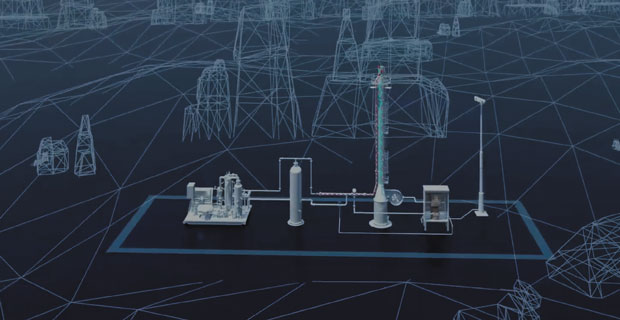
As AI enables companies to analyze massive volumes of operational data at scale, emissions alerts have transformed from a simple regulatory compliance tool to a powerful indicator of operational issues. In many cases, pinpointing and addressing the emission event’s root cause simultaneously improves throughput and reliability.
“Larger operators tend to be more assertive in using continuous monitoring technology,” he says. “But many others still take the view, ‘I’ll use it when I need it.’”
Rayme Dean, Cimarron’s director of aftermarket sales, comments that industry consolidation has also slowed implementation. As operators work through mergers, leadership changes, and differing operating philosophies, many programs have lost momentum.
“There have been a lot of mergers,” Dean points out. “Sorting out responsibilities, leadership, and operating philosophy has played a major role in slowing some of these programs. It hasn’t stopped progress, but it has slowed momentum.”
Even so, Dean says operators that have adopted continuous monitoring, advanced analytics, and AI-assisted workflows are seeing benefits that go well beyond emissions reporting.
“One of the biggest benefits is keeping gas in the lines and product moving,” he says. “That has a direct revenue impact, which is compelling. But it also supports stewardship and helps operators position themselves more effectively.”
Predictive Insights
Dean says the industry’s focus is shifting from simply collecting operating data to using AI and analytics to understand what that data means in context.
“Operators have vast digital lakes full of data,” he says. “They have pressures, temperatures, and sensors everywhere. But they are also so busy that they often don’t have time to understand how all those inputs relate to one another.”
Those correlations, Dean says, are where much of the value lies. When operators see how those inputs affect throughput and reliability, they can improve performance while reducing emissions, risk, and regulatory exposure.
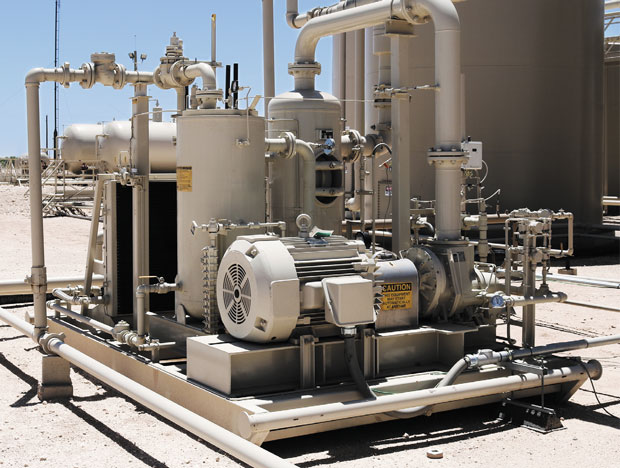
For decades, vapor recovery units have been one of the central pillars of strategies that pair emissions reduction with additional revenue. These units are becoming more effective as detailed operational data and machine learning help them adapt to changing conditions and maintain optimal performance.
“That’s where we’re seeing real progress,” he says. “It comes from studying the data operators already have, but doing it in a way that allows those data sets to overlap and inform each other.”
Artificial intelligence is taking on a larger role in that process. By analyzing large operating data sets continuously and rapidly, AI can help operators detect abnormal conditions earlier and respond before they turn into larger performance or emissions events.
“We have AI models that track the data, learn from it, and identify trend lines so we can be more predictive rather than reactive,” Dean says. “Operators want systems that can flag developing issues and recommend corrective action before performance begins to decline.”
Foster points to a recent project involving multiple mechanical vapor recovery units. By combining machine-learning tools with operating data, Cimarron identified performance gaps tied to emissions events and found that nearly all emissions in the pilot were linked to underperforming VRUs.
“More than 90% of the emissions were linked to vapor recovery systems not performing as they should in that production environment,” Foster says. “Using machine learning, Rayme and the team were able to improve equipment performance quickly and bring emissions down.”
As field results build confidence, Foster says operators are beginning to treat AI-enabled emissions intelligence less as a compliance tool and more as a business tool.
Dean says the broader goal is to automate as much of the response process as possible, reducing the burden on field personnel while improving speed, consistency, and decision quality.
“We’re trying to take work off operators,” he says. “We’ve deployed cameras and sensors that collect data, set thresholds and triggers, and let AI do the initial work. It can determine when something needs to be reported and automatically generate a service ticket without human intervention.”
By reducing unnecessary site visits, surfacing equipment issues earlier, and accelerating response, these systems can improve safety, lower operating costs, and cut emissions at the same time.
As the industry builds a stronger track record around these results, Foster says more operators are beginning to view AI-enabled emissions intelligence as a business tool that supports broader operational objectives.
“Two years ago, people were overreacting to regulation-driven behavior,” he says. “What we’re seeing now is operationally driven behavior that is sustainable. That’s why more operators are adopting it.”
For other great articles about exploration, drilling, completions and production, subscribe to The American Oil & Gas Reporter and bookmark www.aogr.com.