







Inherent Geologic Diversity Providing Plenty Of Targets In Eagle Ford Shale Play
By Danny Boyd
This coming October will mark 18 years since the Eagle Ford discovery well was announced in La Salle County, Tx., setting off a development frenzy that began in the gas-prone southern reaches of the play and quickly expanded northward into the liquids-rich area. While it is hard to describe anything in America’s unconventional sale playbook that hasn’t now become of age, the Eagle Ford is definitely one of the most mature plays in America.
Yet through it all, the Eagle Ford Shale and benches both above and below it collectively seem to be the gift that keeps on giving. With distinct oil, wet gas/condensate, and dry gas windows, the Eagle Ford formation continues to give operators diversity in their acreage portfolios with the optionality to target gas or liquids production (or both) in the same basin to better navigate commodity price cycles. Add in the overlying Austin Chalk and the underlying Pearsall Shale—which some are eyeing as the next big South Texas oil play—along with refracturing opportunities in vintage wells and the possibilities really start stacking up.
Gas production, including growing associated gas volumes from “oil” wells, give South Texas producers short-haul advantages to feed the booming Gulf Coast demand hub with “locally sourced” supplies. They are also well positioned to sell into the international gas market with ongoing expansions in liquified natural gas export capacity, including NextDecade Corp.’s Rio Grande terminal at Brownsville, Tx. The first processing units are scheduled to commence operations in 2027, and Rio Grande is already locking up agreements with both large regional producers and global consumers.
For Devon Energy Corp., more associated gas from Eagle Ford oil wells with higher gas-to-oil ratios means more LNG sales as the company looks to benefit from a 10-year LNG supply contract with Centrica, the parent company of British Gas, says Jason Hildebrand, vice president of the Mid-Continent and South Texas business unit.
New Era Beginning
The deal, which begins in 2028, gives Devon exposure to international prices for its production across the multiple basins in which it operates, including gas from its 86,000 acres in the Eagle Ford. The Oklahoma City-based company is redeveloping existing units with both new wells and recompletions in DeWitt and Karnes counties. This year, the company is working two rigs and a completion crew and plans to turn 68 Eagle Ford wells to the sales line.
Advanced seismic is helping assess fault blocks, better understand risks and identify sweet spots in the challenging Karnes Trough, Hildebrand says, but about 90% of current work is in DeWitt County.

Devon Energy is running two rigs and one completion crew and plans to turn 68 Eagle Ford wells to the sales line this year. The company’s introduction of simulfrac for the first time in the Eagle Ford is improving cost efficiencies by reducing the time existing wells have to be offline while new adjacent wells are being stimulated.
In early 2025, Devon dissolved a joint venture with BPX Energy, which Hildebrand says has resulted in reducing per-well drilling and completion costs by $2.7 million. Lower Eagle Ford units with tighter rock on the northeast portion of Devon’s DeWitt County acreage were suddenly economical, he adds.
Now, early units drilled on 660-foot well spacings are being redeveloped with laterals in a wine-rack configuration between the original spacings to tap rock slightly above and below the initial target.
“More often than not, the new wells are in the upper portion of the Lower Eagle Ford, but there are opportunities for us to sneak a few wells in below the original primary development,” Hildebrand divulges.
The company’s introduction of simulfracs for the first time in the Eagle Ford is improving cost efficiencies by reducing the time existing wells have to be offline while new adjacent wells are being stimulated, he says.
Refracs are also playing a role. Devon continues to tweak refrac designs and identify the best recompletion candidates following 21 refracs in 2024 and 10 last year. Top re-stimulated wells have yielded initial production up to 80% of IPs on legacy wells completed with longer frac stages and less proppant.
However, Devon is considering drilling a twin well this year next to a legacy well to see if drilling costs on the new well prove to be more economical than pumping a recompletion. “We have seen so much improvement on the drilling cost side that it is starting to challenge the theory of refracs,” Hildebrand explains.
Huff-n-Puff New Drills
For BlackBrush Oil & Gas, drilling and completion innovation is guiding plans for natural gas liquids-driven enhanced recovery on planned Eagle Ford wells as the company also prepares for Pearsall drilling. From 1,500 to 2,000 wells in each bench is possible across 175,000 acres held in Maverick and Zavala counties, says Chief Executive Officer Scott Martin.
Last year, the San Antonio company divested of acreage prospective of the Pearsall in Frio County to the east, where EOG Resources and Formentera Operations are notching IPs of 1,500 barrels of oil a day along with associated gas from the bench below the Eagle Ford.
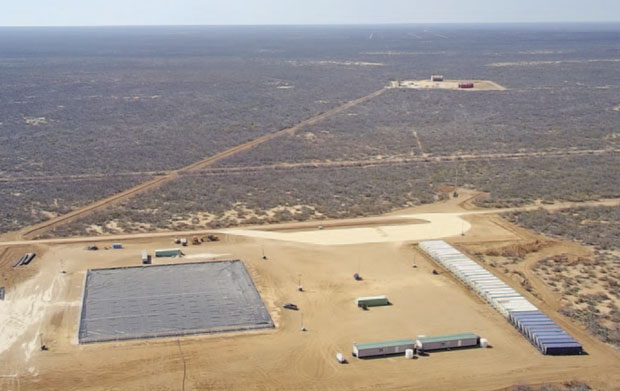
BlackBrush Oil & Gas expects to drill 21 wells over the next 18 months, focusing initially on the Eagle Ford but with plans to eventually target the Pearsall and other formations as well. Once completed, the new wells will deploy a ‘huff-n-puff’ enhanced recovery technique to inject Y-grade NGLs to boost oil recoveries. At flowback, oil and NGLs will be separated and the NGLs processed for reuse.
“We sold the acreage in Frio County, which was proven, because the stuff we have to the west is better, and we have a huge footprint with an advantageous lease,” Martin reasons.
In the west, the Pearsall is shallower at a depth of about 7,500 feet and has pay thickness averaging 500 feet, or 50-75 feet thicker than in Frio County. A deep vertical test of distinct Pearsall depositional zones that include the Bexar Shale, Cow Creek Limestone and Pine Island Shale reveal 3% higher porosity in the Cow Creek, the chief target, says BlackBrush Co-Founder and Chairman Philip Mezey.
Initial laterals extending to 10,000 feet on the over-pressurized play could yield IPs of 15 million cubic feet a day with 50-75 barrels of liquids produced per 1 million cubic feet, he adds.
With plans to support all drilling and completion work from cash flows by mid-2027, BlackBrush is initially focusing mostly on Eagle Ford development and expects to drill 21 wells over the next 18 months.
Upon completion, Martin explains that the wells will use an NGL-driven “huff-n-puff” enhanced recovery technique to boost oil recoveries. Unfractionated, Y-grade liquids will be injected into the formation to become miscible with the oil during shut in. At flowback, oil and NGLs are separated and the liquids are processed for reuse.
Six early Eagle Ford wells drilled between 2013 and 2014 were stimulated with water originally, which, while very economic, resulted in some formation damage, a common historic occurrence in the area, he relates. On a pilot project, NGL huff-n-puff boosted initial production of native oil from 17 to 1,100 bbl/d, he continues. Bolstering economics is the availability of liquids from an NGL pipeline that traverses the position on the Chittim Ranch.
Liquids handling and processing infrastructure is under development, with the goal of eventually conducting the project almost entirely with reprocessed liquids, Mezey adds, noting that NGLs were chosen over natural gas because of superior miscibility. Liquids also require a fraction of the pumping pressure.
Across BlackBrush’s position, stacked pay potential includes the Austin Chalk, Glen Rose, and Georgetown, and the company plans to develop acreage in the Edwards Trend gas play, a carbonate reef extending from LaSalle County eastward to DeWitt County.
Trading Acreage
Farther east on a 10,000+-acre position in the Southern Robertson County region northwest of Houston, BBL Operating Company continues to trade acreage to optimize development of the Eagle Ford and Austin Chalk while looking to recompletions and refracs to get more out of older wells, says President Kipp Whitman.
In southwestern Robertson County, the privately held company initially completed its first refractured Eagle Ford well, the Midnight Special No. 1, in 2020, with 15 stages on 400-foot spacing as it tested early completion approaches in an oil-rich portion of the play. The well came on making 840 bbl/d.
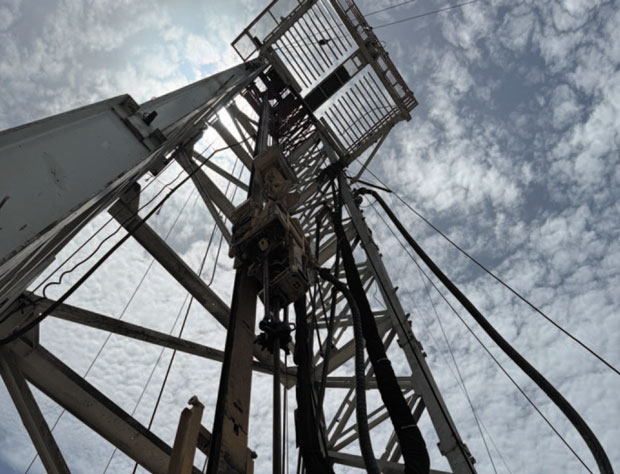
BBL Operating has completed its first Eagle Ford refrac. The refrac for the Midnight Special No. 1 in Robertson County took the well, which was initially completed with 15 stages and 400-foot spacing, up to 36 stages with 150-foot spacing. In the process, it applied fine-mesh sand. In addition to evaluating other refrac candidates, BBL plans to drill four new wells this year on its 10,000-acre position in Southern Robertson County.
“In late November, we went back in and put a 6,000-foot liner in the Midnight Special No.1, then went up to 36 stages, reducing spacing to 150 feet and applying an intense frac with fine-mesh sand,” Whitman explains.
A refrac is likely down the road on the Midnight Special No. 2 well, which was completed with 36 frac stages and had an IP of 640 bbl/d, he adds. Meantime, the company is gearing up to add to its Eagle Ford production with four new wells this year. Two of those, the Ring of Fire No. 1 and No. 2, will be drilled early in the year with two others on the drawing board.
After initial assessments of its newest Eagle Ford wells, BBL could drill six more on a position that adjoins holdings of larger producers. Among its neighbors are Magnolia Oil & Gas Corp. and WildFire Energy LLC.
“The Eagle Ford is becoming more and more active, and it seems that the wells are doing very well for everybody,” Whitman observes.
Shallower Austin Chalk wells with 6,500-foot laterals have yielded strong results for BBL as well, he adds. IPs have approached 200 bbl/d of oil, with one free flowing more than 100 barrels daily for over a year.
Tight Sand Drilling
Although the Eagle Ford and Austin Chalk continue to be the region’s workhorse benches, pays uphole are also attractive. Tweaking its completions approach, Strand Energy L.C. this year plans to make the most of remaining work tapping the San Miguel sand under its 6,000-acre leasehold on the Faith Ranch in portions of Dimmit, Maverick and Webb counties, according to President Kent Brock.
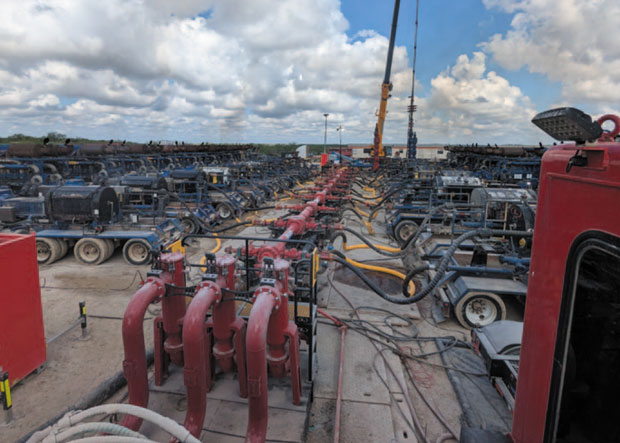
Strand Energy is developing the San Miguel sand on its 6,000-acre leasehold in portions of Dimmit, Maverick and Webb counties. A recent two-well pad included laterals extending beyond 10,000 feet at vertical depths of 3,700 feet. To improve completions, the company added some in resin-coated sand to reduce proppant flowback as well as a cationic surfactant to the frac fluid. The result was 30-day IPs ranging from 15,000 to 18,000 barrels.
A recent two-well pad included longer laterals, extending beyond 10,000 feet each, at vertical depths of 3,700 feet, Brock explains. To improve completions, the company pumped some resin-coated sand to reduce overall sand output during flowback. A cationic surfactant was also added to the slickwater frac fluid, which consisted of a blend of recycled produced water and freshwater from the Rio Grande. The result? Higher initial production, including 30-day IPs ranging from 15,000 to 18,000 barrels.
With GORs of about 2,500-to-1, the wells were producing 500-600 barrels of oil and 1.4 million cubic feet of gas a day each after being on line for 60 days, Brock details.
Frac stages typically carry 250,000-300,000 pounds of 30/50-mesh sand and the company included 20% resin-coated sand spread throughout each frac stage in three different places. Sand production virtually disappeared, a positive outcome since sand mixed with the high-paraffin oil can clog up flowlines and equipment, he says.
“The resin-coated sand is reducing the issues when you get sand producing to the surface,” Brock observes.
Eight more wells planned this year will bring the total count to 26 and should completely develop the current leasehold.
With the improved outlook for natural gas prices, the company is looking to vertical gas-weighted development elsewhere. In the Columbus Field about 70 miles west of Houston, Strand is drilling a vertical offset to its first Midway Sand well as it adds to an inventory that includes production from the Wilcox above it.
The newest Midway well will be drilled to 12,500 feet and is expected to be completed naturally, after perforating the well under-balanced. The Midway also has a good liquid yield, with the first well averaging 70 barrels of condensate per million cubic feet of gas, Brock says.
Accelerating Development
Tidal Petroleum is taking advantage of lower drilling and completion costs to accelerate development of pads in the Eagle Ford oil window while preparing to drill more gas prospects, President Lee Novikoff reports.
With forecasts calling for higher gas demand for data center power plants and LNG exports, Novikoff says he is convinced stronger demand and better prices are here to stay and will drive improved rates of return on gas acreage to the south of Tidal’s oil position in McMullen and Fayette counties.
“I think you will see more operators start pulling more gas into the mix,” he comments. “The last time I was evaluating gas plays, the price was under $2 per Mcf. Now we are in the $4-$5 range.”
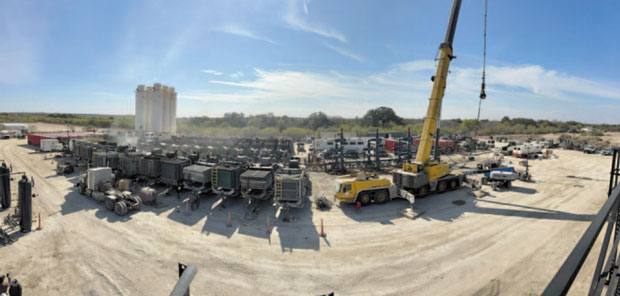
At the end of 2025, Tidal Petroleum was completing a four-well pad in McMullen County, stimulating a total of 185 stages in 7,900 to 10,500-foot laterals. A larger pad in Fayette County is set to spud early this year, with average lateral lengths of 8,900 feet completed with 3,000 pounds of 100-mesh sand per lateral foot at a targeted pump rate of 90 barrels/minute.
In the meantime, Tidal is picking up the pace on oil drilling to take advantage of lower D&C costs (down 25% in some cases) and lock in favorable rates of return for the life of wells. “These wells are going to see $55 oil, they are going to see $70 oil, and they are going to see $90 oil,” Novikoff remarks. “Over the next 10 to 15 years, they are going to see every price imaginable. You cannot just look at current pricing.”
Global developments that have contributed to lower prices will change, he says. Despite more production from Saudi Arabia, the kingdom likely cannot boost production much further. While global demand is expected to grow by 5%, according to some estimates, domestic production will likely remain relatively flat.
To prepare for a better market, the company was completing a four-well pad in McMullen County, stimulating 185 stages total at year’s end. A larger pad in Fayette County to the east is being drilled early this year. Altogether, the company has room for 16 more wells in Fayette County, he says, with smaller projects elsewhere being developed between pad projects.
The McMullen wells include a lateral of about 10,500 feet, with the shortest being 7,900 feet. Average laterals in Fayette will be around 8,900 feet, with completions typically including 3,000 pounds of 100-mesh sand per lateral foot pumped at a rate of 90 barrels/minute.
Aside from the McMullen pad, Novikoff says he hopes to drill and complete two multiwell pads before summer driving season, when he anticipates demand pushing prices higher.
In addition to drilling more hydrocarbons, the company continues to weigh options to acquire tracks and units from divesting companies. Tidal also participates in farm outs from others and sharing acreage with neighbors to develop wells with longer laterals in cost-sharing arrangements.
Giddings Field
Other regional plays are driving production growth for larger players. In the expansive Giddings Field east of Austin, Magnolia is boosting production as it maintains a successful strategy of acquiring core Austin Chalk and Eagle Ford positions at attractive entry-level costs, Chairman, Chief Executive Officer and President Christopher Stavros said in the company’s third quarter disclosures.
In 2025, production growth was 10%, including 11% in the third quarter, outpacing initial guidance of 5-7%, chiefly because of strong performance from Austin Chalk wells being drilled on a portion of 624,598 net acres at Giddings.
“Our Giddings well results have not only outperformed our expectations but have exceeded levels of the last couple of years,” Stavros stated in the company’s third quarter results release. Outperformance allowed the Houston-headquartered company to defer several completions into 2026, a move that resulted in 5% savings on spending in 2025, improved cash flow, and enhanced operations this year.
Magnolia plans to return to areas where the first wells drilled in late 2024 and early 2025 continue to yield exceptional results. Over time, there is more to pursue, he told investors in a fourth-quarter call.
Holdings also include 22,000 acres prospective mostly for the Eagle Ford in Karnes, Gonzales and DeWitt counties farther south. However, its bread-and-butter assets—yielding just under 80,000 barrels of oil equivalent per day, or 80% of company production—are around Giddings, where only 240,000 acres are under development as appraisal work continues outside the core.
Since 2019, the company has added 255,000 net acres in the Giddings Field and continues to assess opportunities to acquire bolt-on assets, including new leases, incremental working interests and minerals. Bolt-ons from private operators added 18,000 acres last summer.
While bolt-ons have expanded the footprint, organic growth through the drill bit has guided most production growth, Stavros goes on.
This year, the company will continue to deploy two rigs and one completion crew as it allocates consistent capital to appraisal work at Giddings and the Karnes area.
For other great articles about exploration, drilling, completions and production, subscribe to The American Oil & Gas Reporter and bookmark www.aogr.com.