






Insurance Market Softens In Many Areas But Still Expects Discipline
By Andrew Linnabary
Independent oil and gas companies are heading into their 2026 insurance renewals with a market that continues to resist simple labels. Pricing relief is emerging in several places and pressure is building in others. Capacity is available, but carriers are more selective. And while the national loss environment—particularly in auto and umbrella—remains challenging, brokers say upstream business is still far more insurable than many companies assume.
The key is a strong narrative. Underwriters are rewarding companies that can show how they manage risk, document safety, and control operations. They want to see evidence of how crews are trained, how contractors are managed, and how incidents are handled, as well as the processes companies adopt to ensure they are constantly improving.
At the same time, pressure points in the market, most notably commercial auto and excess liability, remain very real. National claims trends have reshaped claim outcomes. Juries in several states have handed down nuclear verdicts large enough to influence underwriting for years. And carriers are more closely watching how policyholders manage drivers, equipment, and fatigue in an environment where even one severe accident can reshape a program.
Still, the overall tone among brokers is far more optimistic than pessimistic. Property, equipment, and inland marine remain competitive. Workers’ compensation is stable. Pollution coverage for land-based operations is predictable. And even in casualty, companies that show discipline are outperforming the curve.
It’s a shifting environment—one where independents and service companies have more control over their outcomes than they may realize.
Market In Transition
Ted Dimitry, who handles commercial lines at Higginbotham, describes the current marketplace as a sector undergoing recalibration, not contraction. “The market is in a state of transition,” Dimitry says. “Some carriers have exited the space, others have pulled back in capacity, but I think overall it’s well supported. I don’t see it drying up completely.”
Dimitry says workers’ compensation and employer’s liability remain steady performers. General liability depends on location, contracts, and operator standards, but auto liability continues to dominate conversations. “We saw a meteoric rise in auto liability rates in the early part of the decade,” he says, noting that this trend is not unique to oil or gas. 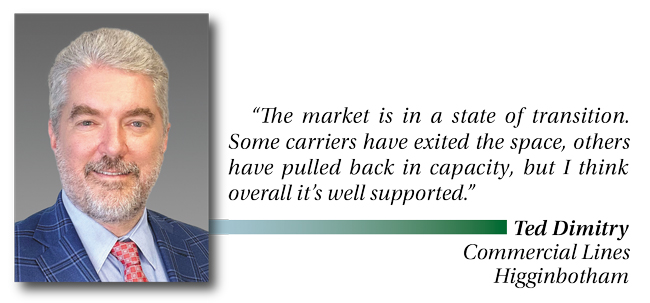
The underlying factors include distracted driving, rising medical costs as more people survive severe crashes, and a litigation environment capable of transforming a single accident into a multimillion-dollar loss, Dimitry says. Those factors have an impact nationally, following carriers across jurisdictions and informing how underwriters assess an insured’s fleet profile.
Inflation is magnifying many claims’ severity, Dimitry notes. “If you have a liability claim or a lawsuit that lasts for two, three, four or five years, inflation is going to compound that loss,” he explains. “If a piece of equipment cost $1 million five years ago, it might cost $1.3 million or more now.”
Still, Dimitry makes it clear: auto losses, while challenging, are manageable for companies that show intentionality. He stresses that underwriters can work with accidents, but not with a lack of response. Carriers want to see corrective action, not complacency. They want to understand what happened, what changed afterward to address similar situations, and the other steps leadership is taking to anticipate and prevent future accidents.
“It’s one thing to have a great safety program on pen and paper, but it’s another when an incident does occur and the insurance company pays the claim, and the company just carries on like business as usual. Companies need to be very conscious of and reactive to large incidents that happen. Otherwise, they wind up being seen as uninsurable over time.”
That same level of scrutiny now extends to master service agreements. Dimitry says MSAs are the operator’s “first line of defense” and warns that operators without enforceable MSAs expose themselves to significant liability from contractor injuries. Without strong contracts, he explains, operators can “get hit two, maybe three times by the same incident,” especially when a contractor’s employee collects workers’ comp, then sues everyone on site.
“Operators need to engage both a lawyer and an insurance broker to help them develop MSAs, because the indemnity and insurance provisions in those MSAs determine whether the operator absorbs or offloads risk,” he suggests.
Even in stressed lines, Dimitry says thoughtful companies remain insurable. “With the right approach to risk management, even if there’s some claims, the underwriters will—if there’s a story or narrative to be told—support them,” he says. That proactive approach, he says, is what keeps costs down and ensures companies remain viable in the eyes of the market.
“With the right approach and the right legal strategies, many companies can get affordable insurance year over year,” Dimitry assures. “They just need to be thoughtful about it.”
Softening Conditions
Darcy Meyer, risk advisor at ICI Insurance, sees a different slice of the upstream market—one dominated by smaller operators and service companies that often juggle slim staffing, complex schedules, and hands-on owner involvement. For these companies, multiple lines have softened meaningfully over the past two years.
“Because carriers have been profitable writing this industry and these types of businesses, they want to sell their overall portfolio to them,” Meyer says. Competition has returned, she notes, and “anything that creates competition between the carriers helps.”
Meyer traces much of the relief to 2023. Many of her clients now see flatter or lower premiums, and several carriers have indicated they expect “more of the same for 2026,” particularly in general liability and workers’ comp. But she cautions that auto and umbrella remain outliers.
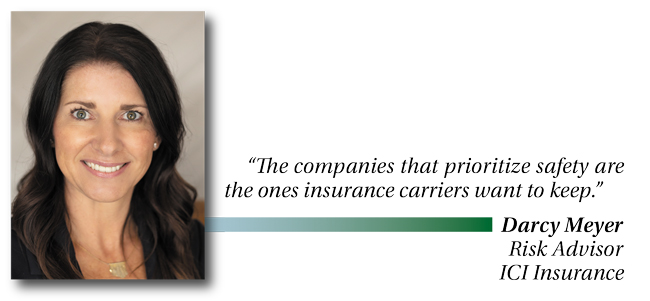
“Auto and umbrella or excess lines will continue to see the biggest rate increases,” she says. “Vehicle repair costs, medical costs and litigation have increased drastically causing auto lines to be unprofitable for insurance carriers. On the umbrella line we’re seeing larger jury awards also known as nuclear verdicts that result in multimillion-dollar awards to plaintiffs.”
When they are assessing who to cover and how much that coverage should cost, Meyer says underwriters consider several factors. “The biggest one is the operational risk,” she emphasizes. “Whether you’re upstream, midstream, or downstream makes a big difference. And while it’s not as big of a factor, location plays a role as well. Are you in Kansas, or are you in Colorado? Colorado is a little more litigious.”
Loss history, she adds, remains “huge” because upstream work is physically demanding, remote, and inherently risky. Insurers prefer clients who have a track record of managing those risks well.
With that in mind, Meyer says safety culture is a key differentiator. “The companies that prioritize safety are the ones insurance carriers want to keep,” she says. In fact, she indicates they will compete for companies that demonstrate consistent training, enforce safety practices, and show openness to recommendations.
She encourages owners to ask their agent a basic question: Where can we improve? “There are always ways to get better,” she says. “Start small and have your agent help you.”
Meyer also stresses the importance of MSAs. Some carriers “absolutely will not take anyone” without one, she says. Several independents remain stuck with their current carrier because their contracts are outdated. ICI provides sample MSAs—“not legal advice,” she says, but a helpful starting point—to help clients align with market expectations.
She also highlights cyber coverage as a newer area independents should no longer overlook. “As oil and gas companies evolve with automation, remote well monitoring, cloud-based systems and AI, they become vulnerable to cyberattacks,” she says.
The consequences of a cybersecurity incident can be severe, Meyer warns. She points out attacks have forced several Kansas employers to temporarily halt operations, with some suspensions lasting a month.
For Meyer, the formula for affordable insurance is simple: strong safety, updated contracts, early conversations with agents, and clear communication. “Having a good safety program goes a long way,” she says. “To be able to provide that and show it to your carrier will only strengthen that relationship.”
Earning Back Premiums
Pat Nickodemus—vice president of energy at AssuredPartners, an insurance broker that works with BITCO Insurance Companies—brings nearly 30 years of experience assessing how market trends impact the oil field service sector. He applies that experience to help the contractors who build, maintain, haul, install and repair equipment across every basin.
Nickodemus grew up in Casper, Wyoming, “in the middle of the Wyoming oil fields,” where his father worked in the industry. “That’s really how I got into the business,” he says. “In 1997, I started insuring oil and gas contractors exclusively, and that’s what I’ve done for almost 30 years now.”
He insures “basically anybody who works on location,” including construction crews, roustabouts, water haulers, pad builders, tank and pump installation companies, and trucking crews.
One of the distinctive tools he uses is association-based dividend programs, where contractors and operators can potentially earn back a portion of their premiums. For example, Nickodemus directly handles a dividend program with the North Dakota Petroleum Council.
“In a traditional guaranteed cost insurance program, you pay your premium and the insurance company pays your claims,” Nickodemus says. “In a dividend program, if you have a favorable loss ratio, you have the potential of getting a return of premium in the form of a dividend.”
He offers a simple example: “You pay $100,000 per year in total account premium, and you have $50,000 in claims—that’s a fifty percent loss ratio.” BITCO then determines if that loss ratio qualifies for a dividend. BITCO’s other oil and gas associations in Illinois, Oklahoma and Texas, he notes, have averaged about 15% over the last 30 years, though dividends aren’t guaranteed.
The program rewards discipline, he says. “If it’s a company that just doesn’t have a good loss history, they’re not going to benefit from it,” he acknowledges. But most contractors, he says, are capable of hitting the levels needed to see returns.
Nickodemus sees the same litigation trends affecting other areas. “It’s the lack of tort reform, liberal jurisdictions and overzealous plaintiff attorneys,” he says. “When an attorney sees an oil company logo on the side of a truck, they get very excited.”
“When it comes to claims in our industry, the ‘loss leader’ is auto,” Nickodemus says. Environmental claims occur but are typically easy to clean up and not as expensive to mitigate as severe auto accidents.
Rates vary sharply by geography. “Auto liability and auto physical damage rates in Texas are substantially more expensive than in Utah, Colorado or North Dakota,” he illustrates.
After decades in the sector, Nickodemus describes dividend programs, strong MSAs, and rigorous safety enforcement as the three most important tools contractors can use to manage insurance costs. Noting that insurance is frequently “a top three expense line item,” he says the combination of discipline and dividends helps contractors improve their bottom line and gives them room to reinvest.
‘A State Of Flux’
For small to mid-sized oil and gas companies, the current insurance market remains a shifting, uneven landscape, characterizes Mark Davidson, vice president and commercial lines leader at IMA Financial Group. While parts of the broader energy sector are showing hints of softening, he says those shifts are not being felt evenly—especially among smaller producers and service companies operating in shallower, lower-pressure basins.
“The insurance marketplace is in a state of flux,” Davidson says. “There are suggestions that the market is starting to see some softening, and I think that is generally true. But there’s a separation between softening for larger upstream and midstream clients and your traditional independent oil and gas producer. We have great relationships with long-standing markets that like these risks, but I’m not seeing a ton of new capacity enter the market that serves producers with smaller well schedules. There is capacity for those who buy Control of Well and oil lease property, and the market is getting aggressive in providing lower rates and enhanced terms.”
Davidson says much of the pressure these companies are feeling stems from persistent challenges in commercial auto and excess liability. Even when capacity is available, carriers are cautious and selective, he says. This is particularly true for auto liability, where trends continue to push losses into the “excess tower,” meaning coverage exceeding the primary policy. 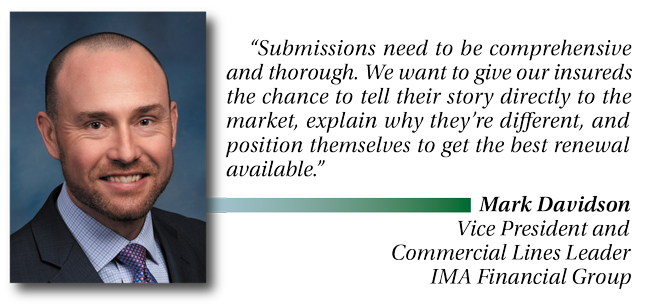
“We’re probably more than a decade into an auto market that hasn’t been able to price for losses,” Davidson says. “Large liability verdicts continue to be one of the biggest drivers of rates. Those verdicts have gotten much larger.”
As a result, excess markets remain tight, he notes. “Many package carriers are probably putting up less excess capacity than they were even five years ago,” he comments. “It’s critical to work with a broker that has multiple access points to excess carriers through direct relationships, wholesale partnerships and even the London market.”
Across other major lines, the picture varies, Davidson says. Workers’ compensation remains the industry’s bright spot. “Workers’ comp continues to be maybe the best-performing line in insurance, and I think carriers have been able to price for that effectively,” Davidson says. He credits better safety management and stronger return-to-work programs.
General liability is seeing minor increases, but no dramatic swings, Davidson continues. Property markets are softening, but that relief is greater for companies with large property schedules and may not be as impactful to smaller operators or contractors.
On the operational side, Davidson describes proactive safety investments as critical—less for dramatic rate cuts and more for market access. Installing vehicle telematics and dash cams, for example, can broaden the number of carriers willing to quote auto coverage, he says. “Technology and programs that reduce risk open up options for companies in the marketplace, and I think it mitigates some of the potential rate increases the market could be looking to take,” he says.
Looking ahead to the next couple of years, Davidson expects auto and excess casualty to continue leading pricing trends, with workers’ comp remaining competitive and property comparatively stable. He urges companies to seek brokers who can tell their unique story.
“It’s unfair when one operator or contractor is treated the same as another because they fall into the same class of business, when they may truly operate very differently from one another in terms of best practices and safety measures,” he says. He calls strong submissions, clear differentiation and demonstrated best practices the best tools for smaller companies to secure favorable terms.
“Submissions need to be comprehensive and thorough,” Davidson says. “We want to give our insureds the chance to tell their story directly to the market, explain why they’re different, and position themselves to get the best renewal available.”
More Capacity, Higher Expectations
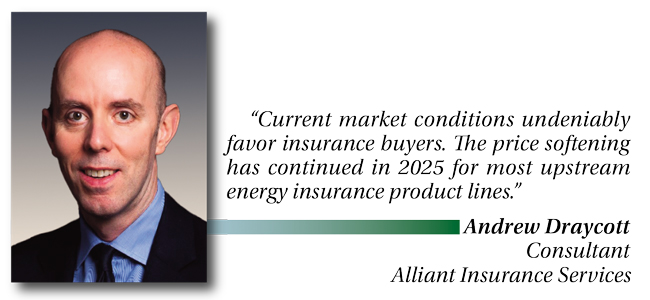
From a national and global perspective, California-based Alliant Insurance Services sees upstream insurance continuing to tilt in favor of well-run independents. Andrew Draycott, a consultant at Alliant, says the shift is clear. “Current market conditions undeniably favor insurance buyers. The price softening has continued in 2025 for most upstream energy insurance product lines. Underwriters have looked to balance various competing dynamics: Their own growth and profitability requirements with increased capital in the segment versus fewer individual upstream U.S. oil and gas buyers (post continuing M&A activity) and a benign loss environment.
“It is likely that this price softening environment will continue in 2026,” Draycott predicts. “Underwriters will continue to compete for market share. Anecdotal evidence suggests that many underwriting entities have curbed their growth requirements for 2026 compared with the previous two years.”
Underwriters’ desire for a competitive edge can be seen in several behind-the-scenes moves. Draycott notes that the job market for experienced energy underwriters “has been very fluid over the last few years,” resulting in significant movement of personnel and new pricing leaders emerging as teams relocate and try to reestablish footing.
He adds that the increased utilization of portfolio placements and the marketing of particular risks on a pooled basis has given insurers more ways to manage risk and changed how they evaluate profitability.
Some accounts still require more specialized attention. Draycott points to casualty coverage for businesses with “significant fleets of owned autos” and risks involving legacy or orphan wells, which demand extra forensic detail and discussion, he says.
But across the board, he says the biggest differentiator for independents is the quality of their presentation. “Competitive insurance protection—like most capital raising requests—requires the presentation of a story which is clear, precise and compelling. This is particularly true if an entity wants to outperform a ‘market index’ and achieve better short-term and long-term responses from underwriters compared with others in their sector.”
He emphasizes that this narrative matters just as much at claim time. “Energy claims are often caused by complicated events and are subject to bespoke coverage wordings, so the right sentiment, experience and resource is critical in landing a mutually acceptable result.”
And because not every insurer responds the same way to a given risk, Draycott encourages operators and service companies to spend time with their brokers.
“It is important to work closely with your broker to help present key risks accurately and appropriately and avoid sloppy canned generic presentations,” Draycott says. “Every business is unique and therefore the presentation should reflect that uniqueness. Since no story will resonate with all relevant markets, it is important that your broker helps to match the right story with the appropriate patient and sophisticated insurance capital providers.”
For other great articles about exploration, drilling, completions and production, subscribe to The American Oil & Gas Reporter and bookmark www.aogr.com.