





Texas, Other States Draw Data Center Developers’ Interest
As data center developers look for places with ready access to energy, many are turning to Texas, according to a survey by fuel cell manufacturer Bloom Energy. “By 2028, Texas is projected to exceed 40 GW of (data center) capacity—nearly 30% of total U.S. demand—representing a 142% increase in market share relative to today,” the survey projects. “Georgia is also gaining momentum, with market share projected to rise 75% as developers expand deeper into the Southeast.”
Meanwhile, many traditional data center hubs may lose market share. “While Virginia continues to grow in absolute terms, its relative share is expected to decline as grid constraints intensify in one of the industry’s most mature markets,” Bloom reports. The company adds that California, Iowa, Oregon, and Nebraska should see their relative market share halve thanks to power constraints, permitting requirements and long interconnection timelines.
“At the same time, the rest of the United States is emerging as a meaningful aggregate winner, with market share projected to increase 21% by 2028,” the survey says. “This increase reflects a shift toward a broader set of power-advantaged states, as developers pursue regions where large blocks of power can be secured more quickly. Though individual markets like Mississippi and Oklahoma remain smaller in absolute terms, their growth highlights how far developers are willing to extend siting flexibility to meet AI-driven compute demand—even when that requires trade-offs in network proximity and workload placement.”
To illustrate this trend, Bloom turns to Oklahoma. The state is expected to only capture about 2% market share in the next three years, but the company estimates that will require its deployed capacity to grow sixfold.
That growth is not enough to make Oklahoma one of the biggest winners in the “rest of the United States” category. According to Bloom, those states are Idaho, Wisconsin, South Carolina, Mississippi, North Dakota, Indiana, Maryland, Louisiana, South Dakota, Kansas and Kentucky.
Power Needs
Widespread data center development reflects rapidly growing demand. Estimates from McKinsey & Co. suggest total U.S. IT load capacity could nearly double by 2028, jumping from about 80 GW last year to about 150 GW. Bloom notes this is more than twice the level projected in 2024 forecasts.
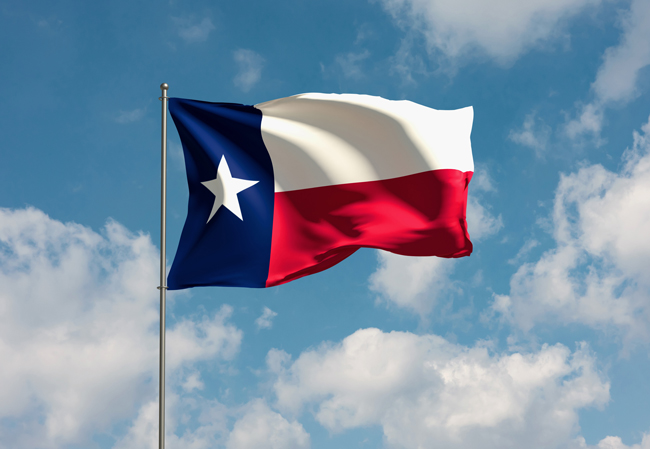
As data center developers look far and wide for places where they can secure power, Texas and many other states will benefit.
“The surge in demand is being fueled not only by more data centers but by significantly larger ones,” Bloom says. “Even as developers continue building smaller, low-latency edge sites near metropolitan centers, hyperscaler and colocation provider survey respondents indicate that the share of new campuses expected to exceed 1 GW rises from roughly one in five in 2030 to nearly one in three by 2035. To contextualize this scale, each 1 GW campus would consume as much as roughly 20% of New York City’s entire electricity load.”
Power is not the only constraint on data center development. According to Bloom, developers also expect cooling capacity, water access, permitting complexity, and network infrastructure to become significant bottlenecks.
To secure power more quickly than utilities can deliver it, developers are increasingly turning to on-site power generation. At many sites, this power is intended as a temporary solution that allows the data center to run before utility service becomes available. However, Bloom’s survey suggests such bridge models may become less common over time.
“Over the past six months, the portion of hyperscalers and colocation providers expecting to operate fully onsite-powered campuses by 2030 has increased by 22% to roughly one-third of data centers, signaling a renewed shift toward onsite solutions amid weakening confidence in grid delivery timelines,” Bloom says.
That marks a big increase from a survey Bloom conducted in April 2024, when only 1% of developers indicated some of their future campuses’ power would come entirely from on-site generation.
Power Options
In the latest survey, conducted in Nov. 2025, 73% of respondents reported they were actively evaluating on-site power solutions. Bloom, which manufactures fuel cells that run on natural gas, biogas or hydrogen, says 47% of those respondents were looking at fuel cells, with 38% considering reciprocating engines and 33% investigating mobile turbines.
“Fuel cells are emerging as a leading onsite technology under consideration, with developers recognizing four practical advantages: (1) Shorter lead times that reduce time-to-power risk, (2) Lower local emissions, which support faster permitting and greater community acceptance, (3) scalability and modularity, including the ability to ramp output, and (4) Alignment with long-term sustainability objectives such as achieving 24/7 carbon-free energy compliance,” Bloom writes.
The company says the November 2025 survey used a double-blind process and collected input from 152 respondents, including hyperscalers, colocation providers, utilities and independent power producers, and equipment providers. 84% of those respondents were U.S.-based.
In addition to providing more detail on the trends discussed above, the full survey outlines changes to data center architectures. To read it, visit When Power Defines Growth: How Power Availability is Reshaping the Data Center Industry.
For other great articles about exploration, drilling, completions and production, subscribe to The American Oil & Gas Reporter and bookmark www.aogr.com.