






Mid-Continent Region Draws Outside Investment With Varied Paths To Growth
By Danny Boyd and Charlie Cookson
The vast Mid-Continent region of America is well known for weather extremes, from horizon-spanning gorgeous sunsets to twisters that can drop from the heavens in a split second. While the Weather Channel’s Jim Cantore rarely visits Dodge City or cruises the outskirts of Enid, Ok., he keeps pace when Arctic northerlies are set to collide with southern winds from the Gulf.
Even so, the only aspect of the region’s weather people can count on is how quickly conditions change. A week out from weather reports, one may as well flip a coin to determine whether they should plan for clear and calm days or towering cumulus clouds and thrashing winds. Throw in freezing winters and blistering summers, and it’s no surprise that area producers seem particularly adaptable to the vagaries of the industry.
They’re also prone to perseverance. After all, it only took George Mitchell 17 years to complete his first economically viable Barnett slickwater frac in 1997.
During those same years, a scrappy young fellow known for buying distressed assets at bargain basement prices was perfecting directional and horizontal wells not far up I-35, tapping stranded reserves under municipalities such as Oklahoma City, Chickasha and Enid. Harold Hamm would change the world forever when Continental Resources pointed the compass north and brought in the Bakken well Robert Heuer No. 1-17R after combining and honing the two technologies that launched the shale revolution.
Fast forward to today’s extreme volatility in the wake of daunting global conflicts. U.S. drilling and well completion leading indicators reinforce that uncertainty is the prevailing headwind, despite a growing consensus that global crude oil prices will stay elevated for some time due to what most analysts perceive as a lengthening stalemate in the Strait of Hormuz.
Some of the Mid-Continent’s nimble independents seem to be responding to that situation. On April 16, the Red Top Rig Report, a publication from the Independent Oil & Gas Service Inc. that tracks active Kansas contractors, revealed that the active rig count, though down 20% year-to-year, had jumped 27% from the month prior. Perhaps that increase reflects a growing inclination to bring on quick-return, vertically exploited pay zones to answer the global demand call.
Looking at longer time horizons, operators of all types see ample opportunities to grow. Whether they are proven public and private players, private-equity-backed newcomers managed by industry veterans, or family-run firms with track records that span several generations, operators are evaluating new drilling and completion techniques, refracturing old wells, and improving enhanced oil recovery techniques. These opportunities exist throughout the region, from the Barnett Shale in North Texas to unconventional and conventional plays in Oklahoma, and on to deep, vertically-exploited payzones in western Kansas.
BKV Corp., Charter Oak Production, Presidio Petroleum, Switchgrass E&P, Mull Companies and Citation Oil & Gas are among the Mid-Continent playmakers who are relying on their expertise and new ideas to thrive in a region that remains essential to America’s ongoing energy supply growth.
Texas Offsets and Refracs
In North Texas, BKV Corp. has nearly 9 trillion cubic feet of gas equivalent of total resource and current production approaching 1 billion cubic feet of gas equivalent as the historic Barnett Shale drives expansion across business segments that include upstream, midstream, power generation and CCUS, says Eric Jacobsen, BKV’s upstream president.
With its latest acquisition of Bedrock Energy Partners in September, the Denver-based company has amassed around 530,000 Barnett acres and boosted its Barnett hydrocarbon proved reserves mix to 30% natural gas liquids. The Barnett position includes 15-20 years of inventory containing more than 500 new wells and 2,100 refrac opportunities. This year, the company is using a single rig to drill 30-35 wells there with laterals that average 10,000 feet—more than twice the length of many legacy wells in the play.
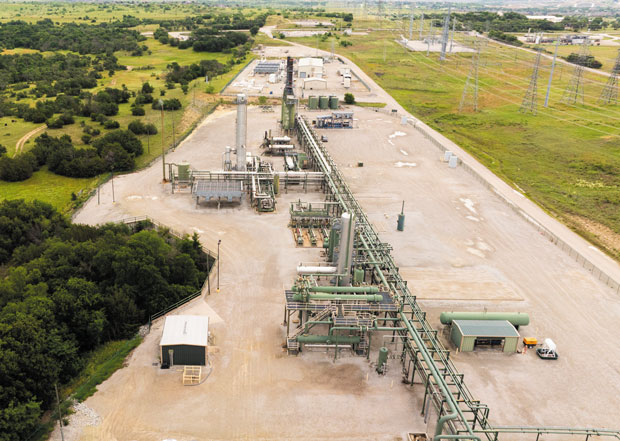
By acquiring Bedrock Energy Partners in September, BKV Corp. has amassed around 530,000 Barnett acres. It plans to drill 30-35 wells in the play this year, many of which will beat their type curve thanks in part to the Barnett’s natural fractures, which allow positive offset well frac hits that increase total production.
Results are getting attention. BKV last year had three of the top 25 new wells in Barnett history, with two posting IPs over 9 MMcf/d. Jacobsen says completions in the naturally-fractured Barnett often come with a bonus on top of the new well performance: offset wells frequently experience increased production as fractures propagate perpendicularly from nearby new wells stimulated with modern fracs.
“On average last year, we outperformed type curves by 22% for our new wells, and roughly half of that was from positive offset well (POW) hits,” Jacobsen reveals. “It’s sustained and it’s real.”
Armed with modern well and completion designs and extensive data and subsurface study, BKV this year begins to assess the less-explored Upper Barnett, chiefly in Denton and Wise counties. Also planned are 60 to 80 refracs of legacy wells, many of which were first stimulated when the Barnett became the industry’s first unconventional laboratory.
Original completion designs often left several hundred feet of unstimulated rock between perf clusters compared with modern perf cluster spacing of 30-50 feet, Jacobsen says. Additionally, the heel of many lower Barnett wells was oftentimes under-stimulated or not stimulated at all, providing additional upside on restimulations.
Enabling production growth is a BKV-owned midstream position with current throughput exceeding 200 million cubic feet of gas equivalent a day and the spare capacity to carry more gas for BKV and other Barnett producers, he says. The company’s Barnett gas already has daisy-chain pipeline access to its Temple Power complex in Central Texas, a joint venture between a BKV subsidiary and Banpu Power US that can produce 1.5 gigawatts of combined cycle gas turbine power to support data centers. The company’s takeaway pipeline network also provides pathways to LNG terminals on the Gulf Coast.
“Blend all those things together—low development costs, modern-day completions, longer lateral lengths, subsurface placement, midstream capacity, Gulf Coast positioning and decline rates that are very low relative to other basins during the first year and beyond—and our returns are extremely competitive,” Jacobsen says.
Oklahoma Growth
As mature U.S. basins become increasingly competitive, a growing number of companies searching for prospects and predictable returns are discovering the bright sides of operating in Oklahoma, says Joe Brevetti, manager and owner along with industry participants of Charter Oak Production in Oklahoma City.
“Companies are divesting positions in the Permian, Eagle Ford, the Denver-Julesburg and elsewhere, and they are searching for opportunities,” he says. “The difficulty in portions of Oklahoma involves complex geology. Not every section is alike, unlike parts of the country where operators can go out and drill for dozens of miles on a trend and get similar, repeatable results.”
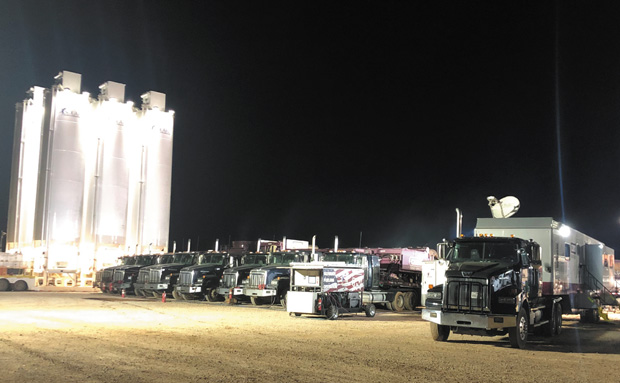
Charter Oak Production’s assets include a SCOOP position concentrated in McClain County, Ok., where wells targeting the Woodford deliver recoverables between 400,000 and 700,000 barrels of oil plus associated gas. This high total production comes partly from long laterals, including three-milers with frac stage counts as high as 72 and more than half a million pounds of sand pumped per stage.
This geological complexity is tempered by industry support from the public, policymakers and regulators, which, along with the Oklahoma Corporation Commission’s pooling process, makes securing leases and positions easier, says Brevetti, a board member at the Petroleum Alliance of Oklahoma and the Oklahoma Energy Resources Board.
A veteran, early player in the Anadarko and South Central Oklahoma Oil Province (SCOOP), Charter Oak is drilling 15 wells this year targeting oil pays with superior economics on a position of more than 100,000 acres. Production from 250 wells adds up to 4,000 bbl/d of oil and 9 million cubic feet of gas a day of gas. In April, one rig was drilling, with a second likely to become active soon.
Charter Oak’s Western Oklahoma wells are producing from Pennsylvania-aged sands that include the Tonkawa down to the Red Fork—a part of the Cherokee—in Custer and Roger Mills counties, where the company has added prospects from occasional farmouts and term assignments.
In the SCOOP, Charter Oak is tapping the Woodford about 8,000 to 10,000 feet down in McClain and other counties, where growth has included organic leasing and unit-by-unit bolt-ons. A planned four-mile well will tap the Woodford beneath the city of Purcell.
Charter Oak already has multiple three-mile Woodford wells with up to 72 stages stimulated and more than half a million pounds of sand per stage, says Brevetti, an engineer by trade. Completions include plug-and-perf fracs utilizing the latest chemistries and proppant placement techniques.
Woodford wells can achieve recoverables ranging from 400,000-700,000 barrels of oil plus associated gas. In western Oklahoma, wells typically have more attractive initial production rates but steeper declines, with IPs ranging from 600-1,400 bbl/d and total recoveries between 350,000 and 500,000 barrels, he says.
Boosting Output
Growing returns for Presidio Petroleum Co. stem from acquiring proven developed producing assets, reducing operating costs and boosting output from existing wells, says Co-CEO Will Ulrich.
The Fort Worth company holds 700,000 acres with over 2,000 producing wells in Oklahoma, Kansas and Texas. This year, 56 producing wells and other Arkoma Basin assets were acquired from companies controlled by Vortus Investments. Overall production is projected to be approximately 24,000 barrels of oil equivalent with roughly 80% gas.
“When players look at acquiring PDP assets, I think there’s a philosophy of wanting to leave the assets alone or perhaps improve them around the edges to cut operating expenses 5-10% and call that a win,” Ulrich says. “We approach it with a very different philosophy, which is radical optimization.”
Founded in 2017 by Ulrich and co-CEO Chris Hammack, Presidio secured backing from Morgan Stanley Energy Partners and bought its first assets with a goal of reducing expenses by up to 30%.
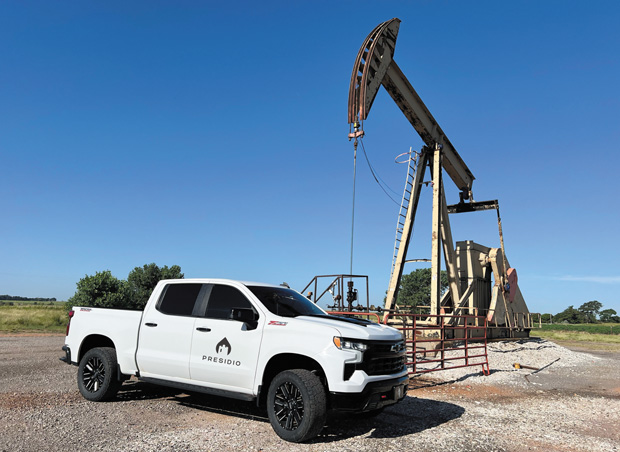
Presidio Petroleum Co. acquires assets and improves their performance through what it describes as radical optimization. On its first asset, the company halved costs while increasing production 15% partly by developing more efficient routes for pumpers, right-sizing artificial lift equipment, and developing an AI platform to monitor wells and suggest changes.
Within six months, the company managed to cut costs by 50%. Following subsequent work, it also improved production by 15%. The savings and extra production came from streamlining operations, optimizing pumper routes, adjusting compression and artificial lift size, deploying in-house chemical expertise, and implementing an internally developed AI platform that monitors well conditions and recommends changes, Ulrich outlines.
Field asset managers and veteran pumpers retain key decision-making duties and report directly to engineering in Fort Worth.
The potential for growth in the PDP segment is huge, Ulrich insists, with $75 billion in possible deals across the Lower 48 as more private equity investors look to divest to boost liquidity.
About $44 billion of that value includes the types of PDP deals that Presidio has done. The company has identified about a dozen actionable opportunities it is currently evaluating.
Its ability to act on those opportunities has been enhanced by a March merger with EQV Ventures Acquisition Corp., a special purpose acquisition company, that resulted in Presidio being listed on the New York Stock Exchange under the ticker “FTW.” Presidio has acquired some of Morgan Stanley Energy Partners’ interest with about 75% in cash and the remainder in equity.
The company has a long history of successful acquisitions. In fact, Ulrich relates, it pioneered a new form of financing to acquire PDP assets, developing an oil and gas asset-backed security in conjunction with Guggenheim Investments. After gaining its initial position in 2018, Presidio bought Anadarko assets from Apache that included more than 1,000 wells. In 2020, an acquisition from Templar Energy doubled Presidio’s size.
In some cases, the acquisitions come with undeveloped acreage that isn’t a good fit for Presido’s optimization-focused strategy. The company divested 100,000 acres prospective of the Cherokee to boost capital. It is also monetizing some undeveloped assets through farm-outs, including through a partnership with Mewbourne Oil in which Presidio contributes the acreage and retains some mineral interest.
Improving Outcomes
Across the Mid-Continent, companies are acquiring assets and driving continual advancements in drilling and completion technologies to improve outcomes.
That is the core strategy for Switchgrass E&P, which purchased its initial assets last August with backing from Post Oak Energy Capital. In the process, it gained a 25,000-acre SCOOP position in the Oklahoma counties of Garvin and McClain.
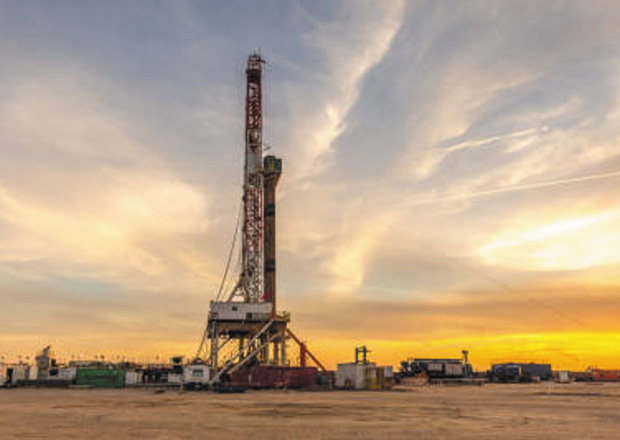
With backing from Post Oak Energy Capital, Switchgrass E&P has purchased a 25,000-acre SCOOP position in the Oklahoma counties of Garvin and McClain. Though highly consolidated and held by production, the acreage still has significant room for development, including opportunities in proven targets such as the Woodford, Sycamore, and Goddard.
“We probably have one of the last sizable, consolidated, undeveloped acreage positions that’s left in the area,” says CEO Tom Thurmond. “It’s in an attractive spot, and we have full 3D seismic coverage over the entire position. It’s virtually all held by production.”
With current production of about 5,000 boe/d in equal portions oil, liquids and gas, the Houston-based company plans to exploit proven SCOOP targets that include the Woodford and Sycamore, as well as Goddard sand within the Springer. Promising future options exist above and below the proven benches.
The SCOOP position benefits from underutilized gathering and processing capacity that can accommodate growth with existing infrastructure, Thurmond says.
Thus far, Switchgrass has participated in nine SCOOP wells with plans to begin drilling on its operated acreage this year. Thurmond says the position has fewer structural challenges than the SCOOP’s reputation for geological complexity would suggest. He adds that returns will be enhanced by improvements to mud systems, well planning, and strategies for setting intermediate casing and building the curves, all of which reduce costs.
Two-mile laterals have become routine in the area, with recent demonstrations pushing lengths out to three miles. Switchgrass will continue to consider nearby acquisitions given its operations team’s extensive Mid-Continent knowledge, says Thurmond, a Texas A&M engineering graduate who has worked with Post Oak as both an adviser and manager of other portfolio companies. His previous roles include a stint as chief operating officer at Brightburn Energy Partners.
“We’ll be judicious about where we go, but acquisitions are clearly a part of our strategy,” he explains. “Our sponsor wants profitable growth. They want us to be engaged in looking for and cultivating high quality opportunities.”
Kansas Hugoton
Anticipating more success vertically drilling deeper oil rights on 71,000 acres within western Kansas’ Hugoton Embayment, Mull Companies is assessing additional 3D seismic recently shot to help further map out prospects, says CEO Jennifer Mull.
In 2024, the Wichita, Ks.-based company added the position in Kearny County to a mix of assets elsewhere in Kansas and eastern Colorado. Drilling began on the embayment stake last summer, tapping the Morrow and Mississippian at depths ranging from 5,000-5,500 feet.
“We will continue drilling out there this year, and have about 10 more wells scheduled,” she says.
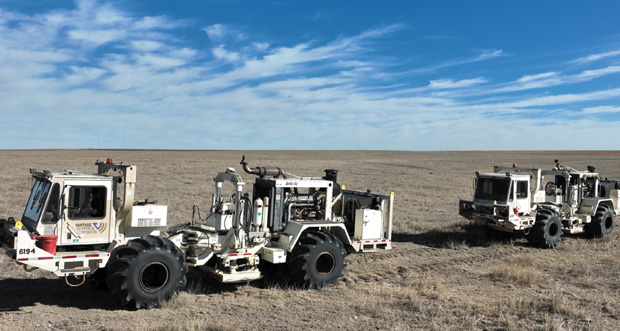
Mull Companies has acquired 3D seismic to enhance its map of prospects on a 71,000-acre position on western Kansas’ Hugoton Embayment. The company began drilling vertical wells there last year and plans to drill 10 more this year as part of a strategy to grow through larger projects.
The private company now operates about 350 wells across its holdings. On the embayment, too few wells have been drilled to date to establish a catalog of consistency, but prospects look good. Completion approaches vary depending on geologic characteristics, with some wells requiring fracturing while others do not, says Mull, whose grandfather, J.A. Mull Jr., launched the company in 1954.
The deep rights position is the centerpiece of the company’s current work and will boost prospects as part of a strategy to guide future growth by focusing on larger projects, she says.
“We look at growth through a three-pronged approach that includes an acquisition strategy, an exploration strategy and exploitation strategy to maximize production,” Mull comments.
Mull, who chairs the Kansas Independent Oil & Gas Association, says she is cautious about reacting too quickly to higher crude prices given uncertainty about the long-term price floor once the Iran conflict ends. “For now, we will stay the course on our drilling and development programs,” she advises.
In Colorado, regulatory challenges hobble development around existing production that includes Northwest Arapahoe Units near Cheyenne Wells, in the eastern-central part of Colorado adjacent to prolific Kansas activity.
“Colorado has always been a good asset for us, and it remains a good asset, although the state in general is much more difficult to exist in these days with all the regulatory requirements,” she says. It took Mull Companies three and a half years to secure its most recent drilling permit in the Centennial State.
In the friendlier regulatory environment that normally exists in Kansas, the company has been successful on a conventional program targeting the oily Ordovician at vertical depths around 3,000 feet in Lyon County, which is north of Emporia. Mull says the multi-generational family company has plans to evaluate additional field developments based on ongoing production results in the area.
Waterflood Upgrades
In addition to testing new drilling and completion techniques in proven unconventional plays and applying modern seismic to guide conventional drilling, Mid-Continent operators are refining their strategies for enhanced oil recovery.
These companies include Citation Oil & Gas Corp., which is combining polymer gels with microemulsions to dramatically slow natural production decline rates on a southern Oklahoma EOR project, details Jay Portwood, the recently retired and former vice president of reservoir.
Primary recovery and EOR contribute to Citation’s gross operated production of 29,000 bbl/d and 105 MMcf/d from more than 6,000 active wells across the Mid-Continent, Permian Basin, Illinois Basin and Rockies.
Holdings include the large Healdton Field Complex in Carter County, Ok., first discovered in 1913 and converted to a waterflood in the 1960s. Nine separate unitized floods produce a total of 1,600 bbl/d of oil and 310,000 bbl/d of water.
The pilot that ultimately validated the polymer/microemulsion combo began in 2008 with polymer gel alone. It involved two injectors treated with polymer gel to improve waterflood sweep efficiency and increase oil recovery at six offset producing wells in the Third Healdton Sand Unit, a distinct part of the complex.
The unit includes higher permeability sandstone layers from which most of the mobile oil has been swept by the injected water, leaving behind a large volume of stranded, immobile residual oil that cannot be produced solely with waterflooding. The residual oil saturation is about 30%. Some form of tertiary recovery will be required to mobilize this oil.
Meanwhile, the lower permeability sand layers retain large volumes of both mobile and immobile residual oil that will not be recovered in a reasonable amount of time unless more water can be forced to sweep through that rock.
In the pilot, about 7,400 barrels of polymer gel were injected into each of the two injectors before a two-week shut in for gelation time. Acid and xylene stimulations on the two injectors and three other non-polymer injectors were done to improve water injectivity into the lower permeability rock, which the company believed to be clogged with scale and oily sludge.
The pilot boosted initial production of 37 bbl/d of oil by 27%, and it took more than six years for production to fall back to 37 bbl/d. The annual decline rate dropped to 2.7%, compared with a 3.2% decline rate before the polymer application.
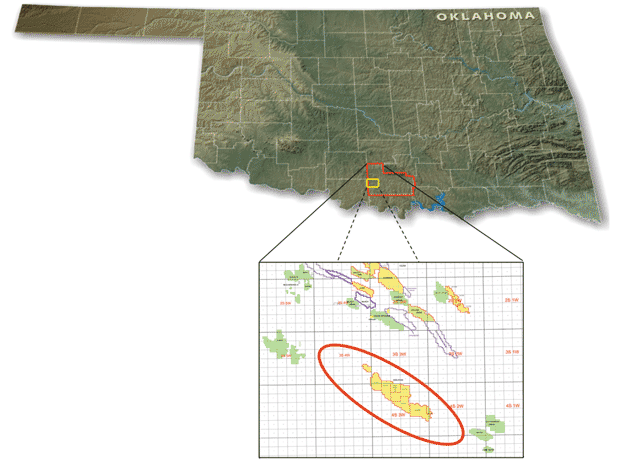
In the Third Healdton Sand Unit, part of a waterflood complex in Carter County, Ok., Citation Oil & Gas increase production by adding polymer gels to recover mobile oil and microemulsions to free immobile oil. Together, these technologies cut the decline rate in half, putting the unit’s daily production in mid-April about 22 barrels above what forecasts suggest it would have been without them.
Enter microemulsions, the nano-sized solvent and surfactant chemicals traditionally used to boost results from horizontal and vertical fracs. Portwood did extensive polymer work for Citation through his own company, EOGA, which he later sold to Flotek.
At Flotek, he learned more about the use of microemulsions in fracs and proved in a lab that they could also support enhanced recovery. In 2015, Citation agreed to try microemulsions in the Third Healdton.
About 7,100 gallons were applied at a rate of one gallon for each 1,000 gallons of injection water over eight months.
“All we were doing was augmenting our normal injection water with just a bit of this chemical that had the ability to mobilize residual oil and help us recover additional oil along with the mobile oil recovered by polymer,” explains Portwood, who joined Citation in 2016. “The microemulsion was a newer thing, but we recognized that we could send it in right behind the polymer and get a second bonus.”
The combined program was expanded to the entire unit in 2022-23 using a microemulsion provided by Guide Energy Solutions. Before the expansion, the oil recovery rate was 35 bbl/d compared with 42 bbl/d three years later. The peak incremental oil rate was 48% higher, or 16 bbl/d.
Considering all aspects of the project together, production of 37 bbl/d before 2008 compared with 42 bbl/d as of September 2025.
As of mid-April, the current rate of 42 bbl/d is 22 bbl/d higher than the forecast suggested by the pre-2008 historical decline trend, with the decline rate improving from 3.2% to 1.6% over the period, Portwood says. All projects cost just over $1.2 million and will incrementally increase recovery by an estimated 250,000 barrels of oil (4.6% of the original oil in place).
“The bottom line is that combining the polymer gel with the microemulsion arrested the previously forecasted depletion rate while boosting production,” Portwood concludes.
For other great articles about exploration, drilling, completions and production, subscribe to The American Oil & Gas Reporter and bookmark www.aogr.com.