







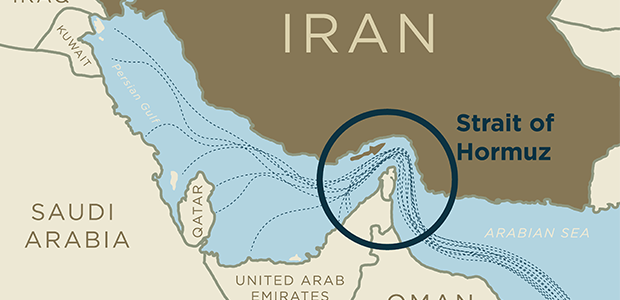
Energy Executives See Hormuz Closed to August or Beyond
DALLAS—When the Federal Reserve Bank of Dallas asked industry executives how long it will take for traffic through the Strait of Hormuz to return to normal levels, more than half put the date in August or beyond.
Specifically, 39% picked August, 26% marked November, and 14% selected “later than November 2026.” However, 20% predicted shipping would resume in May.
In light of the closure, 70% of respondents expect U.S. oil production to increase this year, though the magnitude varies. “The most selected response, chosen by 43% of respondents, was a modest increase of ‘more than 0 but not more than 0.25 million bbl/d,” the Fed details. “Seventeen percent selected ‘More than 0.25 but not more than 0.50 million bbl/d,’ and 10% selected higher amounts than that.”
Looking ahead to 2027, confidence that the war will spur activity grows. “More than three-quarters of executives expect U.S. oil production to increase in 2027 in response to the Iran war,” the Fed says. “The most selected response was ‘more than 0.25 but not more than 0.50 million bbl/d,’ selected by 32% of respondents, followed by ‘more than 0 but not more than 0.25 million bbl/d,” which was chosen by 26%. Roughly 18% expect U.S. production in 2027 to grow by an amount larger than 0.50 million bbl/d in response to the Iran war.”
One service company representative said the war has already prompted some operators to increase activity. “In response to the roughly 45 days of West Texas Intermediate over $75 per barrel, we are hearing increased talk of smaller operators adding rigs. We are also seeing larger independent operators move up drilling schedules,” the company reported. “We don’t have a clear idea of what Persian Gulf production levels will look like when the strait re-opens, but we don’t expect an immediate ramp-up to previous (to closure) levels on account of the infrastructure damage during the bombing campaign.”
“We are roughly estimating that when the strait reopens, we’ll be working with a $70-$80 per barrel floor for WTI in the near future,” the respondent said.
That projection mirrors some analysts’ comments. For example, consider a note that Pickering Energy Partners sent out on April 27.
“Even with a quick resolution to the Iran war (which is unlikely), oil markets look sustainably tighter into 2027/2028+, which is quite a change from the bearish supply/demand outlook earlier this year,” Dan Pickering wrote. “Our confidence grows every week the Strait of Hormuz is shut. We think WTI is likely to average at least $75/bbl for the next few years and could easily be $80+/bbl.”
Survey Pool
The survey took place between April 15 and April 20 and involved executives from Texas, southern New Mexico and northern Louisiana, many of whom have national or global operations. According to the Dallas Fed, 120 firms responded, with 78 focusing on exploration and production and the remaining 42 from oil field services.
Several respondents cautioned that it’s difficult to make confident predictions about the Iran war and highlighted the effect of uncertainty on planning.
“Extreme oil price volatility is leaving both small and large E&Ps unsure of whether to increase capital spending and activity,” one respondent suggested. “Even after nearly a month of oil above $90 per barrel, rig counts declined, signaling little confidence that prices will hold. Closing the supply gap from the Iran conflict will require greater certainty and higher 2027 future prices to incentivize additional rig and frac deployments.”
Long-Term Implications
In addition to querying executives about the closure’s duration and impact on activity, the Dallas Fed asked how much of the shut-in production in the Persian Gulf would eventually return to market. “Thirty-two percent of executives selected ‘100%,’ and another 32% selected ‘More than 90% but less than 100%,’” the Dallas Fed shares. “Twenty percent expect ‘More than 80% but not more than 90%.’ The remaining 15% of executives expect “80% or less.’”
While production should return, most respondents indicated shipping costs from the Persian Gulf would increase after the war. The vast majority expected the total cost per barrel to increase by at least $2, with “more than $2 but less than $4” as the most popular response at 36% and both “more than $4 but not more than $6” and “more than $6” drawing around 20%.
“Most executives believe future disruptions to the Strait of Hormuz are likely,” the Dallas Fed adds. “Forty-eight percent of respondents believe it is ‘very likely’ that geopolitical events will disrupt traffic again within the next five years, while 38% view it as ‘somewhat likely.’ Only 14% of executives consider future disruptions ‘unlikely.’”
One respondent suggested the potential for future disruptions would spur investments elsewhere. “Middle East oil contribution as a percentage will decrease and will be offset by U.S./Latin America/Africa, as the risk premium to operate in Middle East will increase,” the respondent said.
Other comments point to political factors that could shape the war’s long-term implications. “All answers depend on how the conflict ends. Does it end with Iran hard-liners in control, or will there be a move toward democracy?” one poses. “I’m betting the new regime will be a repeat of the old one, unless things change drastically in where we are headed at present.”
For more details on the survey, see Dallas Fed Energy Survey Q1 2026 update.
For other great articles about exploration, drilling, completions and production, subscribe to The American Oil & Gas Reporter and bookmark www.aogr.com.