





Operators Leverage Technology, Infrastructure Expansions To Grow Permian Production
By Danny Boyd
With Permian Basin oil production climbing toward 6.8 million barrels a day and associated gas output approaching 30 billion cubic feet a day, operators are leaning on longer laterals, improved completions, expanded takeaway and water infrastructure, and strategic acquisitions to keep production edging ever-higher across the Midland and Delaware sub-basins and Central Basin Platform.
Permian oil production, which already accounts for 48% of total U.S. output, is expected to grow by another 3% this year, following a 39% increase from 2021 to 2025. Meanwhile, associated natural gas output continues to trend upward as longer laterals contact more rock and gas-to-oil ratios increase over time.
Across the basin, service providers such as Goodnight Midstream continue to add infrastructure to accommodate expanding throughput demand while upstream players such as Devon Energy, Ovintiv, Ring Energy, EON Resources and Diversified Energy take advantage of advanced systems and growing downhole expertise.
For Devon, innovation includes significant investment in takeaway and midstream capacities under a plan to realize higher returns on out-of-basin gas sales. The company’s merger with Coterra Energy earlier in the year boosted combined companywide oil output above 503,000 bbl/d, with most pumped from 762,000 net acres in the Delaware Basin. The company’s drilling inventory there eclipses 5,700 wells after it added 400 wells in New Mexico through a federal lease sale.
Associated Gas
With more Permian oil and a 20-year oil-saturated drilling inventory comes more associated gas for the unconventional gas pioneer. Devon’s latest endeavor to realize higher gas sales prices includes a 25% stake in the Solitude Pipeline System joint venture with WhiteWater Midstream, MPLX, Diamondback Energy and Western Midstream Partners. The project reached a final investment decision in late summer.
“As we think about developing upstream, we look for constraints early that can allow us to scale our position and turn those constraints into opportunities. Solitude is one of those,” says Greg Horne, Devon’s vice president of marketing and midstream. “We are deliberately owning part of the infrastructure, furthering our commercial capabilities downstream across the value chain.”
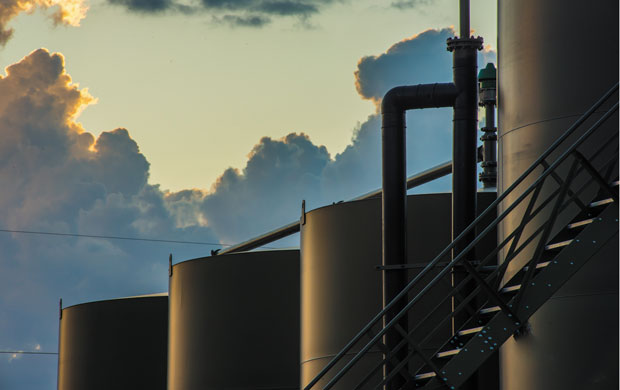
Devon Energy produces more than 500,000 barrels of oil a day, with most of that coming from the Permian Basin. In addition to optimizing its drilling and production operations there, the company is investing in processing plants, gas pipelines, and other infrastructure, a strategy that has helped it move associated gas to more attractive markets.
Plans call for two 48-inch pipes carrying up to 2.25 Bcf/d each from the Permian to the Katy Hub west of Houston. The first line is expected to commence operations in the second half of 2029, with the second starting up in 2030.
While Devon has yet to announce how much firm capacity it possesses under its interest, it adds to 250 MMcf/d retained from a now-divested ownership interest in Matterhorn Express and 550 MMcf/d secured on the Blackcomb Pipeline and Eiger Express pipelines, which begin operating over the next two years.
The takeaway interests allow Devon to take advantage of superior prices supplying power generation markets and liquified natural gas terminals as LNG export demand doubles by the end of the decade, Horne says. LNG-linked sales prices are already in place for two separate supply agreements totaling 250 MMcf/d. More are expected.
Over the next two to five years, 70-80% of Devon’s production will be tied to Gulf Coast pricing through firm transportation or basis hedges, he explains.
Even with Gulf Coast options growing, in-basin gas sales developments include a plan to supply 115 MMcf/d over seven years to Competitive Power Ventures’ 1,350-megawatt Basin Ranch Energy Center in Ward County, Tx., beginning in 2028. Prices will directly track wholesale power in grid operator ERCOT’s West Texas region.
In addition to water system investments that include a 13% stake in WaterBridge, Devon provides behind-the-meter power through 1,200 miles of electrical distribution infrastructure and four in-basin microgrids with about 75 megawatts of installed generating capacity in a supply-constrained region, Horne details.
To get more gas into outbound pipes, the company is adding processing, gathering and compression interests and assets. In the northern Delaware, it owns 100% of Cotton Draw Midstream, serving its eponymous development. A 50% stake with Howard Energy Partners in Catalyst Midstream Partners provides 600 MMcf/d of processing capacity at Devon’s Stateline development.
Combined with its Stateline and Triple Crown gas gathering and compression systems that came with Coterra, Horne says Devon now has 3.4 Bcf/d of operated compression capacity.
Boosting Output
Ovintiv’s gas handling and marketing teams have successfully routed most of the company’s Midland Basin gas to outside hubs to get more attractive pricing, says CEO Brendan McCracken.
With the company using its gas for about a third of its behind-the-meter power generation needs and anticipating more power relief from state approval of high-voltage transmission lines, it is boosting its Permian gas production guidance to as much as 305 MMcf/d and its oil and condensate production guidance to 125,000 bbl/d.
The production boosts coincide with additions to a now 200,000-net-acre Midland Basin position with up to 15 years of drilling inventory. Among 60 companywide transactions, Ovintiv recently added 21,000 Midland Basin acres with 120 drilling locations. In addition to new and existing inventory in traditional benches, Ovintiv has amassed Barnett Shale rights across 100,000 acres in the eastern sub-basin.
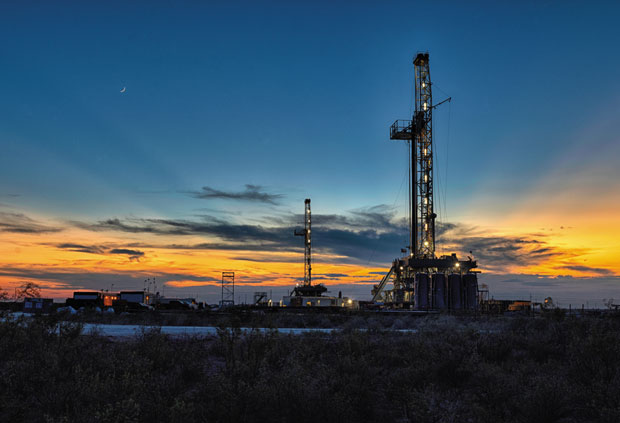
Ovintiv uses cube development to tap multiple zones from a single pad. Through a strategy it calls “reoccupation,” it drills an adjacent cube about 18-24 months after the initial one to minimize pressure depletion. Coupled with many other technical innovations, this technique has led to higher recovery rates while stabilizing well performance.
The company will continue to focus on the Midland Basin as it keeps an eye out for more expansion options. “We continue to find a way to acquire some of this great resource at a well-priced entry point for us, and we think there is more opportunity to do that,” McCracken comments. “Our operating approach and ability to generate some of the best-performing wells in the basin give us a chance to appeal to the mineral owners.”
Innovations have helped the company boost recoveries each year as part of what McCracken describes as a “stacked innovation” approach. Included are cube development with multiple zones tapped from a single pad, refinements to spacing and stage design, artificial intelligence deployments, wet sand and proppant intensity applications, simulfrac and trimulfracs, and surfactant use.
Under a strategy it calls “reoccupation,” Ovintiv drills an adjacent cube about 18-24 months after an initial cube to minimize pressure depletion from the first cube into the next.
“We have had excellent well performance and more stable well performance year over year because of that reoccupation strategy,” McCracken says.
With applications reinforced by substantial pretreatment lab work, the use of surfactants since 2019 on 400 Midland Basin completions at $100,000 a well has improved oil production by 9% per well compared with untreated wells, he adds.
Horizontal Transformation
Ring Energy Inc. is applying modern horizontal drilling and completion techniques across its legacy conventional acreage in the Central Basin Platform and Northwest Shelf. Chairman and CEO Paul McKinney says that has significantly expanded the development potential of reservoirs that historically were developed primarily with vertical wells.
In the southern part of the Central Basin Platform, particularly in the Texas counties of Ector and Crane, the company sees a multi-bench horizontal development opportunity across approximately 31,500 net acres. It has identified more than 200 horizontal locations in the area, compared with only 14 horizontal locations in its year-end 2025 proved inventory.
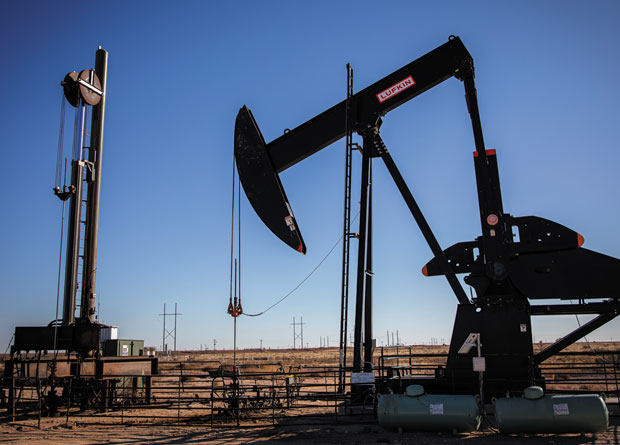
Ring Energy’s production has jumped from 8,800 barrels of oil equivalent a day at year-end 2020 to roughly 20,000 boe/d now. The company’s growth comes in part from applying modern horizontal drilling and completion techniques in areas that have traditionally been developed vertically, an approach that unlocks dramatic improvements in wells’ estimated ultimate recoveries and PV-10s.
That opportunity reflects a broader evolution occurring across the conventional Permian, McKinney observes. Horizontal drilling and modern completion techniques have increasingly been applied to reservoirs on the Central Basin Platform and Northwest Shelf that had been developed vertically for decades.
Ring has participated in that evolution across its acreage in Yoakum, Andrews, Ector and Crane counties, and today is increasingly focused on longer laterals and multi-bench development, McKinney reports. The company’s 2026 development program is overwhelmingly horizontal, and it has begun drilling its first approximately two-mile laterals as part of that transition.
The southern Central Basin Platform is particularly important to the company’s inventory expansion. The company has identified up to eight prospective horizontal development targets there, including the Judkins, McKnight, Glorieta, Upper Clearfork, Tubb, Wichita-Albany and Wolfcamp intervals, with the potential for additional deeper targets as development and technical evaluation progress. Those deeper opportunities include the Pennsylvanian, Barnett/Mississippian and Devonian intervals.
Not every target is expected to be economic throughout Ring’s acreage, McKinney notes. He says the company’s extensive subsurface data and decades of historical vertical-well control have proven to be extremely valuable in defining landing zones and delineating where individual benches are prospective.
The shift to horizontal development has materially changed the economics and resource potential of Ring’s Central Basin South inventory. Based on the company’s analysis of currently identified economic inventory in Crane and Ector counties, horizontal development has the potential to increase estimated oil recovery by more than 180% and PV-10 by more than 65% relative to comparable vertical development, using $70 per barrel WTI and $3.50 per MMBtu Henry Hub assumptions.
McKinney adds that the company continues to improve the capital efficiency of its horizontal program. Horizontal drilling and completion costs have declined from the company’s 2023-2024 average, with 2026 costs targeted at less than $500 per lateral foot.
Longer laterals provide another avenue for improved capital efficiency by spreading fixed drilling, completion and facility costs over a greater amount of reservoir contact. During the first half of 2026, Ring drilled its first three approximately two-mile horizontal wells in Crane County and reported that drilling efficiency on those wells reduced cost per lateral foot by more than 30%.
The horizontal transition is occurring against the backdrop of a larger transformation of the company, McKinney says. Ring’s production has increased from approximately 8,800 boe/d at year-end 2020 to roughly 20,000 boe/d, while year-end 2025 proved reserves reached approximately 153 million boe, double the year-end 2020 level. The company also reports more than 500 identified drilling locations across its broader portfolio, representing more than 10 years of inventory under its stated economic criteria.
Shelf Drilling
On the Northwest Shelf in Eddy County, N.M., EON Resources Inc. received initial proceeds in September from oil sales on the first three of 92 planned horizontal San Andres wells, according to EON CEO Dante Caravaggio.
Work on 12 more wells in the farmout with Virtus Energy Partners as operator gets underway in December on EON’s 13,700-acre Grayburg-Jackson Field, which the company acquired in 2023 as a waterflood producing from the shallower Seven Rivers.
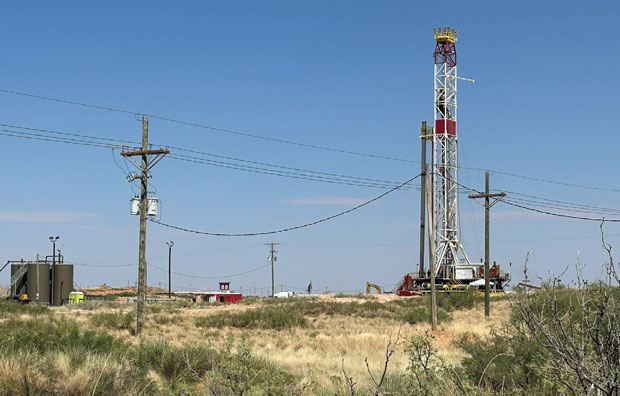
EON Resources is planning a 92-well drilling program targeting the San Andres formation on the Northwest Shelf in Eddy County, N.M. Based on geophysical assessments, the company estimates that these wells’ initial production rates will range from 400-900 barrels a day.
Caravaggio says the $330 million San Andres primary recovery project is expected to yield 45 million barrels of oil. Virtus has already worked a 200-well horizontal San Andres program in the state line area that achieved a peak production of 30,000 barrels of oil equivalent a day.
“Our confidence is high because successful vertical well recompletions and tests completed in June and July created our best wells in the Grayburg-Jackson Field, and we plan to drill 89 more wells.”
Under the farmout, EON retains a 35% working interest and operatorship over other Northwest Shelf assets, including the South Justis Unit waterflood in Lea County, N.M. In July, EON finished a technical engineering and petrophysics study of three pay sections on the South Justis, all part of the Yeso formation, for horizontal drilling potential. Caravaggio estimates horizontal drilling can recover around 13 million barrels of oil from the Blinebry interval within the Yeso.
On the San Andres wells in Grayburg-Jackson, drilling, completion, equipment installation and testing take about 60 days, at a total cost of $3.3 million-$3.5 million. Initial laterals are 5,000 feet, with longer laterals possible.
San Andres targets from 3,300 feet down include the Slaughter A, B, C and D, with total pay thickness of the benches around 1,200 feet. Based on geophysical assessments, Caravaggio says IPs could range from 400-900 bbl/d. Gross oil production could surpass 20,000 bbl/d, with about 7,000 bbl/d net to EON.
Permian Mergers
Across the basin, players continue to assess existing assets and explore new opportunities. On the midstream side, ONEOK Inc. in late August announced an agreement to acquire Brazos Midstream’s Midland Basin natural gas gathering and processing assets.
Upstream, Continental Resources agreed to buy Quantum Capital-backed FireBird Energy II and its 54,000 net acres in the Midland Basin.
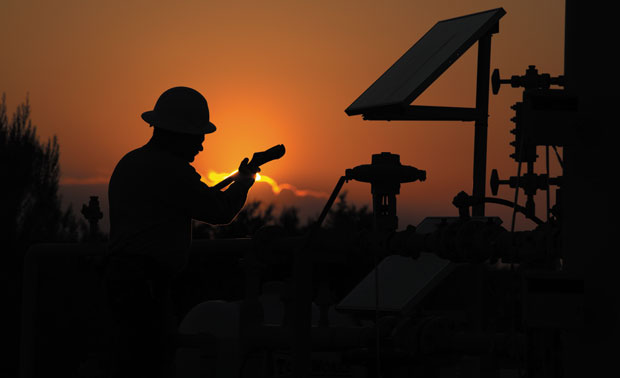
Through an agreement to acquire Birch Permian Holdings, Diversified Energy plans to gain a sizable inventory of producing assets in the Midland Basin near some of its other assets. About 75% of the Birch wells were completed in 2022 or earlier, meaning Diversified has numerous opportunities to enhance production through recompletions and workovers.
With its addition of Birch Permian Holdings Inc., announced in September, Diversified Energy Co. secures a sizable foothold in the Midland Basin as part of a plan to continue adding producing Permian assets.
Expected to close in the fourth quarter, the Birch deal comes with 46,000 net acres and 68,000 boe/d of liquids-weighted production near Diversified’s existing assets. Birch is Diversified’s largest acquisition to date as part of a strategy that involves adding proved, developed, producing reserves and improving existing wells’ output while cutting lease operating costs, says Chairman and CEO Rusty Hutson Jr. He points out that the company typically leaves drilling to others.
“For 25 years we have done one thing: focused on acquiring established, low-decline producing assets, operating them better than anyone else, and converting stable production into durable cash flow,” Hutson says. “That is who we are. It is in our DNA. It is our proven business model, and Birch fits that profile extremely well.”
About 96% of the Birch assets are operated. Estimated reserves are about 1.2 trillion cubic feet equivalent. Included are 480 net wells and more than 150 permitted enhanced oil recovery locations and associated pilot programs that are expected to give Diversified more upside potential beyond existing production, Hutson says.
About 75% of the Birch wells were completed with 2022-vintage and earlier designs, providing more options for recompletion and workover enhancements.
Also included is an integrated midstream footprint consisting of 12 primary central production facilities, nine gathering facilities, and more than 60 miles of gathering line. The production facilities can process up to 345,000 bbl/d of oil and 310 MMcf/d of gas. Along with five water disposal locations are more than 80 miles of water disposal and recycling pipeline.
New Water Pipeline
With upstream players continuing to go full speed ahead in the Delaware Basin, Goodnight Midstream is adding water pipeline capacity to expand service to operators.
The Dallas-headquartered company in September started construction on its 90-mile Estacado Pipeline, which CEO Grant Adams says has the capacity to handle up to 550,000 barrels per day of high-pressure produced water from Eddy and Lea counties.
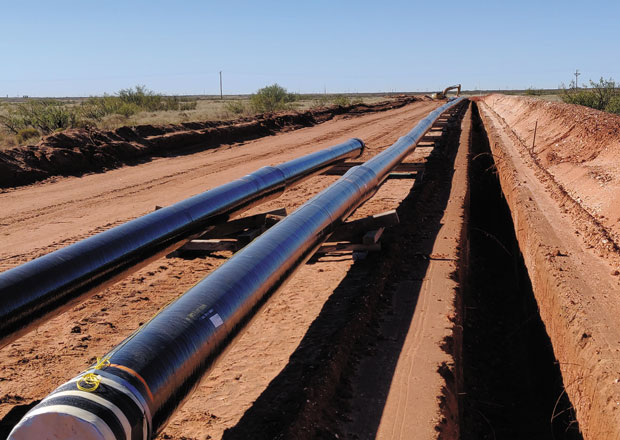
To support upstream activity in the Delaware Basin, Goodnight Midstream is expanding its network of pipelines that transport produced water out of the basin. In September, it began constructing the 90-mile Estacado Pipeline, which can handle up to 550,000 barrels a day of high-pressure produced water from Eddy and Lea counties in New Mexico.
The initial stage, with 350,000 barrels of capacity, is expected to be operational in the first quarter of 2027. Estacado combines with Goodnight’s Llano system, bringing combined capacity to more than 900,000 barrels of water a day, he says. Some of the largest Delaware producers support Estacado with long-term volume commitments.
“Estacado is an expansion that is turning this into a more regional system,” Adams remarks. “Estacado was designed to be a solution we’ve developed in partnership with a number of majors and supermajors. As they continue to develop the Delaware Basin with multiyear programs, what they are looking for is long-haul, diversified, geologically advantaged water infrastructure. That is the problem we are trying to solve.”
About seven years ago, Tailwater-backed Goodnight launched an out-of-basin water export model with Llano, which carries water from Eddy and Western Lea County to the Central Basin Platform in eastern Lea County for both traditional disposal and use in underpressured enhanced oil recovery projects. Estacado will provide even more water for growing EOR use in the region.
Goodnight’s solutions include disposal at 70 companywide disposal sites in the Permian, Williston Basin and Eagle Ford Shale, as well as multiple interconnections with other providers in each of those basins. Across its footprint, the company is experiencing volumetric growth of 25% quarterly, Adams reports. It recently expanded Eagle Ford operations by bolting on five CWR Management saltwater disposal facilities in Karnes and DeWitt counties.
For other great articles about exploration, drilling, completions and production, subscribe to The American Oil & Gas Reporter and bookmark www.aogr.com.