








Consolidation In Artificial Lift Space Accelerates Steps Forward
By Colter Cookson
The reliability and efficiency of artificial lift often determines whether a well hits its type curve or fails to deliver expected returns. Staying on curve has become increasingly important as activity moves from core acreage to lower tier assets with tighter economics.
Fortunately, as artificial lift equipment improves and automation streamlines both optimization and maintenance, it becomes easier for each artificial lift system to operate closer to its potential.
But optimization is only part of the artificial lift challenge. To maximize returns from each well, operators must select the right artificial lift system at every stage of that well’s life. Selection resists immutable rules of thumb as supplier innovations constantly redefine operating windows for each artificial lift technique.
When several techniques could be the right choice, operators may find themselves requesting information from multiple companies to determine which is the best fit for a well. Once the lift is chosen, implementation frequently involves numerous vendors.
“Production optimization is one of the last fragmented parts of oil field services,” says Chad Roberts, executive vice president of production solutions at Flowco. “Most operators are still working with multiple vendors across artificial lift, surface equipment, digital, and optimization, even though the goal is the same: optimize production and recover reserves efficiently.”
While specialized vendors can provide exceptional advice within their areas of expertise, Roberts says a few forward-looking service companies are moving toward a more holistic approach by acquiring peers to bring several technologies under one banner.
This mirrors consolidation already taking place at exploration and production companies. Not long ago, many operators’ production departments would divide decision-making authority among several people, each of whom oversaw one or two forms of artificial lift. But over the past decade, these technology-specific silos have been replaced with artificial lift centers of excellence or total well performance teams that take a broader view.
The integrated teams are charged with understanding the strengths and weaknesses of each artificial lift technique and identifying which is best for each phase of well life from initial production to retirement. Increasingly sophisticated engineering and simulation tools can help make smart decisions, but Roberts says workloads often remain too heavy for team members to devote as much time to each well as desired. Service companies can lighten the load by providing guidance, but fragmentation in the artificial lift space undermines the value of that advice.
“When an artificial lift provider only has one tool in its toolbox, it will always have a bias toward that solution, no matter how much it tries to be objective,” Roberts explains. That reflects both human nature and the reality that someone who works almost exclusively with one technology will be less aware of the evolving capabilities of alternatives.
The solution, Roberts argues, is consolidation. “When a provider owns multiple lift technologies and the surface and digital infrastructure around them, it can focus on what maximizes recovery and capital efficiency for the operator,” he says. “That improves performance, reduces downtime, and ultimately builds trust.”
Gaining Knowledge
As artificial lift providers expand product lines and customer bases through acquisitions, they begin seeing data from more wells. According to Mims Talton, executive vice president of natural gas technologies at Flowco, such data is a gold mine for anyone interested in figuring out the best path forward for other wells.
“Every well is different, but there are patterns in every region or nook and cranny of a reservoir,” he reflects. “The more exposure we have to different well types, the more we can find lookalikes and draw on experience there to help customers select the right artificial lift technologies for each well and operate them efficiently.”
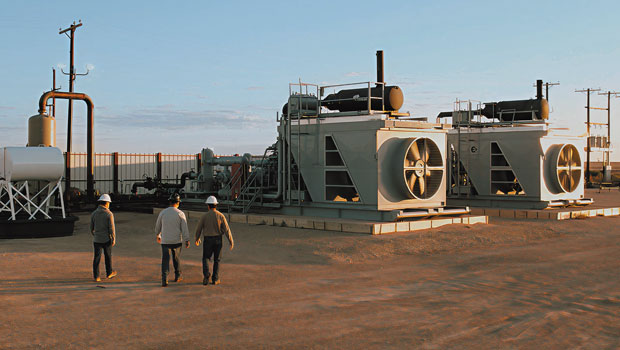
By acquiring companies with expertise in various forms of artificial lift, integrators can offer more credible and detailed recommendations on which techniques to adopt as a well moves through each stage of its life. Such recommendations can help busy production teams get more out of their assets.
One of the keys to leveraging data is decoding the signals in it, Roberts notes. “We work closely with operators to make sure we see the data in the same way,” he comments. “Why do we think a given well has certain characteristics? Did it receive a slug? Is there some type of bottomhole pressure issue? What is causing readings to spike on one sensor but not another?
“The more we learn from each other about how to interpret the data, the more we are able to have real-time conversations around what is happening downhole and when it might be time to move to another form of optimization or a different lift technique,” he says.
For many production engineers, interpretation puzzles can be intriguing. More affordable downhole sensors and nuanced well models have made solving those puzzles easier, but Roberts says it still takes finesse to do it well.
“No matter how long someone has been in artificial lift, they will still see surprises,” he adds. “Frankly, that is part of what makes artificial lift so exciting. Folks who come into production optimization often stay in it for two or three decades because every day is different. They also know they are working toward an important goal: Helping customers energize the world.”
Aggregating Data
Whether they are investigating unusual situations or performing more mundane tasks, production optimizers need easy access to relevant data and tools that allow them to analyze it quickly. The more time spent retrieving data from various silos, the less time for analysis.
Roberts says most companies recognize the importance of making data accessible and usable. That is certainly true for Flowco’s predecessors. The company formed in 2024 through a merger between Flowco Production Solutions, an expert in conventional gas lift and plunger lift; Estis Compression, which pioneered high-pressure gas lift; and Flogistix, a provider of vapor recovery units (VRUs) and emissions detection services.
Before the merger, FPS, Estis and Flogistix all had digital platforms that could provide data and insights on their equipment. Now that they are one company, Roberts says the next step will be combining those platforms into a single source.
“As we scale, we’re building a unified data platform that connects lift systems, surface equipment, and digital monitoring,” he says. “Bringing all the data into one place will help us move from reactive service to predictive optimization. That means identifying performance trends earlier, reducing failures, and improving production consistency.”
Given the amount of data modern equipment collects, Roberts says advancing predictive optimization will require careful automation. “Operators rely on their artificial lift partners because of their knowledge and experience, so any automation system we develop must be as reliable as a subject matter expert,” he stresses.
Ensuring Reliability
The company’s approach to automation will draw on the experience of Flogistix, which Talton notes has a long history of pursuing digital innovations. As part of that effort, he says the company has refined systems for cleaning and maintaining data, ensuring it is trustworthy and usable. The VRU provider has also invested considerable resources into its fleet management platform.
That platform comes from an in-house software development team. “We write our own code because doing so gives us strict control over the quality and capabilities of our software,” Talton says. “That software is a strategic advantage, so we do not want to hand it off to somebody else.”
To improve the reliability of its VRUs, the company’s platform applies machine learning techniques and a series of rules crafted by its engineers to predict issues and schedule maintenance before it leads to downtime or inefficiency.
Historically, Talton says these algorithms would run in the cloud. However, transmission constraints limited how much data the algorithms could look at. Because of latency, the data they did receive would lag behind current conditions, and any changes would usually take several minutes to implement.
Cloud-based processing can still be valuable if it’s implemented with enough care, but Talton says even the most sophisticated algorithms will eventually hit latency bottlenecks on what they can accomplish.
“We are making a big push to do more data processing at the edge,” he shares. “We have a new PLC control system on our VRUs that is powerful enough to model the compressor in real time. It can react to changes in fractions of a millisecond, which means it can do far more to optimize performance.”
With edge computing, Talton says Flogistix should get even better at tailoring maintenance to individual units.
“Today, our overall runtime is beyond 99%. However, that is an average across our fleet. We have some below 99%,” he says. “We want all our customers to see higher uptimes, but we cannot get there by asking our technicians to roll from site to site in trucks and chase traditional 30-45 day preventative maintenance intervals. We have to rely on a much more focused, data-centric model.”
This model grades the alerts it generates. “If something is urgent and the technician needs to take care of it right away, it will let them know,” he says. “Other tasks can be performed alongside other work the next time the technician is on site. That distinction is important, because it lets us maximize runtime for the customer with minimal effort on our end.”
Technical Synergy
Sharing digital best practices is one of many benefits to greater integration among production optimizers, Talton says. He sees many opportunities for one company’s capabilities to enhance another’s.
“Flowco Production Solutions has a downhole sensor that provides real-time data at a cost-effective price, and boy, my wheels are spinning thinking about ways we can use that data to improve VRUs,” Talton illustrates. “For example, we could tell the VRU when a slug is coming and get it ready faster.”
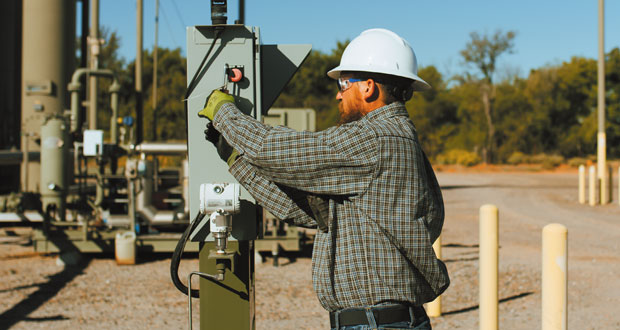
When integrators’ businesses share best practices, technologies, and information, they can frequently unlock value that would be difficult to obtain individually. For example, the vapor recovery unit provider Flogistix hopes to use data from Flowco Production Solutions’ downhole sensors to spot gas slugs long before they reach the surface, which would enable the VRUs to prepare and ultimately capture more gas for the sales line.
Roberts adds that it’s easier for companies to innovate when they can look at the full system rather than a single component. “When we are getting data from multiple lift methods and seeing how both surface and downhole equipment behaves, we can identify failure modes early and design solutions that improve overall well performance,” he outlines. “We also have access to hybrid and transitional lift strategies that would not be possible under a fragmented model.”
As it pursues technical synergies, Roberts says Flowco is benefiting from a more traditional side effect of integration: cross-selling. “We have seen a notable increase in the amount of gas lift installs where we are providing both the downhole valves and the compression,” he reports. “We also have instances where customers have reached out to their contacts for vapor recovery to learn about gas lift.”
Meanwhile, other operators have asked their artificial lift contacts about VRUs, a trend Talton welcomes. “With VRUs, we want to be on the well as early as possible,” he comments. “One, that eliminates more emissions, which is very important, but two, it captures the most economic benefit for the client.”
When production rates are high, so is the amount of oil in the storage tanks. This oil generates more vapors for the VRUs to collect, Talton explains.
So far, Roberts says most of the cross-selling has occurred organically rather than as a result of deliberate efforts by the company to encourage it. However, he notes that Flowco has restructured incentives for executives, managers, and salespeople to encourage cooperation. Instead of focusing on the success of individual business units or specific technologies, the new incentives emphasize the company’s overall growth.
After the merger, Flowco began offering training from each legacy business to members of the other businesses. “We quickly found out that employees were clamoring for more,” Roberts says. “If someone has been a gas lift expert for the last 15-20 years, they’ll likely want to learn more about plunger lift and ESPs. They also want to know how the decisions they make about downhole gas lift valves and mandrels influence the size of the surface compression.
“The support for jumping across technologies and learning the solutions that are available has been overwhelming,” he summarizes.
Financial Flexibility
In addition to creating opportunities for employees, Talton says consolidation can provide the scale to build more robust balance sheets. This can give companies the financial freedom to make longer-term investments.
“Expanding our fleet of rental equipment is capital intensive,” he notes. “With a stronger balance sheet, it’s easier to match supply to anticipated demand. For example, when we want to enter a new area, we can finance large VRUs that have the capacity to handle wells’ early production.”
While integration has many advantages for both service companies and their clients, Roberts says it is important to be selective when looking at potential acquisitions. He points out that Flowco has only made two acquisitions since its formation. In the first, it purchased high-pressure gas lift compressors and VRUs from Archrock, including several electric motor drive units.
In early February, Flowco announced an agreement to acquire Valiant Artificial Lift Solutions LLC.
“Valiant is a Permian-focused ESP operator that has technology we can expand across all our domestic plays, and then even potentially internationally if we see fit,” Roberts explains. “The quality control they had on their supply chain, as well as their assembly and manufacturing, is second to none. Valiant has a great team behind it as well, with respected customer and supplier relationships.”
Between Valiant and Estis, Roberts says Flowco will have in-house expertise in the two most common early-life artificial lift techniques: ESPs and high-pressure gas lift. “Which operators should use depends on where they’re drilling and what they’re drilling. HPGL can be more reliable and affordable than ESPs, especially in sandy, highly deviated wells. However, if the gas-to-oil ratio falls below a cutoff point, ESPs make more sense.”
Infrastructure constraints come into play as well. “In areas where the grid cannot provide reliable power or isn’t available at all, we often see operators choose HPGL even in wells where ESPs could deliver similar production rates,” Roberts notes.
Rod pumps are another area that Flowco would love to get into. “They’re the most popular form of artificial lift in the United States and abroad, so the market is huge,” Roberts observes. “However, we are not going to force ourselves into the space just to be in it. We have to be able to differentiate our source of service before entering a new market.”
For other great articles about exploration, drilling, completions and production, subscribe to The American Oil & Gas Reporter and bookmark www.aogr.com.