








Artificial Lift Now Smarter And Sleeker
By Colter Cookson
Continuing to improve artificial lift is a critical component of the industrywide effort to recover more oil from each well or at least get that oil into the stock tank faster. Today, artificial lift engineers leverage increasingly sophisticated digital tools to keep everything from ESPs to rod pumps running as efficiently and reliably as possible.
Such optimization has become more accessible as advances in sensors, edge computing, and telemetry have made automation and remote monitoring more affordable. Meanwhile, the pumps those digital tools support have become more powerful as their designers refine proven components and reexamine old assumptions.
These advances matter, but focusing too much on equipment design can obscure other ways to help artificial lift systems run longer and smoother, says Josh Jones, vice president of production systems for North America Land at SLB. He advocates a more holistic approach.
“We spend a lot of time not only looking at the artificial lift system’s mechanics and metallurgy, but also the well, the reservoir, and the downhole conditions,” he says. “Optimizing the chemistry or the solids control can deliver clear advantages to the operator.”
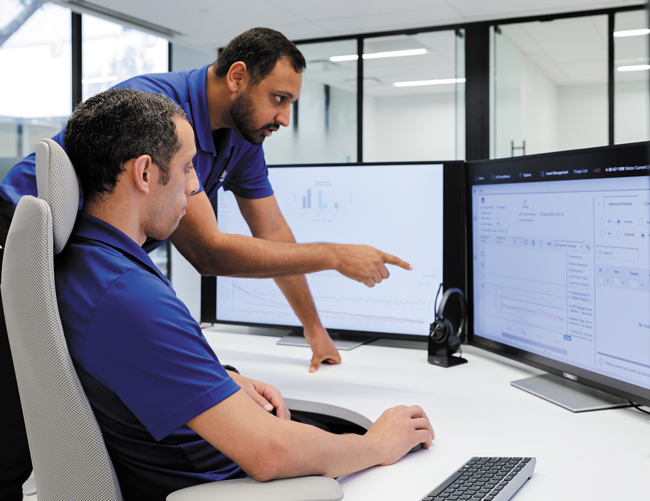
By pairing remote monitoring and automation with a holistic approach to production optimization that considers the downhole environment and the chemical program, operators can significantly increase artificial lift systems’ performance, SLB reports. The company says this multidisciplinary strategy often increases run life by more than 15%.
This system-oriented approach can lead to much greater equipment longevity, Jones says. “We have documented cases where we’re making ESPs, sucker rod pumps, and other downhole equipment last longer by combining the right design elements with the right chemistry,” he shares. “To make a broad generalization, we actively seek improvements in run life of at least 10% or 15%.”
Jones emphasizes that the holistic approach frequently achieves larger increases. He predicts that unlocking better performance will get easier as the industry perfects processes for collecting, managing and acting on data.
“The industry has always strived to provide good lift systems and effective production chemistry,” he says. “Today, more robust data on wells’ performance gives us the ability to link those domains together, learn more quickly what is working and what isn’t, and make smarter decisions.”
Partnership Approach
No matter how much data the industry collects, determining exactly what is going on downhole and why will always require some inferences, Jones reflects. “We have many back-and-forth conversations with operators where they will say, ‘Do you see this trend? What do you think it means?’” he says.
Coming up with sound theories requires digging into the data. Jones says this investigative work benefits from modern data visualization tools and digital workflows that make it much easier for experts to share information and insights.
“We’re organized in such a way that that collaboration is very organic now,” he says. “I have production chemical teams, artificial lift teams and digital teams in the same conversations at least once a week, and that scales on down the organization, where we see the production chemical and artificial lift teams co-located together and providing integrated solutions.”
While integration can help the industry get more from any design, Jones says it is no replacement for improvements to hardware. He mentions that SLB has developed ESPs that pack more power into a shorter length, which allows them to be placed deeper into the curve, where they can more effectively draw down the reservoir.
“The ESPs’ extra power comes partly through improvements in the pump stages, such as nuances with impeller construction and material selection,” he says. “We are seeing single digit improvements in key metrics today, and we believe there is more to get.”
As production declines, it will inevitably become necessary for wells to transition to other forms of artificial lift. Jones says SLB is trying to make that process as fast and cost-effective as possible by creating more flexible wellheads.
“When operators change lift types, they often spend a lot of money and time setting up and taking down scaffolding, swapping out valves, and re-welding equipment,” he says. “We have some spool tree designs that allow operators to stay completely plugged in from a valve perspective. These trees are also much shorter, so working on them requires less scaffolding.
“How significant those benefits are depends on many factors, but we have seen cases where the more flexible wellheads can shorten the transition by six or seven days while saving more than $25,000,” he says. “The extra production from eliminating unnecessary downtime adds up.”
Gas Lift Controller
When Liberty Lift decided to develop a gas lift injection controller, it brought a cost-conscious philosophy from another domain. “Plunger lift automation is a tough battleground that is very cost-driven,” says Jeremy Crank, plunger lift automation manager at Liberty. “To succeed, companies need to walk a tightrope between capabilities and cost-effectiveness.”
Because gas lift often handles much higher production volumes, equipment providers sometimes have the luxury of walking down a hallway rather than balancing on a tightrope. As a result, Crank says many of the traditional options for managing injection rates depend on top-of-the-line equipment with robust capabilities and versatile software.
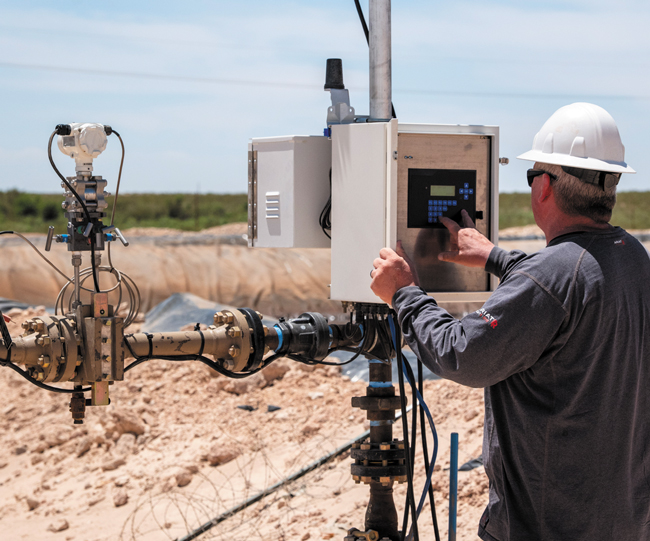
A new gas lift injection controller from Liberty Lift uses fit-for-purpose equipment to deliver reliable performance at lower cost, Liberty says. According to the company, the device’s small footprint also gives engineers more flexibility in where to place it.
In many applications, Crank compares deploying those units to buying a Cadillac to drive to the corner store. “A gas lift injection controller needs to measure gas with a reasonable accuracy to control when injection occurs and maintain the rate,” he says. “We can do that more efficiently with custom hardware that cuts out unnecessary bells and whistles.”
The cost savings from that approach vary widely based on the application and the point of comparison, but Crank says they can be meaningful. “On a standard meter run with a control valve and a specced-out traditional injection controller, we may be 30% less on the face,” he says. “If a site already has a meter run or a control valve, we can take advantage of that to get the cost even lower. There is no need to use our meter run.”
The new system is compact and modular, Crank continues. “A typical gas lift measurement skid is about 10 feet long,” he says. “Our package is small enough that people can hold it in their hands.
“At that size, some operators move away from the classic setup with a dedicated area for tanks and meter runs. Instead, they put the meter right against the wellhead and monitor injection as the gas goes downhole,” Crank says. “That can be faster and easier for those operators, but others prefer the classic style, which the compact controller also supports.”
Like other gas lift controllers, Liberty’s system performs calculations that have been certified by the American Gas Association, Crank assures. “We use high-level 16-bit analog digital converters on our hardware, which are very precise,” he says.
The controller supports Modbus, so it can interface with operators’ existing SCADA systems. For locations without that connectivity, it includes a cellular modem that automatically uses whichever carrier has the best signal. Either way, the data can be viewed through a web-based dashboard.
Crank says the dashboard contains standard readings, including flow rates, the previous day’s production, differential pressures, and static pressure, all of which can be charted. It can be accessed from desktops, laptops, tablets and phones.
“When I talk with potential users, I get a lot of questions about what they can change remotely,” he says. “Many people are used to read-only systems where they can only make significant changes if they have high-level access. We can do that, but because it creates bottlenecks, it makes more sense for many companies to have multiple people who can look at the data and make adjustments if necessary.”
Affordable SCADA
Almost everyone acknowledges the benefits of monitoring equipment remotely and sending someone to a location only when needed, but many operators still lack the SCADA systems to make that possible. As a result, their pumpers continue to drive from location to location every day to record data, then send it to the office.
According to Christian Kurz, founder of Trinity SCADA, that approach is becoming harder to sustain as experienced pumpers retire faster than new talent comes into the industry. This has put operators in a situation where they must find ways to manage more assets with fewer people. Fortunately, he says, deploying remote monitoring is much easier and more affordable than many operators expect.
“When I talk with people who tried remote monitoring a decade ago, they remember it costing more than $10,000 or $15,000 to set up a system that could watch a couple tanks,” Kurz says. “Today, a similar system can cost less than $1,000 to set up, and the monthly costs have come down as well.
“Advancements in technology have brought costs down across the board,” he explains. “That has made remote monitoring much more practical, especially for stripper wells where the operator may only need to see data once an hour or every few hours, not every few minutes.”
Kurz says Trinity was built to help operators leverage their field data without the complexity and cost that historically kept smaller producers from adopting SCADA. He says the goal is not simply to make SCADA cheaper, but to deliver a high-value system that pays for itself by helping pumpers cover more locations with less windshield time.
“One of the biggest values is monitoring water tanks on high-fluid wells that move a lot of water, which are common across Kansas and Oklahoma,” he says. “Some of those may be stripper wells, but the real issue is the volume of water being handled. We have heard stories from operators about how much money they have spent cleaning up a spill, and that cost easily exceeds the cost of a monitor.
“Beyond the money, the monitor gives operators peace of mind,” he continues. “They can go to sleep at night knowing they will be alerted before a tank reaches a critical level.”
For operators that do not want to make a capital investment up front, Kurz says Trinity offers hardware as a service as one of several options. Depending on the operator’s needs and the type of asset, hardware can be leased as part of the monitoring package.
“As long as that HaaS agreement is active, the equipment is under warranty,” he says. “If something breaks or malfunctions, we either drive out and install a replacement ourselves or ship one to the operator as soon as the next day, so the location can get back online quickly.”
Kurz says many operators like that approach because it makes the cost predictable. Instead of purchasing equipment, managing spares and dealing with complicated troubleshooting, the operator has a clear path to keep data flowing. Depending on the situation, the replacement can be installed by Trinity, the operator or the pumper.
Practical Equipment
According to Kurz, Trinity can provide hardware at a competitive cost because some equipment is manufactured in house. For products too complicated or specialized to handle internally, the company works with outside manufacturers that balance cost, reliability and performance.
“We have tested equipment from more than 10 manufacturers to figure out what works well at different price points,” he says. “The highest-end equipment can be very expensive, but we have found products that perform well in the field and still make economic sense. At this stage, we are confident we can offer something reliable and practical for almost every use case.”
Whether the equipment is manufactured internally or sourced from trusted suppliers, Kurz says Trinity SCADA’s sensors are designed for quick installation. “For a typical location with two oil tanks, a water tank and a well, the deployment time after the operator receives the sensors can be as fast as 10 minutes,” he says. “When the product ships, the sensors are already configured, tested, connected to the SCADA platform and ready to communicate. The pumper can screw in the tank level sensors, pressure sensors or wellhead sensors, and the data starts flowing.”
That data ends up in a production SCADA platform Kurz describes as powerful enough for the office, but simple enough for the field.
“I have pumpers who are 80 years old, and they love it,” he says. “That matters because if the software is too complicated, it will not get used in the field.”
Even with that ease of use, Kurz says the software remains powerful enough to appeal to pumpers who want to accomplish more. “A good pumper who wants to cover more ground can now do that,” he says. “Instead of driving blind from location to location, they can see how everything is performing from their phone and focus their time where it is needed most.”
In designing the software, Kurz says Trinity SCADA focused on keeping the interface practical and uncluttered. “We try not to put information in front of someone unless it matters to their role,” he says. “A pumper can enter gauges, look at historical trends from sensors or manually entered data, respond to alarms, and get where they need to go in one or two clicks. An admin or engineer can drill down deep into KPIs, reports, alarms, statistics and the production data they care about.”
The company has sensors for all surface equipment, including wells, VFDs, H-Pumps, compressors, separators, SWDs, chemical tanks, oil tanks, water tanks, and gas meters. Kurz says many of the sensors require little maintenance beyond occasionally replacing batteries.
As a next step, Kurz says Trinity SCADA has a low-cost pump-off controller in beta testing at a few sites. “With a traditional pump-off controller, we have seen setups that cost $8,000 to $20,000, depending on the manufacturer, the lease location and how sophisticated they are,” he says. “Our target is to be around $1,500 for the same type of system.”
At that price point, Kurz predicts pump-off control will make sense for many more wells. “A pump-off controller is not just about turning a pump on and off,” he says. “It is about protecting the well, reducing unnecessary run time, lowering power costs and helping operators avoid damage from pumping a well when there is not enough fluid to produce. If we can bring that capability to more wells, operators can make smarter decisions, extend equipment life and potentially reduce workovers.”
Equipment Integration
When operators convert wells from gas lift or electric submersible pumps (ESPs) to rod pumps using fixed-speed controllers, they have traditionally required two separate installations: a rod pump controller and a motor controller. To streamline this process, Dean Calder, director of automation at Lufkin Industries, recommends a new integrated motor control panel that combines both functions into a single unit.
“Lufkin has worked with customers in the Permian Basin to design this integrated motor control,” Calder says. “The goal is to reduce electrical installation work and the number of crews required on-site, simplifying and standardizing the process.”
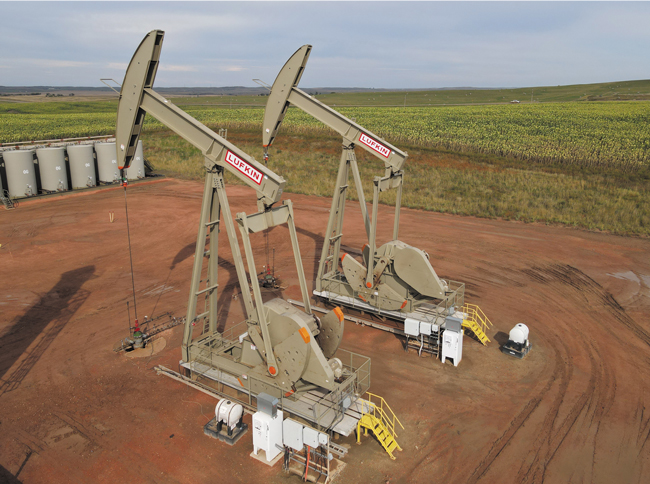
Recent updates to rod lift design software have made engineering more efficient, Lufkin Industries says. The latest version of the company’s software includes tools that enable engineers to evaluate multiple design scenarios quickly. It can also automatically identify the best counterweights for an application, Lufkin adds.
The panel’s layout has been optimized to simplify wiring and auxiliary input connections. Its integrated well manager features a comprehensive quick-start menu that accelerates commissioning once wiring is complete, Calder adds. He says customers report savings on both installation and equipment costs—and faster returns to production that reduce deferred production.
Looking ahead, Calder sees well managers and other automated optimization tools becoming increasingly intelligent and capable of autonomous decision-making. For example, he says Lufkin is implementing methods to automatically adjust variable speed drive set points and more precisely distinguish between gas interference and pump fillage.
Downhole Insights
Rod lift optimization has long relied on dynamometer cards derived from surface load and position data to determine whether to speed up, slow down, or shut off a pumpjack. Calder says Lufkin is advancing that approach with a new wave equation that produces more accurate downhole pump cards by accounting for wellbore friction, rod string dynamics, pumping unit mechanics, and fluid velocities.
The foundation for this work comes from more than 15 years of research using downhole memory gauges. Sensors installed at multiple points along the rod string capture load and position data downhole, which is then retrieved and compared against real-time surface readings, Calder relates. Over time, these comparisons have allowed Lufkin to quantify the effects of mechanical friction and other forces that traditional wave equations have historically overlooked.
In highly deviated wells, the differences are especially pronounced. “We see substantial differences in pump fill, but most notably a significant difference in the fluid load the pump encounters downhole,” Calder reports. “By understanding how fluid loads change, we can calculate pump intake pressure more accurately and help operators keep the pumping speed in the sweet spot that maximizes production while reducing mechanical stress on components.”
Faster Design
Many of the friction insights embedded in the new wave equation are also making their way into Lufkin’s rod pump design software. Over the past two years, Calder says the company has significantly enhanced that software, most notably by moving beyond the industry’s long-standing “one design, one report” limitation.
With the multi-case generation tool introduced in April’s release, Calder says engineers can now automatically build and run multiple design scenarios simultaneously and compare results side by side, eliminating the need to run sequential reports and collate them by hand.
The latest version also automates counterweight selection and placement, Calder adds. Drawing from a library of available weights for each pumping unit crank—which may include 10 to 15 options combining primary and auxiliary weights—the software identifies the optimal configuration. Engineers can also input a preferred weight and receive confirmation of its suitability along with recommended placement, Calder reports.
A new 3D rod string visualization rounds out the update, Calder continues. Because standard north-south deviation surveys can obscure the true complexity of a wellbore’s corkscrew path, the 3D model allows engineers to examine the well from any angle. This gives them a clearer picture of where the rod string will experience elevated side-load stresses, enabling more proactive placement of rod guides to protect equipment integrity.
For other great articles about exploration, drilling, completions and production, subscribe to The American Oil & Gas Reporter and bookmark www.aogr.com.