





High-Torque Connections Push Technical Boundaries In Long-Lateral Architectures
By Danny Boyd
The oil and gas industry has a knack for turning the incredible into the ordinary. Horizontal drilling is a prime example. Twenty years ago, as horizontal development was taking off in shale gas and burgeoning tight oil plays, a typical lateral was on the order of a half mile long. Then came a steady progression toward ever-longer laterals . . . first one mile, then two miles, and now routinely contacting 11,000 feet or more of rock.
At the same time, horizontal architectures have grown much more sophisticated, giving operators the ability to precisely place long-lateral geometric configurations at rates of 100 or even 200 feet per hour. It may seem like standard practice, but the rapid evolution of technologies and techniques has been nothing short of astonishing, including in one of the most crucial areas of advancement: tubular technology.
With extended-reach laterals twisting and turning through miles of unconventional reservoir to navigate space-constrained leases and minimize surface impacts, production casing and connections must withstand extreme torque and other load conditions to get pipe landed all the way to the end of the hole. Although quality welded tubulars remain an option, many operators prefer seamless pipe when drilling ultralong laterals, says Rick Preckel, a partner at Preston Pipe, a market research and consulting firm specializing in the steel pipe and tube industry.
“It is all designed around resolving torque issues that operators are encountering in longer laterals,” he says. “Torque issues, pressure cycles and other key variables are driving innovations geared to solve the issues that operators face.”
Demand Factors
Broader market forces continue to drive oil country tubular goods demand and underscore the need for continuous improvement, says Preckel, pointing to developments over the past two years that have influenced the trend toward longer wells and greater efficiencies. As always, rig counts remain a key indicator of Oil Country Tubular Goods demand that Preston Pipe monitors along with other contributing factors, he emphasizes.
Preckel points to developments since early 2025, when the U.S. drilling rig count was comparable to today’s levels before an intervening decline. Before the Iran conflict, expectations that oil supplies would outpace demand pushed prices lower, with the International Energy Agency at one point estimating a surplus of 4 million barrels a day, he recalls.
Uncertainty over the impact of tariffs prompted operators to reduce oil drilling and rig counts, although expectations for stronger natural gas demand from growing liquified natural gas exports and additional power generation tempered the trend somewhat.
With oil prices rising, the decline has more than reversed as U.S. operators cautiously deploy additional rigs and secure more tubulars and connections. The rig count has risen by about 10% over the past year to approximately 600, with about 460 drilling for oil and the remainder targeting gas, Preckel notes.
As oil traffic out of the Middle East improves and non-OPEC producers increase drilling, the fundamental market conditions that existed before the conflict remain largely in place, he assesses. However, a stronger gas market will continue to support OCTG demand. About 20 billion cubic feet a day of LNG projects remain at the pre-final investment decision stage, Preckel points out.
Anti-dumping duties on South Korea and other countries, along with tariffs imposed by the Trump administration, have affected tubular supplies, but domestic supply appears to be holding up, according to Preckel.
“What we typically see when people get concerned about supply is they start to place orders with multiple sources, so they might place a domestic order, and they might place an import order or multiple import orders,” he comments. “There are a lot of things influencing the supply chain for OCTG as we have moved through this shift in import regime and also as we move through what amounts to about a 10% overall increase in drilling activity.”
Preston Pipe continues to assess the potential impact of the Russia-Ukraine war and is tracking upcoming capital expenditure announcements from public companies to determine whether they will hold the line on drilling.
Despite market shifts and challenges, producers continue to innovate, with more operators moving to alternative designs such as 5.5-inch outside-diameter liners on 7-inch casing.
Other advancements will influence connection design as the number of subcategories between buttress-compatible and wedge connections in the semi-premium market increases to accommodate more specialized applications, Preckel reports.
High-Torque Connections
One thing appears certain as operators drill longer laterals and navigate increasingly complex well paths with more powerful top drives: The use of durable, high-torque wedge thread connections will continue to expand, says Ryan Broussard, CEO of Houston-based Fermata Connections.
High-torque connections allow operators to extend the limits of well design while focusing on cutting costs and improving returns. That includes deploying larger pipe and larger inside diameters to reduce friction losses during hydraulic fracturing, he says.
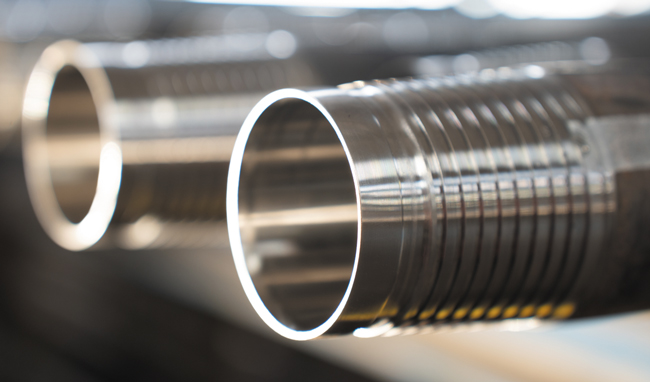
A proprietary wedge thread form from Fermata Connections combines a high torque capacity with a design that minimizes failure points by eliminating the traditional torque shoulder. The shallow thread form’s negative load flanks and pin-to-pin contact accommodate rotating casing downhole and enhance connection integrity to support single-trip casing runs, Fermata reports.
Higher-torque wedge thread connections are also helping reduce casing and connection failures as drillers deploy top drives with substantially greater torque ratings. Once capable of generating about 40,000 foot-pounds, rig top drives now can generate 50,000-60,000 foot-pounds of torque, Broussard points out.
“You used to have a situation where the top drive was the limitation for certain sizes, weights, grades and combinations of connections,” he says. “Now you are seeing the top drive capabilities getting pushed up to where the torque capacity of the connections is becoming a limitation again.”
Fermata continues to advance connection technology to increase torque capacity. The company’s proprietary Constrictor® wedge thread form is engineered to eliminate the traditional torque shoulder and deliver high torque capacity, Broussard explains.
The dovetail thread form features negative load flanks that accommodates rotating casing downhole without requiring pin to pin or shoulder contact, and enhance connection integrity. Eliminating traditional torque shoulders minimizes potential failure points in tight-clearance applications, he says, while a self-locking wedge thread profile provides high-torque capacity, enhanced structural strength and reliable sealability, supporting casing runs in a single trip.
The technology is integral to product lines that include Bushmaster®, Anaconda® and Cobra®. All three are designed for high torque, high tensile strength and severe bending, with a significantly lower risk of inside-diameter restriction from overtorque.
Previously, buttress-compatible semi-premium connections were commonly used in challenging drilling environments in the Delaware Basin, Eagle Ford and elsewhere, but they are reaching their limits as operators require more torque and combined-load capacity, Broussard relates.
Overtorquing these buttress-compatible semi-premium connection results in inside-diameter restrictions, he notes, while strings subjected to combined torque and tension have experienced failures.
Writing In Cursive
With the latest connection advancements, Bushmaster product lines for gas-tight, liquid-tight and slimline applications are being deployed in laterals extending as far as four miles–with operators now looking to 5 miles–and in increasingly challenging unconventional well paths, reports Nilton Garcia, applications engineering manager.
“On these U-turns it can seem like drillers are trying to write their names underground because they are putting these connections almost through cursive writing,” he jests. “That has been a big challenge operators have had to overcome, and we have been fortunate enough those product lines are providing the solutions.”
The use of higher-torque wedge thread connections has accelerated over the past 18-24 months as laterals have grown longer and complex well paths have become more prevalent.
Buttress-compatible semi-premium connections began gaining popularity about a decade ago. They are modified versions of the API buttress connection, featuring shortened couplings that allow the pins to butt against each other and withstand higher torque.
High-torque wedge thread connections use a dovetail or wedge-thread design that transfers torque differently. To overcome shoulder torque limitations, wedge threads vary in width along the length of the connection, with corresponding variations in the pin and box, Broussard explains.
“As you screw the connection together, it starts off loose, but the more you screw it together, the tighter it gets,” he says. “When you do the math for a given connection, you can get up to three to five times the torque-bearing area compared with a shoulder.”
That added contact area does not translate directly into operating torque, which also depends on pipe size, weight, grade and connection geometry. Still, the gains are significant. For example, operating torque on 5½-inch casing with buttress-compatible connections is typically around 30,000 foot-pounds, while comparable wedge-thread connections can reach 40,000 to 60,000 foot-pounds, depending on weight and grade.
Longer Laterals, Faster Makeup
In the Powder River Basin, operators are reporting early success deploying Hunting’s HYPER-LOCK™ HELIX2 connection, developed to combine high torque capability for extended reach wells with faster casing makeup times than other connection options for similar applications. The connection addresses two related priorities for shale operators: delivering casing to increasingly challenging well depths and reducing the time and cost required to install it. Introduced earlier this year, HELIX2 expands Hunting’s onshore connection portfolio, with broader deployment across North American shale basins expected, says Will Shrader, the company’s manager of technical sales and marketing in Houston.
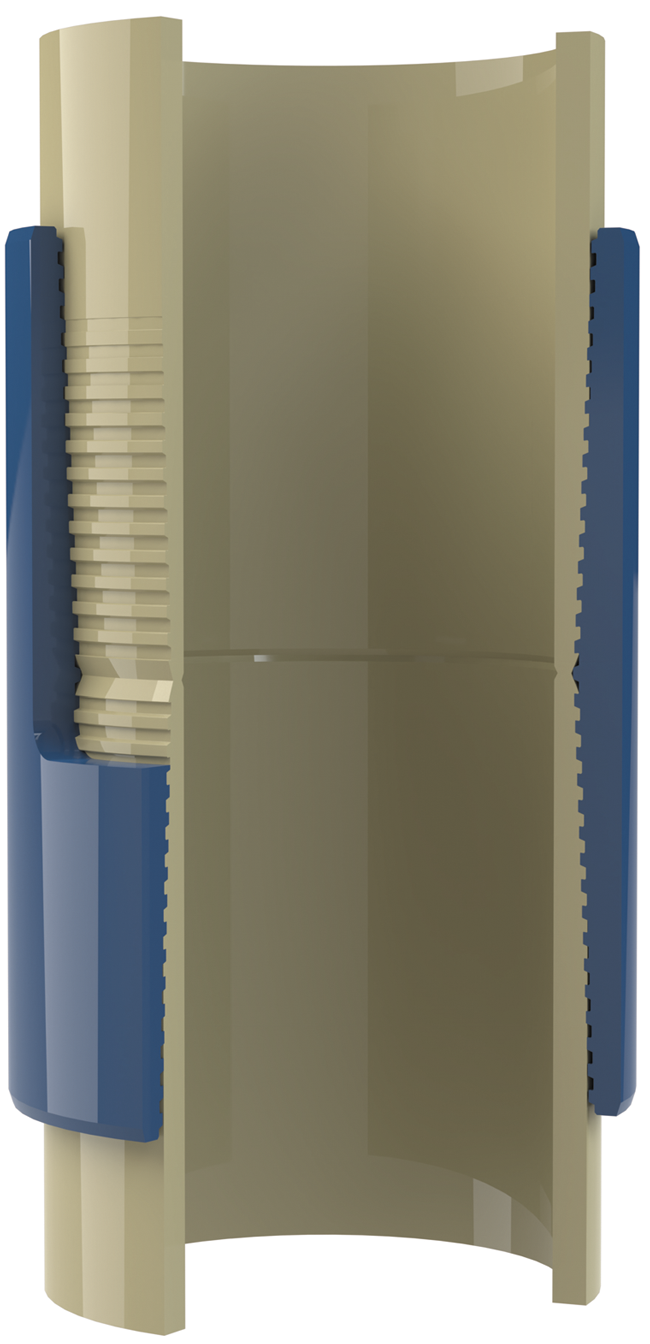
Engineered to combine high torque capability for extended-reach wells with faster casing makeup times, a new connection from Hunting addresses two related priorities for shale operators: bringing casing to increasingly challenging well depths and reducing installation time and cost. The company says the connection was introduced earlier this year in the Powder River Basin, with broader deployment across North American shale basins expected soon.
Hunting has a long history of delivering high-performance connection technology for the most challenging applications faced throughout the global oil and gas industry, he notes. Known for decades as a leader in deepwater connection technology, the more recent success with their TEC-LOCK™ product family subsequently expanded the company’s presence as a leader in the U.S. onshore unconventional market as well. The TEC-LOCK Wedge remains the company’s flagship onshore connection.
However, as the industry evolves and customers push for increasingly longer laterals and enhanced drilling economics, the need for faster and more efficient operations is driving demand for additional solutions. Recognizing the industry demand for increased tensile and torsional performance balanced with the need for cost efficiency, Shrader says Hunting approached the task as an opportunity to bring another innovative solution to the market.
“The last thing the industry needs is another modified buttress connection. HELIX2 expands Hunting’s onshore portfolio for cost-conscious applications requiring higher torque capability and faster makeup speeds than conventional modified buttress connections, while still reserving the wedge-style connections for applications that require their additional performance,” Shrader says. “Particularly, we also wanted an option that opened up mill partnership options to help deliver additional flexibility in pipe sourcing channels.”
According to Shrader, the development objective was to give operators another option as longer laterals increase demands on connection performance and drilling economics.
The connection is currently available in 4.5-inch and 5.5-inch sizes, with larger diameters under development. Positioned to deliver between a semi-premium and the more premium wedge-style connections, HYPER-LOCK HELIX2 offers much of the performance demanded by operators that have outgrown their modified buttress style connection options.
The additional torque capability supports operators rotating casing through extended-reach wellbores, Shrader explains. Connection selection nevertheless depends on the combined demands of the application, including tension, torque, pressure, and other operating conditions.
The design incorporates a proprietary shallow thread form with negative load flanks. Pin-to-pin contact and a unique thread geometry helps accommodate casing rotation downhole and enhances connection integrity.
Real Game Changer
But that is not all that makes HYPER-LOCK unique. The real game changer, Shrader says, is in how HYPER-LOCK delivers operational performance starting on the rig-floor. Pulling from a lesson learned with the TEC-LOCK family, Hunting identified that cost savings can be delivered well beyond just the product price. By helping reduce the time spent installing the product, operators can effectively reduce the overall run time and save significant money on operating costs. This focus shift allows a notable reduction in the “total installed cost” and delivers even greater savings to the operator, Shrader says.
HYPER-LOCK HELIX2 accomplishes this due to the unique design of the connection. The connection requires fewer than five turns from initial stab to full makeup, compared with approximately 12 turns for competing modified buttress connections. “You are making up two thread forms simultaneously, meaning makeup takes half the time,” Shrader remarks.
As suggested in the connection’s name, it utilizes a proprietary double helix thread form providing two points of initial thread engagement. This allows significantly faster makeup than a standard semi-premium connection. The thread design also permits deeper stabbing and reduces the risk of galling and cross-threading, and the flush-bore design provides a continuous internal profile to support tool passage with less hangup, Shrader adds.
Testing has been conducted to validate the HYPER-LOCK HELIX2 performance claims, and it has been tested for various combined load, fatigue, and sealing scenarios. While traditionally only more expensive metal-to-metal seal premium connections offer gas-tight capabilities, Hunting offers both TEC-LOCK and HYPER-LOCK products with its proprietary SealLube™ thread sealant, which utilizes a cross-link polymer curing process to deliver gas tight sealability for most applications.
“It really does a great job of delivering what our customers have grown to expect from Hunting and help to solve challenges in increasingly innovative ways,” Shrader concludes.
For other great articles about exploration, drilling, completions and production, subscribe to The American Oil & Gas Reporter and bookmark www.aogr.com.