







Innovations Save Time While Enhancing Safety And Protecting Remote Sites
By Monica Cervantes
Safety programs rightly begin with strong training programs and deliberate efforts to build and maintain cultures where employees know their superiors and peers consider safety the top priority. In such workplaces, employees feel comfortable exercising their authority to stop dangerous work. During daily tasks, they watch over their peers, alerting them to unnoticed risks and ensuring they get the job done the right way.
When safety becomes a way of life, employees become a driver of continuous improvement. Instead of merely reacting to injuries, they’ll report close calls and help organizations take proactive steps to prevent them. And if they notice something amiss, such as safety equipment or other barriers beginning to wear out, they’ll alert the people who can address the issue before it leads to injuries.
But knowledgeable and motivated employees are only part of the safety equation. The nature of the work also matters. In many industries, including oil and gas, some of the biggest safety gains come from adopting tools that minimize employees’ exposure to risks by simplifying or eliminating steps from routine work.
In addition to improving safety, such advances typically allow companies to complete jobs more quickly while simultaneously reducing the chance of unexpected downtime. They are a win for both safety and efficiency.
Engineering Controls
When something unexpected does occur, the right mitigation strategies can limit the impacts. As a case in point, consider ESP catchers, which are placed in the production casing to arrest the fall of damaged ESPs. The goal is to minimize the cost and time required to fish the motor or other ESP components out of the well.
David Christmas, CEO of Peak Completions, says damage to ESPs frequently comes from erosion. He points out that ESPs often handle wells’ initial production, which tends to contain more sand.
“Over time, sand can erode the pump’s intake. This erosion causes the motor, which is on the bottom of the ESP, to separate, shift and fall down the well,” he says.
Most ESP catchers are run on wireline and set a bit below the ESP assembly. They work by creating a restriction in the production casing that prevents a parted ESP section from traveling lower.
After placing the catcher, operators typically need to kill the well before running the ESP. However, Peak has introduced an ESP catcher that eliminates this step by incorporating an elastomeric sealing element on the outer diameter and a pump-out plug. Operators simply set the catcher in place and install the ESP, then pump out the plug to allow production to flow.
The company has also developed an ESP catcher that connects directly to the base of the ESP motor or gauge rather than being set near it. If the ESP parts, it will activate the catcher’s slips, which keep the parted section within a few feet of the original setting depth.
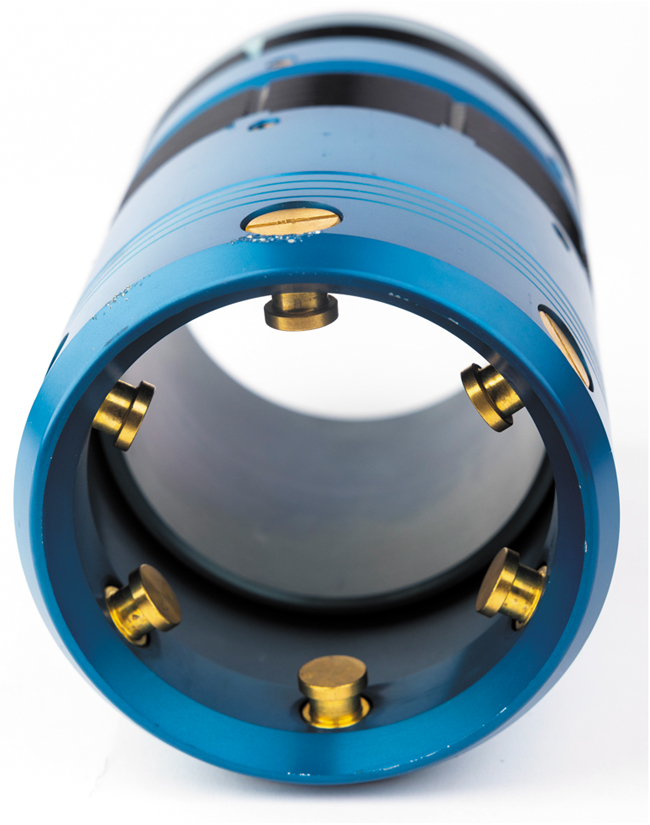
During deployment, this ESP catcher contains a plug that isolates the area above it. This saves time by allowing the operator to run the ESP without killing the well. Once the ESP is in place, the operator simply pumps the plug past the shear screws and out of the well, allowing production to begin.
This device has a short chemical injection sub that also acts as the cone to set the slips after parting. The combined tools provide a higher flow path than other products, minimizing friction while mixing injected chemicals optimally.
From a safety perspective, these catchers are exciting because they shorten fishing jobs and therefore limit employees’ exposure to risks. They also reduce fishing costs and the production lost to unnecessary downtime.
Theft Prevention
Unfortunately, operators must increasingly deal with another source of lost production: theft. Every year, oil theft costs the Permian Basin as much as one billion dollars, with losses affecting more than 40% of the region’s operators. Such “oil rustling” has been a thorn in the industry’s side since large-scale production began, but it is becoming more common and organized.
Aside from the financial impact, theft can create hazardous situations. One such case occurred in March of 2025, when two vacuum trucks tried to steal oil from a station designed for pipeline maintenance. The would-be thieves violated several safety protocols, resulting in an explosion and fire.
Sometimes thieves can be quite sophisticated. For example, some will try to make their activity look routine and innocent by painting their trucks to resemble those of legitimate service companies.
In response to a surge in theft, Texas has passed laws that increase penalties, establish a multidisciplinary task force to identify solutions, and authorize trained officers to inspect oil and gas cargoes.
Meanwhile, service companies have begun developing products designed to enhance security at remote sites. For example, Riot Industrial of Lubbock, Tx., has created a simple, cost-effective device that restricts access to load lines. To open a load line valve with this guard installed, oil haulers must enter a code.
Colton Wiemers, vice president of sales at Riot, points out that each line guard can have up to 10 unique codes. “A lot of oil and gas theft takes place in house, so there’s always a chance that someone will share a code to enable theft,” he says. “With multiple codes, it’s much easier to track who the code came from.”
For extra security, companies can periodically change the codes and configure the device to issue an alert whenever someone accesses the system. Regardless of whether it sends real-time alerts, the device will record how long the valve is open or closed. This information can be correlated with run tickets to verify their accuracy.
In addition to preventing theft, the line guard can detect and alert users about many forms of tampering, including accidental damage from animals or sabotage by activists.
“We have seen instances where someone will crack open a load line, then let the oil leak out and flood the whole facility,” Wiemers says. “If something like that happens, the fast response the guard enables can make a huge difference.”
The device fits any three- or four-inch load line valve. Installation is simple, so on most sites, roustabouts and/or electricians can complete it within a few hours.
Sharing Best Practices
The right equipment can limit workers’ exposure to risks and enhance site security, but it’s still vital to engage qualified safety professionals who understand the industry’s processes and procedures. These individuals can guide personnel toward a safe work environment, drawing on experience and research to offer advice that is practical, relatable and effective.
Like the members of any other discipline, it’s essential for safety professionals to learn from each other. One powerful and fun way to do that is to participate in the World Safety Organization.
“Our function is to take what people have learned and elevate it. Our slogan is ‘safety as a way of life,’ because if you’re not constantly enhancing or developing your skill set, you’ve basically become complacent,” says Juan Carlos Ocasio, a certified safety and security director who serves on the association’s board.
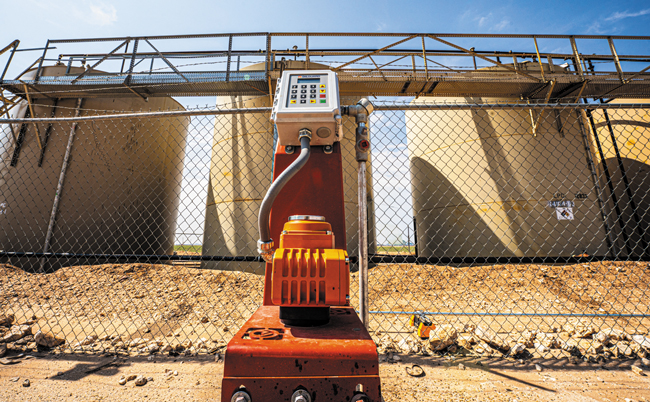
To prevent oil theft, many operators in the Permian Basin and beyond now install load line guards that keep oil haulers from opening the valve unless they know one of the codes for that location. The line guards can also track how long the valve stays open, allowing operators to confirm that actual withdrawals match run tickets.
Ocasio is the World Safety Organization United Nations Representative. He lives in Altamonte Springs, Fl., and holds a WSO consultation status for the Caribbean, South America, and Central America. Specializing in emergency management and disaster preparedness consultation, Ocasio has been part of the World Safety Organization since 2014.
Ocasio’s background illustrates one of the WSO’s greatest strengths: its ability to connect skilled safety experts whose collective experience spans countries and industries. With 23 national offices spread across the globe, the WSO provides an outlet for individuals interested in safety, health, and environment to discover clever solutions to emerging challenges and familiar problems alike.
Take auditing. One U.S.-based company borrowed a best practice from abroad to streamline audits for ISO 45001, an international standard for safety management systems. “Our European partner showed us a 30-minute ‘micro-audit’ approach that lets us verify one clause a day during normal walkthroughs,” relates Jessica M., a certified safety professional in Florida. “We cut our full-audit prep time by 40%.”
Through one WSO program, a Chilean mining team shared a color-coded “risk skyline” graphic it created to make complex geotechnical data easy for frontline crews to understand. Today, several U.S. quarries use similar graphics. While the risks they highlight differ from the ones the oil and gas industry faces, the strategies behind the design will likely prove to be widely applicable.
One of the less obvious benefits of discussing ideas with a multilingual audience is that it encourages safety professionals to distill information to its essence, a discipline that improves every safety briefing they give at home.
These insights aren’t one-off anecdotes. They arrive continuously through WSO’s weekly peer forums, standards committees, and mentorship circles.
With the WSO now based in Hobbs, N.M., it’s easier than ever for oil and gas safety experts to get involved. As the world’s demand for energy rises and geopolitical instability prompts more countries to accelerate domestic resource development, the number of members who need oil field-relevant safety insights and have some of their own to share will only grow. This will make participating more valuable than ever.

MONICA P. CERVANTES is the founder and CEO of Twin Horse Environmental, a consulting firm that has helped oil and gas, construction and manufacturing companies improve safety and environmental programs for more than a decade. She also serves as the chair and CEO of the World Safety Organization.
Cervantes is a WSO-certified safety instructor master level (ISO 17024) and WSO-certified safety technician who has authored articles for World Safety Journal. In addition to leading Twin Horse, she owns Vida Medical Management and La Chava, and she is a business partner in Kyros Global Group. Cervantes is also the founder and CEO of the Gracias Foundation, a nonprofit that encourages musically-inclined youths in West Texas and Southeast New Mexico to play mariachi music while pursuing a college education.
For other great articles about exploration, drilling, completions and production, subscribe to The American Oil & Gas Reporter and bookmark www.aogr.com.